Client Story: How a Financial Institution Transformed Its Mobile Banking App

The Core Challenge: One Mobile Banking App. Every User. Zero Friction.

Building a modern mobile banking app means solving three problems at once: making it intuitive enough for daily use, fast enough to feel instant, and secure enough to earn long-term trust. For one financial institution ready to raise the bar, the answer was a complete transformation of its mobile channel  in partnership with us.

The result is a native mobile banking app built on Digital Edge, ASEE's digital banking platform, designed as a unified 2-in-1 solution for both retail and business users. A single interface. A full range of capabilities. No separate apps, no fragmented experience.

What a Modern Mobile Banking App Actually Requires

A competitive mobile banking app must deliver three things simultaneously:

Here's how this transformation addressed each:

Performance that users notice immediately.

Faster login, optimized app performance, and instant payments available 24/7 (completed in seconds) mean users spend less time waiting and more time banking. The refreshed interface removes visual clutter and surfaces the most-used features without requiring navigation depth.

Security that works without slowing users down.

Biometric authentication replaces PIN-only login, reducing friction while strengthening access control. Payment recipient verification adds a layer of transaction security before funds move. Users can also choose to hide or display their account balance on the home screen, putting privacy control directly in their hands.

Notifications that keep users informed, not overwhelmed.

Push notifications for incoming and outgoing payments, card transactions, and pending items deliver real-time awareness without requiring users to open the app to stay updated.

One Interface. A Full Range of Banking Capabilities.

A well-designed mobile banking app should handle the full scope of everyday financial needs without becoming complicated.

Through a single interface, this app enables users to:

Whether the user is managing personal finances or running daily business operations, the app is built to handle it  on all major mobile platforms, with a consistent experience across devices.

The Technology Foundation: What Is Digital Edge?

Digital Edge is ASEE's strategic platform for digital banking. It is a modular, scalable solution that enables financial institutions to build, update, and expand their digital channels, including mobile banking apps, without disrupting existing services or starting from scratch with each new feature.

For this transformation, Digital Edge provided:

According to ASEE's implementation experience, banks that build on a platform like Digital Edge can iterate faster, maintain stability under growing user loads, and respond to regulatory changes without major redevelopment cycles.

What This Transformation Demonstrates

Successful mobile banking app development is not about adding features; it's about making the right capabilities work together seamlessly. This project illustrates four principles that apply across the industry:

Is your mobile banking app ready for what users expect next? Contact us.

Frequently Asked Questions

A mobile banking app is a software application that allows users to manage their bank accounts, execute payments, and access financial services from a smartphone or tablet. A competitive mobile banking app should include account management, domestic and international payments, card controls, biometric authentication, instant payments, and push notifications all within a secure, intuitive interface accessible on all major platforms.

A secure mobile banking app embeds protection at every layer of its architecture not just at login. Key security features include biometric authentication, payment recipient verification, encrypted data transmission, and alignment with regulatory frameworks such as PSD2. Security should be built into the app's foundation, not added as an afterthought after the core features are developed.

Instant payments are real-time transactions processed 24/7 and completed within seconds. They require backend infrastructure that supports immediate settlement, combined with app-level features such as payment recipient verification and real-time push notifications that confirm transaction status the moment a payment is executed.

A 2-in-1 mobile banking app is a single application that serves both retail (personal) and business users through one unified interface. Rather than maintaining separate apps for different user segments, a 2-in-1 solution provides role-appropriate features  such as personal account management for individuals and creditworthiness certificate requests or POS statement access for businesses within the same platform.

A backend-driven UI is an architectural approach where the app's interface and functionality can be updated from the server side, without requiring users to download a new version from the app store. This enables banks to push improvements, fix issues, and introduce new features in real time resulting in a consistently up-to-date experience for all users.

Digital Edge is ASEE's digital banking platform that provides the technology foundation for modern mobile and digital channels. It enables financial institutions to build native mobile banking apps, iterate on features faster, maintain stability and security at scale, and stay aligned with evolving regulatory requirements without rebuilding from scratch each time user needs or market conditions change.

Mobile banking is safe when the app is built with security as a core architectural principle rather than a feature added later. This includes biometric login, encrypted transactions, recipient verification before payments are processed, and ongoing compliance with financial regulatory standards. Users should look for apps that offer transparency and control such as the ability to manage card limits, block cards instantly, and receive real-time notifications for every transaction.

Banks can deliver real-time updates without service interruption by combining native mobile architecture with a backend-driven UI. This allows interface changes, new features, and performance improvements to be pushed from the server side, meaning users always have the latest version without needing to manually update the app or experience downtime.

Client story: Mobile Banking Digital Transformation That Built User Trust

Core challenge: Build a mobile app that is intuitive, fast, and trusted, not just feature‑rich

Mobile banking has evolved into a core financial channel that customers use daily without thinking twice. However, simplicity for users is the result of careful planning, continuous iteration, and the right technology foundation.

The client is a top-tier bank in an EU member state by total assets, holding a market share that places it in the top tier of the domestic banking sector. The bank maintains a consistently strong position in both loans and deposits, confirming its role as one of the key players in the local financial market.

The Pressure Points

Banks face three major forces during a mobile transformation:

The transformation needed to address all three without compromising usability or speed.

ASEE Approach & Solution

1. UI/UX System Designed for Simplicity

The app was redesigned around simplicity, consistency, and modern interface standards.

Reusable components enabled a cohesive experience across features and screens.

This scalable design system made future upgrades easier and kept navigation clear even as the app expanded.

2. Performance Built Into the Architecture

The mobile app used native mobile architecture combined with a backend‑driven UI.

This setup allowed updates and improvements to be delivered in real time without relying on traditional app store release cycles.

As a result, users experience a consistently fast and responsive app.

3. Security as a Foundation, Not an Afterthought

Security was integrated directly into the system architecture to ensure data and transaction protection at every stage.

The app aligned with leading regulatory frameworks and security standards, giving users confidence during both simple and complex interactions.

 Key Features Delivered

In addition to foundational redesign and architectural improvements, the transformation introduced features that streamline everyday banking:

All features were designed to simplify daily interactions, not add complexity.

Scalable Technology Foundation

This digital transformation was underpinned by ASEE’s Digital Edge platform, which enabled:

Digital Edge supports ongoing evolution, meaning the bank can innovate without disrupting service.

Results & Outcomes

While exact metrics were not published, this case demonstrates that successful mobile banking development:

Outcome: A future‑ready mobile banking experience that balances design, performance, and security.

Is your mobile banking app ready for what's next? We can help. Contact us.

Frequently Asked Questions

Building a trusted mobile banking app requires three core elements: an intuitive UI/UX design system, a high-performance native architecture, and security embedded directly into the system — not added as an afterthought.

By combining native mobile architecture with a backend-driven UI, banks can push updates and improvements in real time — without relying on traditional app store release cycles.

Modern mobile banking apps are expected to offer digital wallet integration, in-app loan processing, real-time live chat, and smart notifications — all designed to simplify daily interactions rather than add complexity.

Security and compliance are built directly into the app architecture, ensuring alignment with leading regulatory frameworks and data protection standards at every stage of user interaction.

A backend-driven UI allows banks to update the app's interface and functionality from the server side, enabling faster iteration and real-time improvements without requiring users to download a new app version.

Why TLS/SSL Certificate Management Is Becoming Your Biggest IT Operations Challenge

TLS/SSL certificates are a digital credential that encrypts communication between a server and a user's browser and verifies the server's identity. It is what enables HTTPS and the padlock icon in browser address bars.

Most internet users never think about TLS/SSL certificates until something breaks. These digital credentials operate silently in the background, encrypting communications, authenticating servers, and establishing the chain of trust that makes online banking, e-commerce, and enterprise software work. But a major industry shift is about to force organizations of all sizes to rethink how they manage them.

As our Robert Preskar, Director of Security and Card Payment Product Development, explains:

"TLS/SSL certificates are the digital 'identity documents' of websites and online services. They encrypt communication, protect data, and verify system identity. Without them, browsers display warnings, applications refuse to connect, and integrations stop working. In short, they are the foundation of trust on the internet."

The 47-Day Certificate Validity Shift: What Is Changing and Why It Matters Now

Industry standards and major browser vendors are reducing the maximum validity period of TLS/SSL certificates from 398 days to just 47 days. This is not a distant roadmap item, it is an active transition already underway across the industry.

On the surface, this may sound like a minor technical adjustment. In practice, it fundamentally transforms certificate management from an annual administrative task into a continuous operational process.

Key facts about the 47-day validity change:

Who Is Most at Risk?

Organizations with the highest exposure to certificate-related incidents include:

What Happens When a Certificate Expires?

Certificate expiration is one of the most preventable, yet most common, causes of IT incidents. When a TLS/SSL certificate expires without being renewed, the consequences are immediate and cascading:

  1. Web services become inaccessible — browsers display security warnings and block user access
  2. APIs and integrations fail — connected systems refuse to communicate with an unverified endpoint
  3. An incident is triggered — IT teams receive emergency alerts and must respond under pressure
  4. Reputational damage occurs — customers lose trust when they encounter security warnings on a company's services
  5. Financial loss follows — in transaction-dependent environments, even brief downtime has direct revenue impact

"What most commonly happens when a certificate expires is service unavailability. It immediately becomes an incident, users cannot access the service, the IT team gets urgent calls, and the company suffers reputational damage. In some cases, there is also direct financial loss because, for example, transactions cannot be processed.", says Preskar.

Why Manual Certificate Management No Longer Works

The Spreadsheet Problem

For years, many organizations have tracked certificate expiration dates in spreadsheets or relied on calendar reminders and email notifications. This approach was imperfect but functional when renewals happened once a year. At 7–8 renewals per certificate per year, it becomes operationally unsustainable.

"Until now, this process relied on manual records because organizations wanted to maintain control. But at this renewal frequency, it is simply no longer feasible. The risk of human error becomes too high.", warns Preskar.

The Operational Math

ScenarioCertificatesOld Model (398 days)New Model (47 days)
Small organization20~20 renewals/year~160 renewals/year
Mid-size organization100~100 renewals/year~800 renewals/year
Large enterprise500+~500 renewals/year~4,000+ renewals/year

At enterprise scale, manual certificate management is not just inefficient — it is a liability.

The Two-Layer Solution: CMS + Certiligent

Understanding the Foundation: Certificate Management System (CMS)

Before addressing the automation challenge, it helps to understand how a well-structured certificate infrastructure is built. A Certificate Management System (CMS) is the centralized repository layer — the operational hub where certificates are issued, renewed, and revoked across all endpoints in an organization.

ASEE's CMS is designed to handle the full breadth of modern certificate environments:

In short, CMS answers the question: "Where are all our certificates, and how do we issue and control them?"

The Next Layer: Certiligent for Automated Renewal at Scale

CMS provides the infrastructure and control layer. Certiligent addresses what happens at the operational level when certificate validity periods shrink to 47 days and renewal frequency multiplies by a factor of eight.

Where CMS manages the what and who of certificates, Certiligent manages the when and how of keeping them continuously valid without manual intervention.

Together, CMS and Certiligent form a complete certificate management stack: CMS as the trusted issuance and control foundation, Certiligent as the automation layer that ensures no certificate ever expires unnoticed.

"Certiligent enables you to monitor all certificates from a single location and define renewal policies. The renewal process happens automatically, and if anything goes wrong, the system notifies you in advance, before the certificate expires." explains Preskar.

The Business Case for Automation

Measured Outcomes from Organizations Using CMS + Certiligent

Based on operational experience with organizations that have implemented automated certificate management, the documented benefits include:

"From experience, we can say that organizations that implement automated certificate management have drastically fewer incidents, less stress and fewer night-time interventions, and significant time and cost savings. In addition, security posture improves and audits become easier to pass." states Preskar.

Scalability Without Proportional Overhead

One of the most significant operational advantages of automation is that certificate volume growth no longer requires proportional headcount growth. Whether an organization adds 10 or 1,000 new certificates, the management overhead remains essentially constant.

"IT can finally return to strategic tasks, instead of constantly firefighting." says Preskar.

Key Takeaway

The shortening of TLS/SSL certificate validity periods from 398 to 47 days is not a future concern, it is an active operational challenge that organizations need to address today. The volume of renewals required under the new model makes manual management not just inefficient, but fundamentally unreliable.

As Preskar concludes: "The shortening of certificate validity is not just a technical change, it is an organizational, operational, and security change. Automation is no longer a 'nice to have.' It is a prerequisite for normal operations."

This article is based on expert commentary originally published in Poslovni.hr on March 25, 2026. Read the original article (Croatian) →

Frequently Asked Questions About TLS/SSL Certificate Management

A Certificate Management System (CMS) is the foundational layer for issuing, storing, and controlling certificates across all endpoints — users, machines, devices, and servers. It answers the question of what certificates exist and who controls them. Certiligent is the automation layer that sits on top of this foundation, ensuring certificates are renewed continuously and automatically as validity periods shorten. CMS and Certiligent are complementary: one provides control and governance, the other provides operational continuity at scale.

A TLS/SSL certificate is a digital credential that authenticates the identity of a website or service and enables encrypted communication between the server and the user's browser. It is what places the padlock icon in browser address bars and what enables HTTPS.

The industry-wide move to shorter validity periods is driven by security best practices. Shorter lifetimes limit the window during which a compromised certificate can be misused. Browser vendors and certificate authorities are coordinating this transition to raise the overall security baseline of the internet.

This varies significantly by organization size and complexity. A small business might have fewer than 10 certificates. A mid-size enterprise commonly manages between 50 and 200. Large enterprises with multiple domains, subdomains, APIs, and internal services may manage hundreds or thousands.

The primary risks are service outages caused by expired certificates, security incidents caused by missed renewals, and increased operational burden on IT teams. As renewal frequency increases with the 47-day validity change, the probability of human error in manual processes rises proportionally.

Organizations should begin by auditing their current certificate inventory to understand the full scope of what they manage. Those without a centralized Certificate Management System should implement one as the foundational control layer. Organizations that already have a CMS in place should evaluate whether their current renewal processes can handle 7–8 renewals per certificate per year — and if not, add an automation layer like Certiligent on top of their existing infrastructure.

How to Assess Mobile App Security Risk: A Free Checklist for C-Level Executives

What this checklist helps you assess:

  • Whether your app can be reverse-engineered or cloned without your knowledge
  • How to evaluate runtime protection against hooking, tampering, and root/jailbreak exploitation
  • Whether a modified version of your app could already be circulating outside official stores
  • How to assess on-device data leakage risks and GDPR exposure
  • Whether your users are protected from fake login overlays and UI hijacking
  • How to check if your business logic and promotional mechanisms are open to automated abuse
  • Whether your security team has real-time threat visibility — or is flying blind
  • How to evaluate audit readiness for NIS2, DORA, PSD2, and GDPR
  • Whether your brand and customer trust are at risk from your mobile channel

Fill out the form and find out what your app is exposing:

How to Assess Mobile App Security Risk: A Free Checklist for C-Level Executives (#147)

Webinar: How secure is your mobile app? Understanding and preventing reverse engineering

Webinar highlights:

  • What reverse engineering is and why it matters today
  • Key types and techniques used in real-world attacks
  • Real examples of iOS and Android apps compromised due to poor protection
  • How to defend your code with obfuscation (our approach)
  • Live demo: applying obfuscation to iOS & Android apps

Fill out the form and download the webinar:

Downloads Webinar: How secure is your mobile app? Understanding and preventing reverse engineering (#144)

Mobile App Hardening vs. Mobile App Shielding: What’s the Difference and Why Both Matter

Mobile applications have become the primary interface between businesses and users. Banking, healthcare, e-commerce, and enterprise productivity rely on mobile apps to deliver critical services and handle sensitive data. But this convenience also makes mobile apps a high-value target for attackers.

The scale of the threat is significant. Cybersecurity reports show that more than 33 million mobile attacks were blocked in 2024 alone, averaging about 2.8 million attacks per month targeting smartphones.

Mobile malware and unwanted applications are also rising rapidly, with over 12 million attacks recorded in just the first quarter of 2025 on Android devices.

At the same time, application-level threats are increasing. In one industry report, the likelihood of attacks targeting Android apps rose from 34% in 2023 to 84% in 2024, showing how aggressively attackers are targeting mobile software itself.

Given this landscape, protecting the mobile application itself, not just backend systems, has become a core component of modern security strategies.

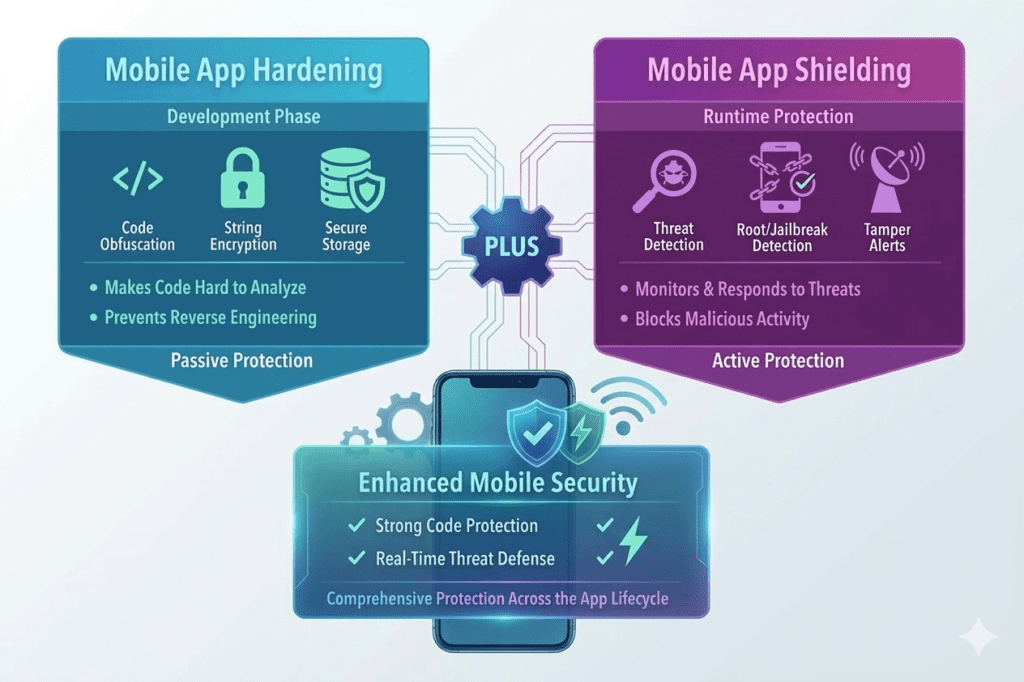
Two key techniques used to protect mobile apps are mobile application hardening and mobile application shielding. Although these terms are often used interchangeably, they address different stages of the attack lifecycle and serve different security purposes. Mobile app hardening and mobile app shielding are complementary protection approaches: hardening strengthens an app during development to remove weaknesses, while shielding adds runtime protection to defend the compiled app against active attacks.

Understanding the difference and how they work together is essential for building secure mobile applications.

What Is Mobile App Hardening?

Mobile app hardening is the process of improving an application’s security posture during development and refers to techniques that strengthen an application’s code and binary to make it more resistant to analysis, reverse engineering, and exploitation.

Unlike runtime defenses, hardening typically occurs during the development and build phase. The goal is to reduce the attack surface and make it significantly harder for attackers to understand how the application works.

This is particularly important because mobile apps run on untrusted devices. Attackers can download the application, decompile it, analyze the code, and attempt to manipulate its logic.

Hardening techniques help slow attackers down and protect sensitive application logic, intellectual property, and security mechanisms.

How Mobile App Hardening Works and What Are The Key Techniques

Code Obfuscation

One of the most widely used hardening techniques is code obfuscation, which transforms application code into a form that is difficult for humans to understand.

Common obfuscation methods include:

Even though an attacker may still be able to decompile an app, obfuscation ensures the resulting code is difficult to interpret or manipulate.

For example, a mobile banking application may obfuscate its transaction validation logic to prevent attackers from identifying how transfers are verified.

Secure Secret Management

Hardcoded secrets, such as API keys or encryption keys, are a common weakness in mobile apps.

Attackers who reverse engineer an application often search for exposed credentials inside the binary. Secure secret management reduces this risk by using secure storage mechanisms.

Best practices include:

These measures prevent sensitive secrets from being easily extracted from the application.

Secure Networking and Certificate Pinning

Mobile apps frequently communicate with backend APIs, making network security critical.

Without proper protections, attackers can intercept traffic through man-in-the-middle (MITM) attacks.

Hardening techniques in this area include:

Certificate pinning ensures the mobile app only communicates with trusted backend servers, even if an attacker attempts to intercept the connection.

Secure Storage

Mobile applications often store local data such as authentication tokens, session information, or cached user data.

Hardening practices aim to prevent attackers from extracting this information.

Typical approaches include:

Dependency and Build Security

Modern mobile apps rely heavily on third-party libraries and SDKs.

While these dependencies accelerate development, they can also introduce vulnerabilities.

Secure development teams reduce this risk by:

These practices help prevent attackers from exploiting weaknesses introduced through the software supply chain.

What Is Mobile App Shielding?

While hardening focuses on strengthening the application before it is released, mobile app shielding focuses on protecting the application while it is running on the device.

Mobile App Shielding introduces runtime defenses that detect and respond to attacks in real time.

These techniques are often associated with Runtime Application Self-Protection (RASP), where the application actively monitors its environment and behavior for suspicious activity.

Mobile App Shielding is particularly important because attackers often manipulate mobile apps during execution using debugging tools, emulators, or instrumentation frameworks.

Runtime protections help detect and block these activities.

How Mobile App Shielding Works  and What Are Common Mobile App Shielding Techniques

Root and Jailbreak Detection

Rooted or jailbroken devices remove many of the operating system’s built-in security restrictions.

Attackers frequently use these devices to bypass application protections.

Root and jailbreak detection mechanisms allow the app to identify compromised devices and restrict functionality if necessary.

This is why many banking apps refuse to run on rooted/jailbroken devices.

Debugger Detection

Attackers often attach debuggers to applications to observe behavior and modify execution flow.

Debugger detection techniques attempt to identify when a debugger is attached and respond accordingly.

Typical responses may include:

Emulator Detection

Emulators are frequently used by attackers and researchers to analyze mobile applications.

Mobile App Shielding mechanisms can detect when the app is running in an emulator environment instead of a physical device.

If an emulator is detected, the application may limit functionality or shut down entirely.

Hooking Detection

Attackers commonly use hooking and instrumentation frameworks such as Frida or Xposed to manipulate application behavior at runtime.

These tools allow attackers to:

Mobile App Shielding techniques attempt to detect these frameworks and prevent them from interacting with the application.

Tamper Detection and Anti-Repackaging

A common attack against mobile apps involves modifying the application binary and redistributing it.

Attackers may:

Tamper detection mechanisms check the integrity of the application during runtime.

If the binary has been altered or repackaged, the application can detect the change and prevent execution.

Mobile app Hardening vs. Mobile app Shielding: Key Differences in Mobile App Security

FeatureMobile App HardeningMobile App Shielding
Protection FocusProtects application code and binariesProtects the application during runtime
Implementation PhaseCode obfuscation, string encryption, and secure storage practicesAfter installation, while the app is running on the user’s device
GoalMake the app difficult to analyze, reverse engineer, or tamper withDetect suspicious activity and attacks in real time
TechniquesReduces the likelihood that attackers can understand or manipulate the appMonitoring app environment, detecting debugging attempts, rooted/jailbroken devices, modified binaries
Type of ProtectionPassive protection (increases effort required for attack)Active protection (monitors and responds to attacks)
Primary EffectReduces likelihood that attackers can understand or manipulate the appDetects and responds to malicious activity while the app runs
Role in Security LayerAims to slow down attackersAims to respond to attacks in real time
ComplementarityWhen combined with shielding, strengthens security across multiple attack stagesWhen combined with hardening, provides comprehensive protection throughout the app lifecycle

Why Combining Mobile App Shielding and Mobile App Hardening Works Best

Relying on a single layer of defense is rarely sufficient in mobile security.

Mobile app hardening alone may make an application difficult to analyze, but a determined attacker could still eventually reverse engineer it.

Mobile app Shielding alone may detect attacks, but if the application code is easily readable, attackers may quickly identify ways to bypass protections.

A blended approach combining both mobile app hardening and mobile app shielding significantly increases the effort required to compromise an application.

This layered model provides several advantages:

Organizations in high-risk industries, such as banking, fintech, healthcare, and gaming, often implement both techniques as part of a defense-in-depth strategy. Without mobile app hardening, vulnerabilities may exist in production. Without mobile app shielding, protected code can still be analyzed and bypassed on compromised devices.

Mobile App Hardening vs. Mobile App Shielding FAQ

Mobile app hardening refers to techniques used to strengthen an application’s code and binary to make reverse engineering and exploitation more difficult. This typically includes code obfuscation, secure storage practices, and network security mechanisms.

Mobile app shielding focuses on protecting the app at runtime. It uses techniques such as root detection, debugger detection, and tamper detection to identify and respond to attacks while the application is running.

No. Mobile app Hardening protects the application code before deployment, while mobile app shielding protects the application during execution. They address different stages of the attack lifecycle.

The need depends on the risk profile of the application. Apps handling sensitive data, financial transactions, or intellectual property benefit most from these protections.

In some cases, determined attackers may eventually bypass protections. However, mobile app hardening and mobile app shielding significantly increase the time, expertise, and resources required to compromise an application.

Industries with high security requirements often rely on these techniques, including:

  • enterprise software
  • banking and fintech
  • healthcare
  • telecommunications
  • mobile gaming

Apply for Your Free 30-Day App Protector Trial

Get full access to advanced mobile security for 30 days, featuring both App Hardening to make your app tamper-proof and App Shielding to actively detect and block attacks in real time. Explore a user-friendly portal and see how your app stays protected at every stage. No upfront payment needed.

Protect My App Now

How CBUAE’s 2025 directive is Shaping the Next Phase of Strong Customer Authentication  in the UAE: Perspectives from Europe’s PSD2

The UAE is entering a decisive new phase in digital banking security.Of course, this is not a starting point for the UAE. It is a progression.

The UAE is widely recognized as one of the most advanced digital economies in the world. From AI strategy and smart government initiatives to real-time payments and digital banking innovation, the country has consistently positioned itself at the forefront of financial modernization.

With the  Central Bank of the UAE (CBUAE) Notice No. CBUAE/FCMCP/2025/3057, financial institutions are being pushed toward:

How CBUAE directive mirrors the path Europe took under PSD2, but gives the UAE a chance to start at a more mature level

Other markets have undergone similar regulatory transitions in recent years. In Europe, the Revised Payment Services Directive (PSD2) introduced Strong Customer Authentication (SCA) requirements across the EU. What followed was a multi-year transformation, both operationally and strategically, as institutions refined how they balanced fraud prevention, compliance, and customer experience.

Europe's journey provides useful context, not as a blueprint, but as a reference point for how authentication models tend to evolve under regulatory change.

How Is the UAE’s Regulatory Landscape Evolving Beyond Static MFA

The CBUAE directive is not simply about adding another authentication factor. It reflects a deeper shift in philosophy.

Historically, many banks relied heavily on static controls. That implies passwords at login and OTPs at transactions. That model assumes that once a user successfully authenticates, the session is trustworthy. Today’s fraud landscape has made that assumption full of errors.

Account takeover attacks now commonly involve:

In this context, static MFA is necessary, yet still insufficient.

The regulatory emphasis on adaptive and risk-based controls signals that authentication decisions must become contextual. Banks are expected to assess transaction risk dynamically, rather than applying uniform friction across all users and journeys.

This is a shift from “authenticate everyone the same way” to “authenticate according to risk potential.”

That distinction is critical.

What Europe Learned From PSD2 (and Why It Matters to the UAE)

When PSD2 introduced SCA, it required two independent authentication factors for digital payments. The directive also required dynamic linking. This means that authentication has to be cryptographically tied to the transaction amount and beneficiary.

On paper, the rule is straightforward.

In practice, it is forcing banks to rethink:

The primary technical vehicle for enforcing SCA in e-commerce was EMV 3D Secure (EMV 3DS), particularly version 2.x, which allowed issuers to exchange richer contextual data and apply risk-based logic.

Although the rules were clear, the majority of institutions were not yet mature enough to apply them effectively in practice.

The Early PSD2 Implementation Pitfalls

1. Over-Authentication and Customer Friction

In the early stages, many European banks adopted a conservative compliance setup. Rather than fully leveraging transaction risk analysis, they triggered step-up authentication for nearly all card-not-present transactions.

From a regulatory perspective, this was safe.

From a business perspective, it was expensive.

Merchants reported measurable increases in cart abandonment. Customer complaints about frequent OTP prompts significantly increased. Some consumers shifted to alternative payment methods with lower perceived friction, such as digital wallets, A2A payments, and BNPL options.

The result? Fraud decreased, but so did conversion rates.

The European experience suggests the following: strong authentication must be intelligent, not one-size-fits-all.

2. Delayed Integration of Fraud Intelligence

PSD2 allowed exemptions from step-up authentication for low-risk transactions. However, to use those exemptions effectively, banks needed mature fraud scoring engines and accurate risk calibration.

Many institutions discovered that their fraud systems were not sufficiently integrated with their authentication layers.

Fraud teams and identity teams operated in silos. Risk scores were not dynamically driving authentication decisions. As a result, exemptions were underutilized, and friction remained unnecessarily high.

It boils down to this: PSD2 structurally favored institutions that could align fraud intelligence with authentication orchestration, because doing so enabled more frictionless approvals while remaining compliant.

3. Treating SCA as an IT Upgrade Instead of an Identity Transformation

Perhaps the most strategic mistake was framing SCA as a compliance project rather than an opportunity to modernize identity.

Some institutions implemented:

They met regulatory deadlines.

But they did not redesign their broader identity architecture around zero-trust principles or continuous risk assessment.

The banks that invested in adaptive authentication, behavioral monitoring, and integrated risk orchestration are now operating at significantly higher maturity levels. As a result, these institutions were able to reduce account takeover losses while maintaining higher transaction approval rates and lower customer drop-off.

The European Maturity Curve

As PSD2 rolled out, a clear evolution in authentication strategy began to take shape across Europe.

Initially, authentication was rule-based and uniform. Step-up mechanisms were triggered broadly to ensure compliance.

As fraud engines matured and data exchange within EMV 3DS improved, issuers began distinguishing between low- and high-risk transactions. Frictionless flows increased. Approval rates stabilized.

Today, leading institutions go further. They deploy behavioral analytics and continuous authentication mechanisms that assess risk not only at login or payment, but throughout the session lifecycle.

Trust is no longer established once at login, but continuously evaluated as risk changes.

What UAE Banks Can Do Differently

Europe’s experience provides a useful reference point, and the UAE can take those insights and apply them from day one.

1. Build Adaptive SCA Into the Core Architecture

Rather than layering risk assessment on top of static MFA, banks should embed contextual intelligence directly into authentication flows.

This includes:

By integrating these signals in real time, banks can differentiate between a returning, low-risk customer and a potentially compromised session.

Additional authentication is triggered only when the risk justifies it, rather than being applied to every transaction.

2. Use EMV 3DS as a Risk Channel, Not Just a Compliance Mechanism

EMV 3DS 2.x supports the exchange of extensive contextual data between merchants, acquirers, and issuers.

Institutions that leverage this data effectively can:

The key is not just turning on 3D Secure, but using risk data properly to decide when to challenge a customer and when to let the payment go through smoothly.

3. Connecting Fraud Signals to Authentication Decisions

One of the biggest lessons from Europe wasn’t about technology - it was about teamwork.

In many banks, fraud prevention and authentication were handled by different teams. Fraud teams focused on detecting suspicious transactions. Authentication teams focused on login flows, MFA tools, and customer journeys.

But risk-based authentication only works well when those two areas are closely connected.

If the fraud system detects that a transaction looks suspicious, that information should immediately influence how the customer is authenticated. For example:

At the same time, the results of authentication matter for fraud models. If a customer successfully completes biometric verification, that’s useful information for improving future risk decisions.

When fraud and authentication operate separately, banks often end up either:

The most effective institutions made sure fraud, security, and digital teams were working toward the same goals - balancing fraud reduction with smooth customer experience.

4. Move Toward Continuous Authentication Zero-Trust Model

Modern fraud does not respect session boundaries.

Once attackers bypass login, they often exploit lateral movement within digital banking environments.

Continuous authentication addresses this by:

This aligns directly with zero-trust principles, where trust is continuously validated rather than assumed.

For the UAE, this represents a chance to implement a forward-looking identity posture from the outset, rather than retrofitting it later.

How Can CBUAE Regulatory Compliance Become a Strategic Advantage for UAE Banks

Regulatory change often starts as a compliance requirement. Though over time, it can become an opportunity. In Europe, the banks that treated SCA as more than just a rule to follow were able to reduce account takeover losses while keeping approval rates strong. By avoiding unnecessary authentication challenges, they also reduced customer frustration and built greater confidence in their digital channels.

The CBUAE directive offers a similar opportunity. It is not just about implementing Strong Customer Authentication, but about doing it in a way that protects customers while keeping their experience smooth and intuitive.

Europe’s experience offers a clearer direction, so UAE banks can start off on the right foot with smarter, risk-based authentication.

FAQ about Strong Customer Authentication (SCA) and CBUAE

SCA is a regulatory requirement that ensures financial institutions verify a user’s identity using at least two independent factors. Modern SCA also adjusts authentication based on real-time risk rather than using a one-size-fits-all approach.

The Central Bank of the UAE’s 2025 directive shifts banks from static multi-factor authentication (MFA) to adaptive SCA, emphasizing continuous risk evaluation, integrated fraud detection, and enhanced consumer protection.

Adaptive SCA evaluates risk at multiple stages of a transaction, including:

  • Integration between fraud and authentication systems for ongoing optimization
  • Pre-authentication risk checks (device, geolocation, behavior)
  • Real-time fraud scoring
  • Dynamic authentication based on risk levels (frictionless, biometric, step-up, or block)
  • Continuous session monitoring
  • Over-authentication increases friction and customer drop-off.
  • Fraud detection and authentication must be integrated for better approvals.
  • EMV 3DS should be used for risk-based authentication, not just compliance.
  • SCA should be part of a broader identity strategy, not just IT compliance.

By applying authentication challenges only when risk is detected, adaptive SCA allows low-risk transactions to flow frictionlessly, reducing unnecessary steps like OTPs and improving overall digital trust.

Integration ensures that fraud signals directly influence authentication decisions, enabling faster detection, lower false positives, and higher transaction approval rates.

The UAE can implement adaptive, risk-based SCA from the start, avoiding the trial-and-error challenges Europe faced and benefiting from proven models in fraud prevention, customer experience, and authentication orchestration.

Yes. By continuously monitoring behavior and linking authentication to risk signals, adaptive SCA can detect anomalies early, reduce exposure to phishing, SIM swaps, and session hijacking, and protect both banks and customers.

maximizing the potential of your 3d secure service - ebook

Maximizing the Potential of Your  3DS Service

Learn how expert support, intelligent risk scoring, and continuous optimization can strengthen security while preserving seamless customer journeys.

Download Ebook

Why R8 Obfuscation Is No Longer Enough for Android App Protection

For many teams, enabling R8 has felt like a reasonable and responsible step toward protecting application logic.

That perception is not wrong, but it is increasingly incomplete.

The way Android apps are attacked, analyzed, and replicated has evolved. Reverse engineering is no longer a niche skill practiced by a small group of experts. It is becoming faster, cheaper, and increasingly automated. In this new reality, relying on R8 alone is no longer sufficient for applications that carry meaningful business value.

R8 is not obsolete, but relying on R8 alone reflects an outdated threat model.

 What Was The Initial Purpose Of R8 Obfuscation?

At its core, R8 is an optimization tool, not a security solution. Its primary goals are to reduce application size, eliminate unused code, and improve runtime efficiency. Obfuscation is included, but it is not the central design objective.

This distinction matters because R8’s obfuscation focuses primarily on reducing readability through symbol renaming, while largely preserving the original logical structure of the application. Although this approach maintains correct behavior (as all obfuscation must), it leaves execution flow and intent relatively intact, making the app easier to analyze using modern automated and AI-assisted tools.

As a result, R8 introduces friction rather than true protection. It slows analysis, but it does not prevent it.

R8 Obfuscation vs. AI-Assisted Reverse Engineering

The rise of AI-assisted reverse engineering has dramatically changed how app analysis is done, as well as who is able to do it. What previously required days of manual effort by skilled specialists can now often be achieved in minutes using automated tooling and large language models.

AI systems do not rely on variable names to understand software. They analyze structure, patterns, API usage, and behavior. Renamed symbols offer limited resistance to this type of analysis. In many cases, AI can infer intent, reconstruct abstractions, and explain application logic in plain language despite heavy renaming.

“R8 was designed to slow down humans while modern reverse engineering increasingly relies on machines.”

This shift significantly reduces the defensive value of basic obfuscation techniques.

Why R8’s Predictability Has Become a Weakness

Because R8 is widely adopted, extensively documented, and consistently applied, its output is highly predictable. Attackers understand what R8-obfuscated code looks like, how it behaves, and how to process it efficiently.

Decompilers, analysis frameworks, and automated pipelines are already optimized to handle R8 output. What once introduced meaningful friction has become a standardized preprocessing step in many reverse engineering workflows.

In security, predictability is rarely an advantage. When attackers know exactly what to expect, defensive value erodes quickly.

R8 Obfuscation Still Exposes Business Logic and Intent

Even with R8 enabled, reverse-engineered Android apps often continue to reveal sensitive information. Feature gating logic, licensing checks, API workflows, fraud detection mechanisms, and proprietary algorithms typically remain visible to anyone willing to inspect the decompiled output.

While names may be obscured, intent is not. For enterprise app owners, this creates tangible risk. Business logic can be studied, replicated, or bypassed, undermining competitive differentiation and revenue protection.

R8 hides labels, not meaning, and meaning is what attackers are after.

R8 Is a Build-Time Tool in a Runtime Threat Landscape

R8 operates entirely at build time. Once the application is compiled and distributed, its role is effectively complete. It does not observe runtime behavior, respond to hostile environments, or defend against dynamic attacks.

Modern Android threats increasingly target running applications through techniques such as hooking, instrumentation, memory inspection, and repackaging. These attacks do not depend solely on understanding source code, instead, they exploit runtime behavior.

Because R8 provides no runtime awareness or self-protection, it cannot address this growing class of threats.

R8 vs. Modern Obfuscation Solutions: A Capability Gap

R8 is best understood as a baseline layer, while modern obfuscation solutions are designed as active defensive systems.

CapabilityR8Modern Obfuscation Solutions
Code shrinking and optimizationCore functionSupported  
Symbol renamingbasicAdvanced
Control-flow obfuscationNOYES
Logic transformationNOYES
AI-assisted analysis protectionLimitedDeisgned for it
Runtime self-protectionNOYES
Anti-tampering and Anti-hookingNOYES
Compliance alignmentLimitedStronger Support

This comparison highlights a structural difference. R8 focuses on efficiency and basic concealment, while modern obfuscation focuses on raising attack cost, disrupting understanding, and actively resisting analysis throughout the app lifecycle.

Why R8 Alone Is Becoming a Business Risk

Mobile applications now embed logic that directly impacts revenue and competitive advantage. Pricing rules, entitlement checks, fraud prevention systems, recommendation engines, and proprietary algorithms are no longer supporting elements - they are core business assets.

As reverse engineering becomes more accessible and automated, exposure of this logic carries real financial and reputational consequences. At the same time, regulatory and compliance expectations are increasing, particularly in industries such as finance, media, gaming, and e-commerce.

In this context, relying solely on R8 is no longer a conservative choice, but a fragile one.

What Would be a Realistic Android Security Strategy Beyond R8? 

The goal is not to abandon R8. It remains a valuable part of the Android ecosystem, improving performance and providing baseline obfuscation at minimal cost.

However, a realistic security posture recognizes that R8 is only a starting point. Enterprise-grade protection increasingly requires layered defenses that combine build-time obfuscation with runtime protection, logic transformation, and active resistance to tampering and analysis.

This layered approach aligns with how modern attacks actually operate.

 Why Is R8 No Longer Enough On Its Own?R8 remains useful, but it was designed for a different era. It was not built to counter AI-assisted reverse engineering, automated attack pipelines, or runtime manipulation of applications.

As threats evolve, defensive strategies must evolve with it. For organizations that depend on Android applications to protect revenue, intellectual property, and user trust, R8 alone is no longer enough.

Download Code Obfuscation eBook

Almost every modern mobile application is exposed to reverse engineering. Download this guide to learn how code obfuscation protects your source code, API keys, and business logic while significantly increasing your app’s security..

Download eBook

App Protector Q4 2025 Release: What Your App Can Learn from Its Environment

This update adds VPN detection, proxy detection, malicious app detection, and unknown application origin check on both platforms. Android-specific detections include ADB monitoring, Developer Options detection, and spoofed location checks. On iOS, we've added screenshot blocking.

In short, this release offers you more visibility into network conditions, device configurations, and environmental risks. All for you to make better-informed decisions on how your app responds to threats.

New Detections on Both Platforms

Let’s start with the detections that are now available on both Android and iOS. These focus mainly on understanding the environment your app is running in, especially when something looks off.

What Does VPN Detection Actually Tell You?

The new VPN detection checks whether a device is routing its network traffic through a VPN.

Using a VPN isn’t automatically bad, as plenty of people use them for privacy. But from an app protection point of view, VPNs are often used to:

This detection gives you extra context. On its own, it’s just a signal. Combined with other detections, it can help you spot activity that deserves a closer look.

 Why is Proxy Detection Important For App Security? Proxy detection identifies whether the device is set up to use an HTTP, HTTPS, or SOCKS proxy.

Why does that matter? Because proxies can:

If a proxy is detected, it’s a good indication that network traffic might not be going straight from the app to your servers. That’s especially relevant for apps that care about data integrity or client-side enforcement.

 How Does Malicious Application Detection Improve Device Awareness? This release adds detection for specific known malicious applications installed on the device.

Other apps on the phone can matter more than people expect. Malicious apps can:

By detecting these apps directly, you get a clearer picture of whether your app is running in a hostile environment, even if your own app hasn’t been touched.

Why Unknown Application Origin Is A Threat?

This detection checks how the app was installed.

If an app was downloaded from an unofficial source, that raises a red flag. Apps installed outside official stores are more likely to be:

Flagging unknown origins helps identify tampered or unofficial versions of your app in the wild.

Android-Only Detections

Android gives users a lot of flexibility, which is great. However, it also means there are a few extra things worth keeping an eye on.

What Can You Find Out With ADB Detection?

ADB (Android Debug Bridge) is a built-in Android tool that lets a computer communicate directly with a device.

Developers rely on it, but in production environments, ADB can be used to:

Detecting active ADB usage helps highlight cases where a device might not be operating purely in the user’s hands.

How Developer Options Detection Helps?

This detection checks whether Developer Options are enabled on the device.

Developer Options unlock features that are useful for testing and debugging, but they also:

Enabled Developer Options don’t automatically mean malicious intent, but they do signal that the device isn’t in a default, locked-down state.

Why Spoofed Location Detection Also Matters?

Location spoofing is more common than people think. It’s often used to:

This detection looks for signs that the device’s reported location isn’t genuine, helping protect any logic that depends on trustworthy location data.

iOS Update: Screenshot Blocking

On the iOS side, we’ve added screenshot blocking.

This lets you prevent screenshots on sensitive screens, especially useful for:

It’s a simple feature, but it can significantly reduce the risk of accidental or intentional data leakage.

Wrapping Up

This release is all about better context and better signals. Instead of relying on a single indicator, you now have more ways to understand:

If you have questions or want to dig deeper into any of these detections, contact us – zero obligation.

Mobile App Code Obfuscation: Protecting What Makes Your App Valuable

Key takeaways:

Learn how code obfuscation protects your mobile app’s code and secrets, and see real performance results from iOS and Android devices.

  • Learn how reverse engineering works and why mobile apps are easy targets
  • Explore key code obfuscation techniques and what they protect against
  • See real iOS and Android performance results for CPU and memory
  • Understand how obfuscation protects IP, secrets, and app logic
  • Learn how to balance strong security with a smooth user experience

Fill out the form and download the document.

Code Obfuscation eBook

What are the cybersecurity threat trends, and how can identity management help mitigate them?

It starts with a normal-looking email.

An employee at a mid-sized finance company gets a message that looks like it comes from IT: “We’ve detected suspicious activity. Please sign in to confirm your account.” The link goes to a page that looks exactly like the company’s login screen. They type in their username and password. Nothing seems to happen.

Behind the scenes, someone else is logging in as them.

Within minutes, attackers are inside the company’s systems, browsing customer records and financial data. No malware. No broken firewall. Just a stolen identity.

This kind of story plays out every day across businesses of every size. And it shows why security today is no longer just about servers and networks. It’s about who is signing in, what they’re allowed to do, and whether that access still makes sense.

That’s where Identity and Access Management (IAM) comes in.

Most modern breaches don’t start with broken systems. They start with someone signing in when they shouldn’t. As companies move more work into cloud apps, remote logins, and automated services, attackers focus less on breaking things and more on abusing identities.

What threat patterns are behind these attacks, and how can better identity management help stop them?

1. Credential theft and account takeovers

The trend

Phishing emails, fake login pages, and leaked passwords are still the easiest way into most companies. Attackers don’t need to break in when people hand them the keys. Many users reuse passwords across work and personal sites, so when one site is breached, criminals try the same credentials everywhere else.

What it looks like in real life

A bank employee clicks on a fake Microsoft 365 login link. The attacker captures their credentials and logs in from another country. From there, they start looking through emails, resetting passwords, and finding systems that don’t require any extra verification.

By the time anyone notices, sensitive customer data is already gone.

How IAM helps with credential theft and account takeovers

IAM makes stolen passwords much less useful.

Multi-Factor Authentication (MFA) means that even if someone knows your password, they still need a second proof, a phone prompt, a security key, or biometrics. Passwordless login goes even further by removing passwords altogether.

Modern IAM systems also look at how someone signs in. A login from a new country, a new device, or at 3 a.m. can trigger extra checks or get blocked entirely.

Instead of trusting every login, IAM asks, “Does this really look like the right person?”

2. Privilege escalation and insider threats

The trend

Many breaches don’t start with hackers breaking in, rather with someone having too much access. Old admin accounts, forgotten users, and shared passwords give attackers a shortcut once they’re inside.

What it looks like in real life

An IT administrator leaves the company, but their account stays active. Months later, an attacker discovers the account and uses it to access servers, databases, and cloud systems that regular users could never touch.

No alarms go off, because from the system’s point of view, a “trusted” admin is doing the work.

How IAM helps with privilege escalation and insider threats

IAM enforces the idea that people should only have the access they actually need. Nothing more.

Role-based access control (RBAC) makes sure that a marketing user can’t suddenly see payroll data. Automated reviews prompt managers to confirm who should still have access. Privileged accounts can be closely watched or limited to short-term use.

When someone leaves, their access is removed automatically instead of lingering for years.

3. Shadow IT and unmanaged accounts 

The trend

Employees sign up for tools to get their jobs done. File sharing, analytics, project management, customer surveys - often without telling IT. Each of those tools becomes a new place where company data and user accounts live.

What it looks like in real life

A marketing team signs up for a new analytics platform using their work emails. Some employees leave. Some contractors come and go. No one tracks who still has access.

Months later, that forgotten app is breached, and customer data leaks out, even though the main company systems were locked down.

How IAM helps with shadow IT and unmanaged accounts

Single Sign-On (SSO) pulls these apps back under control. Instead of each tool having its own login, they all connect to one identity system. When someone leaves the company, their access disappears everywhere.

IAM also helps discover which apps people are using and who has access to them, so nothing stays hidden for long.

4. API keys and service account leaks

The trend

Software now talks to other software all day long. APIs, scripts, and automated services use their own credentials. Unfortunately, those credentials are often poorly protected.

What it looks like in real life

A developer accidentally commits an API key into a public GitHub repository. Attackers find it within minutes and start pulling data from backend systems.

No human ever logs in. The system just quietly hands over its data.

How IAM helps with API keys and service account leaks

IAM secures these machine identities too. Tokens can expire, rotate automatically, and only allow access to specific services. Instead of long-lived keys that never change, systems get short-lived, limited-use credentials that are much harder to abuse.

If something leaks, it can be shut down quickly.

5. Supply chain attacks

The trend

Most companies give outside vendors access: HR software, IT support, billing systems, and more. If one of those vendors gets compromised, attackers can use their trusted access to get inside. This is commonly known as a supply chain attack.

What it looks like in real life

A payroll provider is breached. The attackers use its login to enter dozens of customer companies, moving from one system to another without triggering alarms.

How IAM helps with supply chain attacks

IAM operates on a Zero Trust principle. It treats outside users just like internal ones: they must prove who they are, follow strict rules, and only access what they’re supposed to. If a vendor no longer needs access, it can be removed instantly instead of forgotten.

Why identity is now the main target

Traditional network-based security is no longer enough. With hybrid environments and distributed workforces, identity has become the primary attack surface. IAM solutions provide a scalable, open-source foundation for securing identities across applications, APIs, and cloud services.

Identity Access management solutions offers:

Best practices for IAM implementation

Good identity security isn’t just about installing software. It’s about using it well.

Companies that get the most out of IAM usually:

The bottom line

Most modern breaches don’t start with broken servers. They start with a stolen login, an old account, or a forgotten app.

By managing identities carefully; who can log in, what they can access, and how they prove who they are; organizations can shut down many of the easiest paths attackers use.

Security isn’t just about keeping people out. It’s about making sure only the right people get in.

Ready to strengthen your identity security? Explore how IAM solutions can help you implement MFA, SSO, and Zero Trust principles effectively. Contact us!

Cybersecurity Trends Shaping 2026: Trust Under Pressure

Cybersecurity in 2026: The Big Picture

Cybersecurity in 2026 is shaped by two clear forces. First, organizations across all sectors continue to expand their digital footprint. Second, attackers are adopting new technologies, especially AI, at an unmatched pace.

The result is an attack surface that is growing faster than most organizations can realistically secure. Cloud platforms, connected devices, remote work, digital financial services, and complex supply chains create a world where cyber risk is no longer contained.

Today’s reality is simple:

Regulatory frameworks such as NIS2, DORA, and the Cyber Resilience Act are pushing companies toward stronger accountability and transparency. At the same time, advances in AI and quantum computing are forcing organizations to rethink long-term security choices.

Below are the key cybersecurity trends that will define 2026.

1. NIS2 and DORA: Cybersecurity Becomes a Board-Level Responsibility

By 2026, NIS2 and DORA have firmly shifted cybersecurity away from being a purely technical concern. These regulations expand the number of organizations required to meet defined security standards and demonstrate continuous risk management.

Incident response plans must be documented and tested, risks reassessed regularly, and supplier security actively monitored. Executive leadership is expected to understand cyber risk and make informed decisions rather than leaving responsibility entirely to technical teams. For many organizations, this requires new reporting structures and closer cooperation between IT, security, legal, and compliance functions.

Key points

Download PDF

2. Cyber Resilience Act (CRA): Security Built Into Products

The Cyber Resilience Act (CRA) introduces a major shift in how digital products are developed and maintained. Instead of fixing security issues after release, manufacturers are expected to manage security risks throughout the entire product lifecycle.

This applies to software, hardware, and connected devices sold in the European market. Development teams must demonstrate secure coding practices, vulnerability testing, and clear plans for patching and long-term support. Customers increasingly expect proof that products meet basic security standards before deployment.

Security is no longer a differentiator, it is becoming a baseline expectation.

Key points

3. Post-Quantum Cryptography: Preparing Before It’s Urgent

Post-quantum cryptography is gaining attention not because quantum computers are already breaking encryption, but because sensitive data often needs to remain confidential for many years.

In 2026, organizations are identifying where traditional encryption is used, particularly in long-lived systems such as databases, backups, and communication platforms. Some are testing hybrid approaches that combine classical and quantum-resistant algorithms.

The focus is not immediate replacement, but preparation. Delaying action increases long-term exposure.

Key points

4. Deepfakes and AI-Driven Social Engineering

Attackers can now generate realistic voice recordings, write natural-sounding emails, and create convincing video content with minimal effort. In 2026, these techniques are no longer experimental.

Employees increasingly receive messages that appear to come from trusted leaders or partners. These messages often create urgency and pressure recipients to bypass established controls. Because the content looks and sounds authentic, traditional awareness training alone is no longer sufficient.

Organizations are revising approval processes and evaluating tools that detect synthetic media. Trust in digital communication must now be verified.

Key points

5. Ransomware Continues to Change

Ransomware groups continue to evolve. In 2026, many attacks no longer rely on encryption alone. Instead, attackers focus on stealing data, disrupting cloud environments, or damaging information so it cannot be trusted.

Identity systems and cloud services are frequent entry points, allowing attackers to operate quietly. Once access is established, data can be copied quickly and used as leverage. AI tools are increasingly used to identify valuable targets and automate movement.

Ransomware response now involves legal, communications, and leadership teams alongside technical staff.

Key points

Download PDF

6. Identity Becomes the Main Security Control

As cloud adoption and remote access continue to grow, attackers increasingly gain access by logging in rather than breaking in. Stolen credentials, tokens, and misconfigured permissions are common entry points.

Identity environments are complex. Employees, contractors, applications, automation tools, and AI systems all require access, often across multiple platforms. Gaps are easy to miss.

Security teams are focusing on limiting permissions, monitoring behavior, and improving visibility into how identities are used. Machine identities are receiving greater attention due to their broad access and limited oversight.

Key points

7. Supply Chain Attacks Remain a Major Risk

Organizations depend on a wide range of external suppliers for software, services, and infrastructure. Attackers exploit this by targeting smaller or less secure partners to reach larger organizations.

A compromised update, vulnerable library, or insecure integration can introduce risk without warning. These attacks often affect many organizations at once.

Supply chain security is now treated as an ongoing process, not a one-time assessment.

Key points

8. ICS and OT Systems Under Pressure

Industrial systems supporting energy, manufacturing, and transportation are increasingly connected to IT networks and cloud platforms. Many still rely on legacy technology that is difficult to update or monitor.

This makes early detection harder and raises the stakes, as disruptions can affect physical operations. Organizations are investing in better visibility, segmentation, and cooperation between IT and operational teams.

Protecting these environments requires specialized knowledge and long-term planning.

Key points

9. Mobile Devices as an Entry Point

Mobile security is shifting from device-level controls to app-level protection. Attackers increasingly target mobile applications used for payments, authentication, customer access, and internal workflows.

By reverse-engineering apps, tampering with code, or injecting malicious frameworks, attackers can bypass controls and access backend systems. Because mobile apps often act as gateways to APIs and cloud services, a single compromised app can expose much larger environments.

Organizations are embedding security directly into mobile apps through integrity checks, code obfuscation, and runtime protection mechanisms.

Key points

10. DDoS Attacks Drive Demand for Resilience

DDoS attacks are larger, more frequent, and often automated. They are commonly used to disrupt services or distract defenders during other attacks.

Because stopping every attack is unrealistic, organizations are focusing on resilience. Systems are designed to scale under pressure, and partnerships with mitigation providers are now standard.

DDoS protection has become a business continuity concern, not just a technical one.

Key points

Conclusion

Cybersecurity in 2026 is shaped by responsibility, resilience, and realism. Regulations are stricter, attackers are faster, and digital systems are more connected than ever. Organizations can no longer rely on isolated controls or reactive measures.

The trends outlined above point to a clear direction: security must be built in, continuously monitored, and aligned with business priorities. Companies that invest early in strong foundations, visibility, and prevention will be better prepared to operate securely, meet regulatory expectations, and maintain trust in a challenging threat landscape.

eBook
Trust Under Pressure: Cybersecurity Trends Shaping 2026

This ebook provides practical insight to help organizations understand where risks are increasing and how security strategies must adapt to remain effective and trusted.

Download PDF

In case you're curious, feel free to contact us - zero obligation. Our ASEE team will be happy to hear you out.
MFA and IAM in Practice: Key Takeaways from the Cybersecurity NIS2 Business Breakfast

Through two complementary presentations, Maja Šporčić and Dubravko Kovačić, Product Managers at ASEE, addressed authentication and identity management from both a security and a governance perspective.

Maja’s session focused on modern MFA technologies, while Dubravko expanded the topic of Identity and Access Management (IAM) and Identity Governance and Administration (IGA) as foundations for long-term control and compliance.

Modern MFA as a Foundation of Identity Security

In her presentation, Maja Šporčić focused on the role of multi-factor authentication in preventing identity-based attacks. As phishing and credential theft remain dominant attack vectors, relying solely on passwords is no longer sufficient. MFA has therefore become a mandatory control rather than an optional security enhancement.

Maja presented the evolution of authentication methods and explained how FIDO-based hardware and software authenticators address the weaknesses of traditional authentication. Hardware security keys offer the highest level of protection because they rely on cryptographic mechanisms and cannot be compromised through phishing. They are particularly suitable for privileged users and high-risk roles where the impact of account compromise is significant.

At the same time, Maja emphasized the importance of software-based authenticators as a scalable and user-friendly option. These solutions enable strong authentication without the logistical complexity of distributing physical devices, making them well-suited for organizations seeking wider adoption while maintaining a high level of security. Together, hardware and software authenticators enable organizations to align authentication strength with risk.

product manager explaining mfa

Identity Challenges That MFA Alone Cannot Solve

While strong MFA significantly reduces the risk of unauthorized access, the session made it clear that authentication alone does not solve broader identity challenges. Organizations often struggle with fragmented identity environments, unclear access rights, excessive privileges, manual access assignment, and inactive or duplicated accounts.

These issues directly affect security, auditability, and compliance with regulatory frameworks such as NIS2 and GDPR, reinforcing the need for structured identity management.

From Authentication to Control: The Role of IAM

Building on the authentication topic, Dubravko Kovačić presented how Identity and Access Management (IAM) provides the necessary structure and governance across the entire identity lifecycle. IAM ensures that access is not only secure at login, but also appropriate throughout a user’s time within the organization.

Dubravko explained how centralized user and role management, combined with Single Sign-On and fine-grained access policies, helps organizations regain visibility and control. Lifecycle management, from onboarding to offboarding, ensures that access rights are aligned with business roles and removed promptly when no longer needed. This reduces both operational overhead and security risk.

In addition to core IAM capabilities, the presentation covered advanced authentication methods, adaptive authentication based on risk scoring, and action-based authorization tailored to specific business processes. Support for network authentication through Remote Authentication Dial-In User Service (RADIUS) further extends centralized control across infrastructure and applications.

product manager explaining iam

IAM and IGA: Governance, Visibility, and Compliance

A key part of Dubravko’s presentation was the distinction between IAM and Identity Governance and Administration (IGA). While IAM focuses on enabling access, IGA introduces oversight, accountability, and compliance.

IGA adds structured access reviews, certification processes, segregation of duties controls, and policy management. These capabilities allow organizations to clearly demonstrate who has access to which systems and why, supported by audit-ready reporting. Role mining and intelligent role management further help reduce excessive privileges and support the principle of least privilege.

Together, IAM and IGA ensure that access decisions are both technically enforced and business-justified.

Automation and Continuous Control

Automation was highlighted as a critical best practice for effective identity management. By triggering identity changes through HR events, organizations can automate onboarding, role changes, and offboarding. Policy- or role-based provisioning, combined with integration into systems such as SAP or Salesforce, ensures consistent access management across the IT landscape.

Continuous monitoring, detailed audit trails, and anomaly detection help organizations identify unusual behavior, privilege escalation, and unmanaged access. The presentation also addressed the importance of managing privileged accounts through PAM and applying just-in-time access models for critical systems, as well as detecting and addressing shadow IT.

The Role of AI in Identity Management

The session concluded with an overview of how AI can support IAM and IGA processes. AI-based capabilities enable the consolidation of duplicate user accounts through entity recognition, analysis of access usage to identify unnecessary entitlements, and generation of recommendations for access optimization. AI also improves auditability by tracking identity changes and supporting compliance with NIS2 and GDPR requirements.

Conclusion

The Cybersecurity NIS2 Business Breakfast clearly demonstrated that adequate identity security requires a combination of strong authentication and structured identity management. MFA, particularly when based on FIDO standards, protects access at the authentication level. IAM and IGA ensure that access is appropriate, governed, and auditable throughout the entire identity lifecycle.

Together, these components help organizations mitigate identity-related risks, comply with regulatory obligations, and establish a sustainable approach to cybersecurity.

NIS2 as a Competitive Advantage, Not an Expense

But what if we look at them differently?

NIS2 is not just a bureaucratic checklist. It’s a practical guide to the minimum level of cybersecurity every organization needs to survive. When seen through that lens, NIS2 becomes proof that your company cares about its customers, its operations, and its reputation, and is a foundation for real competitive advantage.

MFA: The First Line of Defense

One of the key NIS2 requirements is Multi-Factor Authentication (MFA).
MFA alone will not stop every possible attack. However, without it, your systems are already compromised. Stolen credentials remain one of the most common attack vectors, and MFA provides the first and most effective layer of defense.

“Identity theft and compromised passwords are still the main entry point for attackers. MFA is the first wall of protection every organization should have,” emphasizes Maja Šporčić, Product Manager at ASEE Solutions.

The Biggest Threat Often Comes from Within

Statistics show that more than half of organizations lack a single source of truth when it comes to digital identities. Access rights are often distributed across departments and systems, users share or reuse passwords, and permissions frequently remain active after employees change roles or leave the company.

Unlike banks and financial institutions, which have long operated under strict cybersecurity regulations, many other sectors still manage identities in fragmented ways, creating security blind spots and unnecessary risks.

From Chaos to Control: Identity Management in Practice

The good news: solutions already exist and are proven in practice.

All of this comes together through centralized Identity & Access Management (IAM), enabling organizations to move from chaos to control.


As Dubravko Kovačić, Product Manager at ASEE Solutions Security Division, explains:

“Centralized IAM not only enhances security but also reduces costs, improves user experience, and creates a solid foundation for digital transformation.”

Join the NIS2 Business Breakfast in Zagreb

Want to learn how to turn NIS2 compliance into real business value?
Join us at the NIS2 Business Breakfast, hosted by ASEE Solutions, on November 5 at the Hilton Garden Inn Zagreb.

Discover how to effectively manage digital identities, ensure compliance, and increase both security and operational efficiency.

Participation is free, but seats are limited. Reserve your spot today by clicking on the registration link.

ASEE Product Updates: Q3 2025 Highlights

Here’s your full rundown of what we shipped in Q3 - and what’s just around the corner.

New in Authentication: Infrastructure Upgrades Ahead

Big changes are coming with the SxS v7.0 release in Q4, as we continue modernizing our authentication stack to boost performance, stability, and long-term support.

Here’s what’s on the upgrade list:

These upgrades don’t just keep us current - they lay the groundwork for future features and optimizations. More details (and rollout timelines) are coming your way soon.

New in TriDES: Powering Multi-Tenant 3DS

Our 3DS Server v2.7.0 is now officially live, and it’s a big one. This release introduces full support for multi-tenancy and multi-acquirer setups, making it ideal for payment orchestrators and gateways that manage multiple acquiring banks on a single platform.

What’s new:

It’s also EMVCo recertified and retested by Mastercard and VISA, ensuring full alignment with the latest 3D Secure mandates and best practices.

New in ASEE AuthHub: What’s Coming

We’re continuing to evolve ASEE AuthHub, our lightweight IAM platform built for SaaS applications. It’s designed for easy integration, full NIS2 alignment, and passwordless login options.

More updates are coming in Q4, including early feedback from our first rollout partners.

New in Mobile Security: Real-Time Protection and More Control

Online Integrity Check Is Now Configurable

You can now define how your app responds when its integrity is compromised. The Online Integrity Check uses real-time server validation to detect tampering, unsafe environments, and runtime threats.

From the App Protector Portal, you can:

This gives your team more flexibility to stay ahead of mobile threats and tailor in-app defenses to your security strategy.

Watch Webinar: The Role of Integrity
Check for Mobile App secuirty

Try App Protector – Free Trial Now Available

Want to know how your mobile app performs against real-world attacks?

With our App Protector Free Trial, you can test all core features, like reverse engineering protection and runtime tampering detection, without any long-term commitment. Setup is quick, and you’ll get full access to the App Protector Portal.

Try App Protector

Wrapping Up Q3

That’s it from us for now. If you have any questions about these updates or want to talk about how they can support your team’s goals, contact us anytime. We’re happy to help.

When Trust Becomes a Target: The Hidden Risks in Modern Cybersecurity

To mark Cybersecurity Awareness Month, we sat down with two of our leading experts, Robert Preskar, Business Line Manager, and Maja Šporčić, Product Manager, to discuss three major topics shaping today’s security landscape: social engineering, zero trust architecture, and supply chain attacks.

The Human Factor: When Technology Meets Deception

According to Robert Preskar, the rise of AI-powered scams has taken social engineering to a new level. Cybercriminals now combine multiple communication channels, emails, phone calls, text messages, and even deepfake audio, to manipulate their targets.

“We’re seeing highly sophisticated phishing attacks that go far beyond the inbox,” says Preskar. “Attackers use SMS, messaging apps, QR codes, and phone calls, even voices generated by AI that perfectly mimic real people.”

These attacks are no longer isolated to a single communication channel. Preskar describes them as “omnichannel attacks” - coordinated efforts that combine email, phone, and messaging to build credibility and pressure victims into quick decisions.

“Criminals prepare carefully,” he explains. “They collect data from social networks or buy it on the dark web. Then they launch precisely targeted attacks that use multiple channels. For example, starting with an email and following up with a phone call.”

A Real-World Deepfake Example

He recalls a case where an employee nearly transferred tens of thousands of euros after receiving what seemed like a legitimate email and phone call from their director, both fakes generated using AI.

“The attackers knew the director was abroad and even cloned his voice to sound impatient and rushed,” Preskar says. “Thankfully, the employee double-checked with the CFO before making the payment.”

This example illustrates how deepfake technology, combined with available personal data, makes deception incredibly convincing. Attackers can now generate realistic audio in less than two minutes of recorded speech. The most concerning part is that the required data is often already public.

Fighting Back with Awareness and Cooperation

“Balancing business transparency with privacy is getting harder,” Preskar notes. “Every piece of information we share online, for marketing, employer branding, or social media, can later be used against us.”

To fight back, he stresses that companies need a holistic approach. Technology alone isn’t enough. Security must include education, collaboration, and proactive regulation.

“Technology is advancing faster than people,” Preskar warns. “We need to catch up through awareness and cooperation between businesses, regulators, and telecom providers. Criminals don’t wait for compliance, they just act.”

Regulations Are Improving, but Gaps Remain

He also points out that while EU regulations like NIS2 and DORA improve transparency by requiring incident reporting, they still don’t fully define how to share information about new types of attacks or AI-driven threats.

“Regulations are improving, but we also need real-time data sharing and a joint effort across the ecosystem. That’s the only way to stay ahead of these rapidly evolving threats,” he concludes.

Building Trust by Assuming None: Zero Trust Architecture

When it comes to protecting systems and data, Preskar emphasizes the importance of moving beyond traditional security perimeters. The Zero Trust approach operates on a simple principle: never trust, always verify.

Zero Trust is not just a technology framework - it’s a mindset.“It means continuously verifying identities, monitoring access, and encrypting data everywhere, all the time,” says Preskar.

He points out that multi-factor authentication (MFA) is now a baseline standard, combining passwords, biometrics, and behavioral analysis to verify users. However, old methods like SMS-based codes should no longer be relied upon.

“SMS one-time passwords should be avoided whenever possible. They’re too easy to intercept,” he explains. “Modern authentication uses push notifications, QR codes, or biometric checks that are much harder to fake.”

Encryption, Preskar adds, must protect data both in transit and at rest. And as AI-driven attacks grow more complex, security strategies must be proactive rather than reactive.

“If a breach happens, quick detection, isolation, and communication are crucial,” he says. “But ideally, good prevention means the attack never happens in the first place.”

Weak Links in Strong Chains: Supply Chain Attacks

While social engineering targets people, supply chain attacks target trust between businesses. According to Maja Šporčić, these attacks are on the rise globally.

“In recent years, we’ve seen several incidents where attackers exploited vulnerabilities in suppliers’ systems,” she notes. “In one case, a compromised accounting tool led to a fake invoice and a €250,000 loss.”

Šporčić explains that supply chain threats are dangerous because they exploit the interconnected nature of modern business - one weak partner can compromise everyone in the chain.

“Attackers look for the easiest entry point with the biggest impact,” she says. “They often go after smaller service providers, software vendors, or maintenance partners that have trusted access to larger systems.”

Manufacturing companies, she adds, are particularly vulnerable due to older operational technologies (OT) and industrial control systems (SCADA) that weren’t built with cybersecurity in mind.

“Sometimes, an infected USB stick or laptop brought in by a service technician is enough to disrupt production,” says Šporčić. “And in critical infrastructure, that’s not just a financial risk - it can endanger people’s safety.”

To defend against these threats, she advises companies to perform supplier risk assessments, understand what tools and systems partners use, and ensure compliance with regulations such as NIS2, DORA, and the Cyber Resilience Act.

“Transparency is key,” Šporčić emphasizes. “You can’t protect what you don’t fully understand. Companies should also implement technical safeguards like multi-factor authentication and identity and access management systems.”

Looking Ahead: Awareness as the First Line of Defense

Both experts agree that cybersecurity is no longer just an IT issue, but a shared responsibility across all departments and partners.

“Criminals don’t follow regulations, and they innovate fast,” Preskar concludes. “That’s why education and collaboration are our strongest tools.”

Šporčić adds: “Technology will keep evolving, but so can we. With awareness, good practices, and the right partnerships, we can make our digital world safer for everyone.”

Cybersecurity Month is the perfect reminder that strong security starts with small, consistent steps, from verifying suspicious email to asking one more question before approving a payment. Because in today’s world, trust is something that must be earned and protected.

Originally published in the leading Croatian business weekly magazine Lider.

Power Up Your Mobile App Security: 30 Day Free Trial  

Your users trust you every time they download and open your app. That trust is priceless, but it’s also fragile. A single security breach can erode confidence, damage your reputation, and expose sensitive data. Protecting mobile apps isn’t optional; it’s essential.

Why Mobile App Security Matters More Than Ever

Mobile apps are constantly under threat from attackers who exploit vulnerabilities to gain access, steal information, or manipulate code. From reverse engineering to tampering and unauthorized data extraction, mobile app attacks are getting more sophisticated day by day. Without proper protection, even well-built apps can become vulnerable targets.

A compromised app not only puts users at risk, it puts your entire business on the line. Data breaches can lead to costly fines, lost customers, and long-term brand damage. By prioritizing security now, you're not only protecting your users, but setting up you and your app for success.

Start Your Free Trial Now

Benefits of Proactive Protection

Traditional security measures often fall short when it comes to mobile. App Protector is designed specifically to address the unique challenges of mobile environments, with built-in capabilities to detect, block, and prevent real-world attacks before they cause any damage.

Investing in your mobile app security isn't just about risk management – it's about creating a safer, more reliable experience for your users. When users know they can trust your app, they stay loyal, engaged, and confident in your brand.

What's Included In The Free Trial?

Built-In Threat Detection

With App Protector, you can rest assured that your app will be protected from the following threats:

Why Try App Protector?

Our free trial is the perfect opportunity to test how App Protector strengthens your mobile security posture before you commit long-term. Developers and security teams can explore the full feature set, test different scenarios, and see exactly how the solution integrates into existing workflows.

Get Started Today

Protecting your mobile app shouldn't be complicated nor a leap of faith. With our App Protector Free Trial, you can experience powerful protection from day one.

Start Your Free Trial Now

NIS2 and Energy: Powering Up Cybersecurity Compliance

The stakes couldn’t be higher. That’s why NIS2 is raising the bar with stricter requirements designed to make energy infrastructure more resilient and better protected against today’s growing cyber threats.

But what does this mean for energy companies? How should oil producers, refineries, electricity grids, and energy distributors prepare for compliance? And what are the consequences of falling short?

 In this article, we’ll break down what NIS2 means for the oil and energy sector, the biggest cybersecurity challenges companies are facing, and some practical steps you can take to stay compliant while keeping operations running smoothly.

The NIS2 Directive and Energy: A Critical Sector in the Spotlight

Under NIS2, energy is classified as an “essential entity”. This applies to oil producers, natural gas suppliers, electricity generation facilities, and transmission system operators. These organizations form the backbone of Europe’s economy and national security, making them prime targets for sophisticated cyber criminals, including state-sponsored groups.

Energy systems are particularly attractive for attackers because:

Being classified as an “essential entity” under NIS2 means non-compliance isn’t an option. Organizations that fail to meet the directive’s standards face severe financial, legal, and operational consequences.

What Are the Consequences of Non-Compliance?

For energy providers, the risks of ignoring NIS2 are substantial:

The message is clear - failing to comply is not just a regulatory issue, it’s a critical business risk.

Start your NIS2
compliance journey now

Cybersecurity Challenges in Energy & NIS2 Compliance

1. Protecting Operational Technology (OT)

Unlike IT systems, OT environments directly manage physical processes. Many of these systems were built decades ago and lack built-in security.

Solution: Network Segmentation & OT Security

Use Case:
In 2021, a ransomware attack forced the shutdown of a major US oil pipeline. A lack of proper segmentation between IT and OT environments played a key role. By adopting strict segmentation and industrial IDS, energy operators can prevent similar large-scale disruptions.

2. Identity & Access Management (IAM)

Thousands of employees, contractors, and field engineers require access to sensitive energy systems. Without proper control, excessive privileges can easily be exploited.

Solution: Role-Based IAM with Just-in-Time Access

Use Case:
An oil refinery introduced an IAM system with role-based access control (RBAC) and automatic offboarding. Insider threat risk dropped significantly, and compliance audits became faster and more transparent.

3. Strong Authentication & MFA

Password-only logins are a common weak spot, especially in field operations where mobile devices are used.

Solution: Multi-Factor Authentication (MFA) & Passwordless Options

Use Case:
An energy distributor facing repeated phishing attempts deployed hardware tokens for staff with privileged accounts. This move virtually eliminated credential theft attacks.

4. Incident Response & Resilience Planning

Under NIS2, energy companies must report incidents within 24 hours and prove that they have robust incident response (IR) plans.

Solution: Incident Response Framework & Continuous Monitoring

Use Case:
A European power grid operator now runs quarterly red team exercises against its SOC (Security Operations Centre). The drills uncovered vulnerabilities in its supply chain, which were addressed before attackers could exploit them.

5. Digital Certificates & PKI for Critical Systems

Energy companies depend on reliable and secure communication between control centers, field equipment, and supply chain partners. If attackers tamper with or impersonate these connections, the consequences can be severe.

Solution: PKI-Based Security for Critical Infrastructure

Why it matters:
In the energy sector, attackers may try to inject false data, send unauthorized commands, or impersonate legitimate devices. PKI helps close these gaps by making sure that every device and communication channel is verified and protected.

Additional Cybersecurity Solutions for Energy Under NIS2

Give me recommended solutions

NIS2 as a Guide for Stronger Cybersecurity in Energy

The energy sector is one of the most important parts of Europe’s everyday life. That’s why NIS2 is such a big deal, it’s not just another set of rules. It’s about keeping fuel, electricity, and other essential services running safely.

By putting things like Multi-Factor Authentication (MFA), Identity and Access Management (IAM), stronger protection for operational technology (OT), and clear incident response plans in place, energy companies can both meet the new requirements and make themselves harder targets for cyberattacks.

Don’t wait. Taking steps now to protect energy systems will help keep people safe, businesses running, and critical services available for years to come.

How ASEE Can Help

Dealing with NIS2 in the energy sector can seem complicated, but you don’t have to figure it out by yourself. ASEE can support you with solutions like IAM, MFA, OT security, and incident response to help you meet the rules and keep your operations safe.


Contact us to us and let’s get started on your NIS2 compliance journey in the oil and energy industry.

PSD3, PSR & FiDA: New Rules and New opportunities

PSD3, PSR & FiDA: New EU Rules and Opportunities in Payments and Open Finance

We have three major legislative initiatives aiming to reshape the EU's future of payments and financial data access. Those are PSD3 (Payment Services Directive 3), PSR (Payment Services Regulation), and FiDA (The Financial Data Access). All three of these measures promise to improve consumer protection, strengthen Open Banking, and pave the way for Open Finance.

Payment Services Directive 3 (PSD3) updates licensing and authorization for Payments and Electronic Money Institutions. It also addresses weaknesses of PSD2, and promotes greater security and consumer protection.

Payment Services Regulation (PSR) aims to strengthen Open Banking rules by harmonizing implementation across the EU and boost consumer rights and protection.

The Financial Data Access (FiDA) framework transforms Open Banking to Open Finance by extending data sharing to insurance, investments, and other financial data.

So, as with all major changes, these new legislations bring their own and unique set of challenges. However, there are also plenty of opportunities. Here's what you need to know.

PSD3 Timeline

We have yet to find out about the official implementation timeline of PSD3, as we are still working with drafts of the regulation. However, both PSD3 and PSR are under review by the European Parliament and Council. The final versions are expected by the end of 2025. This is followed by the standard 18- month transition period, meaning that the regulation will be fully applied across the EU during 2027.

PSD2 vs. PSD3: What's New?

Entities impacted by PSD2 will be accompanied by a few other players in terms of PSD3, which broadens its scope to digital wallets, P2P platforms, as well as crypto service providers.

Also, PSD3 highlights the importance of Open banking integrations and data sharing. It aims to make them more secure and simplified through standardized APIs.

Lastly, heightened security measures, such as Strong Customer Authentication (SCA), and more reliable fraud prevention will follow the principles of accessibility and inclusivity.

Who Will be Impacted by PSD3?

As mentioned, the scope of stakeholders impacted by PSD3 is broader than the one within PSD2. This is also influenced by the FiDA framework which puts effort into making a leap from Open Banking to Open Finance. Here's who's impacted and how they are impacted:

PSD3 Key Objectives

1.      Combat and Mitigate Payment Fraud

Some of the measures introduced by PSD3 include the following:

Here's an example: PSD2's form of strengthened security mandated SCA accompanied by two-factor authentication for online transactions. PSD3 might go a step further by introducing advanced monitoring  and ML to automatically detect and prevent fraud in real-time. This will offer users a greater level of confidence when it comes to identity theft and unauthorized account access.

2.      Enhance Consumers' Rights and Protection

Both PSD3 and PSR aim to provide customers more control over their data. This means they will be more transparency over who has acces to their data and for what purposes.

3.      Level the playing field between banks and Non-Bank Financial Players

To promote innovation and competition, PSD3 will standardize electronic payment regulation and promises to improve access to all EU payment systems for non-bank PSPs.

4.      Improve the Function of Open Banking

This goal is going to be achieved by removing remaining obstacles to open banking services, which will in turn, streamline cross-border payments, all in an effort to improve parity in efficiency and security between domestic and cross-border transactions.

5.      Improve the Availability of Cash in Shops and Via ATMs

PSD3 will allow retailers to provide cash services to customers without making a purchase at their physical store. Also, PSD3 will provide a clear set of rules concerning independent ATM operators.

More on PSR and How it Strengthens Consumer Protection

The Payment Services Regulation (PSR) is the EU's way of making payment rules simpler, clearer, and more consistent for everyone.  The big difference? Unlike PSD2 and PSD3, the PSR doesn't need to be written into each country's local laws. Once it's approved, it will apply the same way across all EU member states.

Here's how it makes things better for consumers:

For businesses, this consistency is a win as well. Banks, fintechs, and PSPs won't have to juggle different rules in each country, making it much easier to scale services across Europe. As far as the consumers are concerned, this would mean more trust, more transparency, and safer payments wherever they go.

What FiDA is All About

At the heart of the Financial Data Access (FiDA) framework is a simple but powerful idea: the customers own their data, not banks. That means you should have the right to share your data with whoever you choose – whether that's a payment app, financial advisor, insurer, or mortgage broker.

The thing is, until now, data sharing in finance has been messy and inconsistent. The rules have been unclear, bank's haven't always been required to share data, and the tools to make it run smooth haven't been standardized. With high cost and low trust, it is no surprise that customers and businesses have been slow to embrace it.

With FiDA, consumers get more control and transparency. You'll be able to control who has access to your data and for how long, with simple steps to revoke access. For fintech and other financial service providers, FiDA creates a level playing field. Instead of banks holding all the cards, data will flow more freely, making it easier to develop new products to compete.

Think of FiDA as the start of Open Finance. Soon, you could see personal dashboards that bring all your financial accounts together in one place, or loan applications that pull in your data instantly so you don’t have to hunt down paperwork. Banks may still charge for sharing data, but they won’t be able to lock it away anymore.

The details are still being debated, but one thing is clear: FiDA is set to make financial services in Europe more open, competitive, and customer-focused.

PSD3, PSR, and FiDA Wrap Up

PSD3, PSR, and FiDA are not just new rules on paper, they’re a sign of where Europe’s financial world is heading: safer payments, stronger customer rights, and way more possibilities with Open Banking and Open Finance.

Sure, there will be hoops to jump through. Compliance won’t be easy. But for banks, fintechs, and payment providers, this is also a chance to rethink how things are done and build better, smarter services.

Those who start preparing early, updating systems, boosting security, and making the most of data, won’t just keep up - they’ll lead the way.

UAE Phases Out SMS & Email OTPs Shifting Toward App-Based Security

Transition Timeline

The new regulation officially took effect on July 25, 2025, when all licensed financial institutions in the UAE began transitioning away from OTPs sent via SMS or email. The Central Bank has outlined a full implementation deadline by March 2026, at which point the use of SMS/email OTPs will be completely discontinued. During this transitional phase, customers are being encouraged, and in some cases required, to adopt in-app authentication methods offered by their respective banks.

Why the Shift Away from SMS OTPs?

Traditional OTPs sent over SMS or email have long been considered vulnerable to a range of cyberattacks. Fraud tactics like SIM-swapping, phishing, and interception through outdated telecom protocols have compromised the integrity of SMS-based authentication. These vulnerabilities have been exploited globally, resulting in billions in financial losses. By moving away from SMS OTPs, the UAE is proactively addressing these security flaws and paving the way for modern digital banking standards.

According to cybersecurity experts, the reliance on SMS and email for authentication has always carried significant risk. SMS messages can be intercepted or redirected, especially in cases where attackers gain control over a user’s phone number. Moreover, phishing scams that trick users into entering OTPs on fraudulent websites continue to be a major source of financial fraud.

What Is Replacing SMS OTPs?

The Central Bank’s directive emphasizes the implementation of more secure, app-based and biometric authentication methods. These include in-app push notifications that prompt users to confirm or reject transactions directly within their mobile banking apps. Instead of entering a code received by text, users receive a real-time notification showing transaction details. Approval is then granted using biometric identifiers like facial recognition or fingerprint scans, or through a secure PIN.

Other advanced methods being adopted include cryptographic soft tokens, FIDO2-compliant passkeys, behavioral biometrics, and device-binding technologies. These tools add layers of identity verification that are significantly harder to exploit compared to OTPs.

Who Must Comply?

The new regulation affects all licensed financial institutions (LFIs) in the UAE that offer services directly to consumers. This includes a wide range of financial entities such as:

If a company holds more than one license, it must make sure that each licensed service meets the specific compliance requirements set out in the regulation.

Benefits of the New System

This transition brings several advantages for both financial institutions and customers. From a security perspective, in-app and biometric authentication methods are inherently more robust. They reduce exposure to cyber threats and eliminate the risks associated with message interception and phishing.

Beyond security, the customer experience is also improved. App-based authentication is generally faster and more convenient. Users no longer need to wait for text messages or emails, particularly helpful when traveling or in areas with weak mobile signal. In-app notifications also provide clearer, real-time transaction information, which can help users spot and prevent unauthorized activity more effectively.

Financial institutions stand to benefit from reduced operational costs, too. By eliminating reliance on telecom infrastructure for sending OTPs, banks can cut SMS-related expenses and reduce fraud-related losses. This also allows them to focus more on customer service and digital innovation.

How Banks and Users Are Adapting

Major banks in the UAE have already launched app updates that support the new authentication methods. Customers are being prompted to download the latest versions of these apps, register their devices, and enable biometric login features. Public education campaigns and support services have also been rolled out to ease the transition, especially for those less familiar with mobile banking.

The Central Bank has ensured that the transition process will be inclusive, providing banks with clear guidelines to support all segments of the population. Special attention is being given to elderly users and those with accessibility needs, ensuring they are not left behind in the push for digital transformation.

UAE Sets a Global Standard

As the first country to mandate the complete discontinuation of SMS and email OTPs, the UAE is setting a powerful example for other nations struggling with cyber fraud and authentication challenges. The emphasis on risk-based, biometric, and in-app solutions reflects a forward-thinking approach that other financial regulators may soon follow.

Additional Resources:

ASEE Product Updates: Q2 2025 Highlights

🔐 Authentication Just Got Smarter (and Safer)

SxS v6.48: Easier to Use, Harder to Break Into

The latest version of our authentication solution, SxS, brings a range of improvements for both administrators and end users—focusing on usability without compromising security.

Key highlights:

✔️ Faster Audit Log Archiving: Plus many under-the-hood performance boosts.

✔️ Smarter Token Blocking: Customize rules, automate token unlocking, and cut down helpdesk calls.

✔️ Mobile Number Flexibility: Override mobile numbers—ideal for users with separate personal and business lines.

✔️ Centralized Login with SxSAdmin via ASEE IAM: Simplifies access while strengthening security.

✔️ Now Supporting Rocky Linux 8 & 9: Open-source and RHEL-compatible.

✔️ Fewer Upgrade Headaches: Improved API compatibility and client-side stability.

mToken SDK Updates: Critical Fixes for iOS and Android

Both iOS (v17.3.3) and Android (v14.3.2) versions of our mToken SDK now include critical security patches and bug fixes. If you haven’t updated yet, now’s the time.

ASEE Authenticator v1.1.0: Secure Workforce Login, Simplified

Looking for an easy yet secure way to enable workforce MFA? The updated ASEE Authenticator app brings user-friendly onboarding and strong security in one sleek package.

What you get:

✔️ Built-in RASP and code obfuscation

✔️ Multi-token support, OTP, push, and QR login

✔️ PIN protection + optional biometrics

✔️ Token migration and deletion options

Explore ASEE Authenticator

💳 TriDES 3D Secure: Now Supporting DINA Card

Great news for Serbian cardholders: Our 3D Secure SaaS platform now supports DINA Card, in addition to Visa, Mastercard, and UnionPay.

Our first rollout is with AIK Bank, one of the pioneers in enabling 3D Secure for DINA—ensuring safer, smoother online payments for their customers.

Coming soon: AMEX support is in the works and launching this September.

🔐 Introducing ASEE AuthHub: One Platform, All Access

Say hello to ASEE AuthHub—our all-new, SaaS-ready solution that unites authentication, identity, and access management into one streamlined platform.

Built on top of our trusted IAM, SxS, and CMS products, AuthHub adds:

It's tailored for SMEs, designed to meet NIS2 compliance, and built to scale. Our first implementation is coming this fall, with Monri Payments as an early adopter.

📱 Mobile Security Gets a Power Boost

App Protector Portal: More Controls, Instant Sync

Now you can manage mobile app threats in real-time with ongoing call detection and remote access detection directly from the App Protector Portal.

You decide how your app reacts to threats:

The best part? All changes sync instantly—no redeployment required.

👉 Learn more about ongoing call detection
👉 Learn more about remote access detection

Advanced Obfuscation: Tougher Than Ever

We’ve leveled up our Control Flow Obfuscation module with two new techniques:

Together, these updates make your mobile apps dramatically harder to crack—perfect for high-security sectors like finance, healthcare, and critical infrastructure.

In The Spotlight: What We’re Talking About

A few blog posts you might want to check out:

📌 Gen Z and Cybersecurity: Digitally Native or Digitally Naive?
📌 Feature Spotlight: Ongoing Call Detection
📌 Open Source vs. Proprietary: A Security Perspective

That’s a Wrap for Q2

Thanks for catching up with us! We’ll be back next quarter with more updates, but if you have questions or want to talk through how any of this fits into your setup, contact us anytime.

NIS2 for SMEs: Compliance Checklist Without Big Budgets

As the EU's updated cybersecurity legislation—the NIS2 Directive—comes into force, small and medium-sized enterprises (SMEs) must prepare to meet new standards. While designed to improve cybersecurity and resilience across critical sectors, the NIS2 Directive brings with it questions about cost, resources, and complexity. The good news? SMEs can achieve compliance without overspending.

1. Determine If Your SME Falls Under NIS2

✔️ Budget-Friendly

The first step is to understand whether your business is affected:

Action Step: Conduct a regulatory assessment to verify if your organization qualifies as an essential or important entity under NIS2. Free guidance documents from the EU or national authorities can help.

Required for Compliance? ✅ Yes

2. Conduct a Cyber Risk Assessment

✔️ Budget-Friendly

NIS2 requires entities to take a proactive approach to risk management.

Action Step:

You can use free tools like Microsoft Security Assessment Tool (MSAT) or OWASP risk assessment frameworks.

Required for Compliance? ✅ Yes

3. Implement Basic Cyber Hygiene Measures

✔️ Budget-Friendly

NIS2 mandates the implementation of common cybersecurity practices. Start with low-cost or no-cost steps:

Action Step: Create a checklist and conduct regular audits to ensure these measures are active.

Required for Compliance? ✅ Yes

4. Provide Cybersecurity Awareness Training

⚠️ Moderate Cost

Training is essential, but not always free. While basic sessions can be delivered in-house or with government resources, professional platforms charge fees.

Action Step:

Required for Compliance? ✅ Yes

5. Establish an Incident Response Plan

✔️ Budget-Friendly

You don’t need expensive software to comply here.

Action Step:

Templates from ENISA or national cybersecurity centers can help structure your plan.

Required for Compliance? ✅ Yes

6. Consider a Managed Security Service Provider (MSSP)

⚠️Higher Cost

MSSPs provide services such as 24/7 monitoring, incident response, and reporting. For SMEs lacking internal capacity, this can be a significant monthly cost.

Action Step: If internal expertise is lacking and compliance requirements are strict (e.g., you're in a highly regulated sector), consider a lightweight MSSP plan.

Required for Compliance? ❌Not mandatory, but may be the only practical option for small teams to meet technical and response obligations.

7. Keep Documentation and Stay Compliant

✔️ Budget-Friendly

Requires time and discipline, budget should not be an issue.

Action Step:

Required for Compliance? ✅ Yes

NIS2 Compliance Is Achievable for SMEs

NIS2 compliance doesn't demand a massive budget. Most requirements focus on governance, risk management, and basic cyber hygiene—all of which can be achieved affordably. While some steps like MSSPs or advanced training platforms come with costs, they are only necessary if your internal resources can't cover required obligations.

With a structured approach and strategic use of free tools and documentation, SMEs can comply with NIS2 and significantly enhance their cybersecurity posture without breaking the bank.

Download NIS2 Checklist

Feeling lost about where to start when it comes to the NIS2 Directive? That is why we decided to equip you with actionable steps on how to kick off your compliance journey and reach full compliance with ASEE.

Download eBook

Don’t wait for a breach or a compliance deadline. Start today. Contact us for solution-specific support.

App Protector Q1 2025 Release: New Security Features to Stay Ahead of Mobile Threats

What Is App Protector?

App Protector is an advanced mobile security suite built with seamless protection in mind. It offers a multi-layered defense strategy through four core components:

  1. Runtime Application Self-Protection (RASP) – Detects and mitigates real-time threats within running apps.
  2. Advanced Code Obfuscation – Shields sensitive code from reverse engineering and tampering.
  3. Mobile App Integrity Check – Ensures the authenticity and reliability of app code and its behavior.
  4. Centralized Monitoring Portal – Provides full visibility and real-time threat alerts for continuous protection.

Together, these components deliver holistic mobile security.

New in Q1 2025: Key Feature Updates

We’ve introduced several high-impact features to further strengthen App Protector’s defense capabilities. Here’s what’s new:

1. Remote Access Detection & Mitigation

Remote access attacks remain a potent tool in a cybercriminal’s arsenal, often involving Remote Access Trojans (RATs) like SpyNote or Cerberus. These malicious apps gain full control of a device, enabling attackers to monitor screens, harvest credentials, and even perform transactions.

How App Protector Fights Back:

⚠️ While RASP can detect misuse of accessibility permissions and screen-sharing behaviors, it cannot directly detect malware presence or override user-granted permissions.

2. Ongoing Call Detection: Social Engineering Defense

Fraudsters often use social engineering tactics by calling users while they access mobile banking apps, pressuring them into sharing sensitive information like OTPs.

Two Real-World Scenarios:

App Protector’s Response:

Ongoing call detection helps counter vishing (voice phishing) attacks, significantly reducing the risk of real-time fraud.

3. Online Integrity Check: Real-Time Tamper Detection

Ensuring that an application hasn’t been modified or re-signed is crucial for preventing data theft, fraud, and reverse engineering. Offline checks alone are no longer enough.

Why It Matters:

App Protector's Integrity Check:

This dual-layered approach ensures continuous protection, online or offline.

Ready to Level Up Your Mobile Security?

App Protector’s Q1 2025 release is a significant leap forward in tackling the most pressing threats in mobile security. Whether you're facing vishing, screen-sharing attacks, or app tampering, these new features offer the proactive protection modern mobile apps demand.

Stay secure. Stay ahead. Get in touch to upgrade or learn more.

Download App Protector SDK

App Protector SDK is a mobile security component built into the application's code enabling runtime protection as well as a variety of mobile application hardening techniques, including jailbreak detection.

Try App Protector Free

Open Source vs. Proprietary: A Software Supply Chain Security Perspective 

At this year’s ALERT cybersecurity conference I had the opportunity to explore one of the most persistent questions in our field: is open source or proprietary software more secure — and how does software supply chain security reshape that conversation?

Which is safer: open source or proprietary software? 

The debate over which is more secure — open source or proprietary software — has been ongoing for decades. Neither model is immune to cyberattack. Historically both have been compromised — especially via software supply chain attacks, which have surged dramatically over the past five years. For a long time, software supply chains remained invisible and underestimated but today, new regulatory mandates from the EU: NIS2, DORA and CRA are changing the rules of the game. 

Modern Software Is a Construction

Today’s applications are rarely written from scratch. Instead, we construct modern software — like building with LEGO blocks — by combining components, libraries, frameworks, build tools, CI/CD pipelines, and external services. In fact, modern applications are composed of 70% to 90% open source code, and the estimated value of open source in 2024 exceeds $8 trillion dollars according to a Harvard Business School study.

Who Gets Targeted by Software Supply Chain Attacks? 

Despite the dominance of open source, proprietary software has also been an entry point for attackers. High-profile examples include the 2020 SolarWinds breach or ByBit 2025. 

A software supply chain attack is one where the attacker doesn’t target the victim directly, but instead compromises a third-party dependency — such as a software vendor, an open source project, or a build tool — which the victim inherently trusts. Malicious code is inserted into software and is then distributed to the real targets — often thousands of users and organizations. 

Given the complexity of modern development and the creativity of attackers, these are now considered some of the most silent and most dangerous types of cyberattacks

woman giving a presentation about open source vs Proprietary
Photo: Dražen Tomić

How to Stay Safe: It’s Not Just About the Code Anymore 

In response to the growing threat of software supply chain attacks, the EU has introduced several regulatory initiatives to improve software security across the board. The NIS2 Directive, the Cyber Resilience Act (CRA), and the Digital Operational Resilience Act (DORA) all aim to shift security expectations from optional best practices to legal obligations. 

What’s crucial is that the conversation is no longer about which is “better” or “safer” — open source or proprietary. That debate has evolved. Today, the cybersecurity focus is on transparency, process maturity, continuous monitoring, and clear accountability. Whether code is open or closed matters less than how it’s managed, who maintains it, how quickly issues are addressed, and how well users are protected when things go wrong. 

Key Requirements from NIS2, DORA and CRA 

Regulatory frameworks are converging on a clear message: security must be built into every layer of the software supply chain. The EU’s Cyber Resilience Act (CRA), NIS2 Directive, and Digital Operational Resilience Act (DORA) all emphasize a proactive and accountable approach to managing third-party risks.  

Challenges today’s security teams face: 

woman presenting at a cybersecurity tech conference anout software supply chain
Photo: Dražen Tomić

To address these issues, regulations provide not just compliance requirements, but also a roadmap for building resilient supply chains. Below is a synthesis of their core recommendations: 

🎯 1. Maintain a Supplier Registry 

Keep a complete and up-to-date inventory of all your software suppliers — including indirect and transitive dependencies such as open-source libraries. Use tools like SBOM (Software Bill of Materials) and VEX (Vulnerability Exploitability eXchange) to gain visibility and track exposures. 

🎯 2. Define Supply Chain Security Policies 

Establish clear policies that govern how software is sourced, integrated, and maintained. These policies should differ depending on the risk level — for example, distinguishing between cloud-based, on-premise, or embedded systems

🎯 3. Include Security Clauses in Contracts (SLA) 

Embed security into your procurement process. Contracts must clearly define vendor responsibilities for patching, vulnerability disclosure, incident response timeframes, and liability — particularly in regulated sectors like finance and critical infrastructure. 

🎯 4. Monitor and Review Security 

Supply chain security is not a “set and forget” task. Establish continuous monitoring practices and regular reassessments of vendors, especially in the aftermath of a vulnerability disclosure or breach. 

🎯 5. Define Vendor Evaluation Criteria 

Go beyond pricing and delivery speed. Choose partners who can prove they implement security best practices — such as having secure SDLC processes, certifications (e.g., ISO 27001), or supplying SBOMs and VEX reports

🎯 6. Develop Incident Response Plans Involving Suppliers 

Incident response must be coordinated across organizational boundaries. Ensure your plan includes contact points at key suppliers, predefined escalation paths, and mutual obligations in the event of an attack involving the software supply chain. 

Conclusion

The question isn’t whether open source or proprietary software is safer — both have their strengths and risks. The real question is: How well do you manage your software supply chain? 

Security today is not just about the code — it’s about processes, monitoring, trust and accountability at every stage of development and deployment. 

The software supply chain has become a strategic frontier for cybersecurity. To stay resilient, organizations must move from reactive protection to proactive governance — building security not just into the product, but around the entire ecosystem that supports it. 

Download NIS2 Checklist

Feeling lost about where to start when it comes to the NIS2 Directive? That is why we decided to equip you with actionable steps on how to kick off your compliance journey and reach full compliance with ASEE.

Download eBook

Gen Z and Cybersecurity – Digitally Native or Digitally Naive?

At this year's ALERT cybersecurity conference, hosted by ASEE and powered by our incredible partners, I had the opportunity to present “Gen Z and Cybersecurity – Digitally Native or Digitally Naive?”. We explored the unique challenges this generation faces, discussed key statistics, and highlighted how tailored education can make a real difference.

When it comes to cybersecurity, the question of preparedness is often raised regarding generations that have learned to adapt their lives and live with technology at a later age. This causes one key issue: what about the generation that grew up surrounded by it?

Generation Z, born between 1997 and 2012, is thought to be the first generation to have grown up fully surrounded by technology from a young age. They are typically associated with a very short attention span (~8 seconds) and a strong sense of independence and freedom. With the rise of social media, they are always in contact, always connected with their smartphones, which serves as an extension of their mind and bodies. They are also very big on convenience and ease of use, putting it before everything else, which also causes them to naturally become AI enthusiasts. When combined with all of these factors, a general distrust towards authority arises, and a big problem arises: Generation Z seems to have a very weak grasp on cybersecurity.

Battle of the generations

61% of Gen Z-ers believe that cybersecurity incidents cannot happen to them out of all people, but reports show otherwise. When compared to previous generations – Millenials (born from 1981 to 1996) and Gen X-ers (1965-1980), they seem to have the highest rate of victimization with the lowest tendency to report security incidents (mostly due to the fact that they aren't trusting of authority) and are unlikely to want to educate themselves on the topic of cybersecurity.

On the other hand, Millennials are both eager incident reporters and lovers of education. Generation X seems like a balance between the two: even though they greatly respect authority, they are less motivated for education and more sensitive to identity theft.

Photo: Dražen Tomić

Security attacks happen to everyone

Even the so-called „Internet generation“ feels the consequences of neglecting cybersecurity practices. 34% of Gen Z-ers claim to have lost financial resources due to various scams, while almost half of them (47%) claim they have been victims of password theft on their social media accounts. A further 40% have been taken advantage of via AI-assisted phishing scams.

But how did this happen in the first place? As it turns out, Gen Z-ers keep repeating very basic security mistakes. A staggering 79% of them recycle old, simple passwords across multiple channels and online services. 63% of them share their personal information on social media, and 55% of Gen Z-ers share that same information with various AI chatbots. Not only do they share their personal information with AI chatbots, but business data as well: 59% of them rely on AI when making decisions in the workplace. Another workplace-related mistake is disregarding mandatory IT updates on their work devices, which 58% of Gen Z-ers admitted to doing.

The employers' perspective

Gen Z-ers are big lovers of working remotely, which brings in a set of possible security compromises, as they often work from unsecured networks and rely on their personal (often unprotected) smartphones to access company data and solve various work-related tasks. As they are big lovers of convenience, with little regard for their own online safety, they rarely, if at all, enhance the security of their devices. Rarely do they implement security practices like MFA on their personal and business accounts.

This, coupled with the reusing of weak passwords, leads to a very large gap in their security. Their business information is also not spared from being shared on their increasingly public social media. Combine this with their short attention span, preference for multitasking, and constant need for entertainment, issues like social engineering are bound to arise.

Lastly, Gen Z's independence and self-assuredness make them less likely to report incidents. They are far more likely to handle them themselves or sweep them under the rug. Given all of this information, it's not surprising that 55% of Gen Z-ers consider traditional workplace security policies too complicated or inconvenient for daily use.

Photo: Dražen Tomić

Education is key

Even though Gen Z-ers don't appreciate traditional methods of education, they enjoy alternative ways of staying informed. 72% of Gen Z-ers claim that combining education with games and interactive, competitive quizzes makes education more immersive and fun. Another good tool is using channels that they already know and use, such as memes and pop culture (60% claimed they would prefer this). Additionally, using short video formats akin to TikTok or Instagram Reels (backed by 57% of Gen Z-ers). Lastly, over half of Gen Z-ers (52%) think that storytelling and having someone speak from their own experiences make education more relatable and significant, which leaves a bigger impact on them.

What comes next?

In short, Gen Z-ers, the so-called „Internet generation, “ are always online and never careful enough, with the highest victimization rate of all generations. They are also repeat offenders of basic security mistakes, which also translates into the workplace. Still, it's become more important now to provide them with the proper education and tools to secure themselves and their workplace.

Generation Alpha, born in 2013 and later, will inevitably enter the workplace in a few short years. What happens then, and who will teach them to have cybersecurity in mind, if not Gen Z? This especially becomes important with the advent of AI and various new ways to harm companies and their clients. The best time to have started educating Gen Z on the topic of cybersecurity was ten or fifteen years ago. The second-best time is right now.

To find out more about our security solutions, contact us or visit our blog section.  

Feature Spotlight: Ongoing Call Detection

What is Ongoing Call Detection?

Available for both iOS and Android,  this feature allows the app to detect when a call is in progress while the application is running.

Why does that matter?

Phone calls have become one of the most dangerous attack vectors in modern mobile fraud.

Ongoing Call Detection adds an extra line of defense against voice-based social engineering attacks, helping identify situations where users may share confidential information over the phone while using your app.

The Problem: Social Engineering in the Age of Smartphones

It starts with a phone call.

A scammer poses as someone from the user’s bank or a trusted support team. They explain there's a problem with the user’s account - perhaps suspicious activity or a blocked transaction. To "resolve" it, they ask the user to open their mobile banking app immediately.

Trusting the voice on the line, the user unlocks their phone and opens the app.

At that moment, Ongoing Call Detection activates.

The app notices that a call is in progress. Depending on the configuration, one of two things happens:

“You're currently on a call. Be cautious - never share login credentials or security codes over the phone.”

This subtle disruption can be all it takes to break the attacker’s momentum and make the user think twice.

These attacks aren’t theoretical. They happen every day, especially to less tech-savvy users. But with Ongoing Call Detection, your app becomes part of the defense - alert, aware, and ready to intervene at the exact moment when necessary.

How the App Responds to Ongoing Call Detection

One of the key strengths of the Ongoing Call Detection feature is how configurable and adaptive it is. Much like other mobile threat detections, such as screen recording, jailbreak, or rooting, this detection is fully integrated into the configuration wizard, allowing for tailored responses based on app requirements or individual user profiles.

Here are the available reaction options when a call is detected:

1. Notify the End-User

The app can show a clear, contextual warning to the user, such as:

“You're currently on a call. Be cautious about sharing sensitive information. This call may not be secure.”

This soft intervention is ideal for encouraging safer behavior without interrupting the user experience.

2. Terminate the App

In higher-risk environments, such as financial, government, or enterprise apps, the app can be configured to automatically shut down when a call is detected, especially during sensitive operations like logging in, accessing data, or making payments.

This hard stop ensures no information is unintentionally leaked or submitted under pressure.

3. Generate False Values

A unique and clever security approach - the app can be set to return fake or redacted information during a call session. For example, instead of showing real account balances, personal details, or confirmation codes, the app may display placeholder or zero values until the call ends.

This approach protects users from being manipulated in real time while maintaining session continuity.

Targeted Configuration Options

This detection is not one-size-fits-all. You can configure responses at two levels:

Important to mention, Ongoing Call Detection is not classified as a “mobile app attack” and is treated separately in reporting and monitoring. This ensures accurate analytics and better separation between environmental context and actual device compromise.

Ongoing Call Detection Use Cases

Here are some realistic scenarios where this feature can prove to be useful:

1. Banking App + Fake Bank Call

A user receives a call claiming to be from their bank’s fraud department while logging in to the mobile banking app. The scammer would typically claim something like “We've just detected suspicious activity, please confirm your credentials.” Ongoing call detection would stop the user from logging in to the banking app and unknowingly share sensitive information with the scammer.

2. Payment App + Phishing Attack

During a call from someone pretending to be a merchant or family member, a user opens a peer-to-peer payment app to send money. The scammer guides them through steps to send funds under false pretenses. In case the ongoing call detection is implemented, such scams would simply fail.

3. 2FA Interception Scam

Scammers sometimes convince users to read out one-time passcodes (OTPs) from their authenticator apps.

If Ongoing Call Detection is active when the user attempts to generate an OTP, the app could:

4. Enterprise/Work App Confidentiality

A remote employee on a call with someone impersonating IT support opens a corporate app. The app detects the call and triggers a warning about potential phishing or data leaks, encouraging the employee to confirm the support agent’s identity.

Wrap Up: Ongoing Call Detection For Contextual Security

Ongoing Call Detection adds context awareness to mobile security - a crucial step in staying ahead of fraudsters who rely not on technical exploits, but human vulnerability.

Security isn't just about encryption and authentication anymore. It's about understanding the context in which users interact with your app. By recognizing the risks introduced by phone calls during sensitive moments, we can protect users at their most vulnerable.

Let us know how you’re planning to integrate Ongoing Call Detection in your app, and stay tuned for more proactive security tools in the pipeline.

Download App Protector SDK

App Protector SDK is a mobile security component built into the application's code enabling runtime protection as well as a variety of mobile application hardening techniques, including jailbreak detection.

Try App Protector Free

NIS2 vs. DORA: Understanding the Overlap and Differences

Directive vs. Regulation

One of the main differences is their legal format.

Implementation Timelines

Different Objectives

The two laws are in fact complementary rather than being in conflict – NIS2 covers broader cybersecurity issues through various sectors, while DORA highlights the importance of cybersecurity resilience within the financial sector.

Content Differences

These laws differ not just in purpose but in content:

Which Law Takes Priority?

In case your organization falls under both NIS2  and DORA – DORA prevails. This is due to the lex specialis principle – in case multiple legislations are applicable, the most specfic one applies. In simpler terms, specific legislation holds more power over general legislation. DORA regulation specifically mentions that it overrides NIS2 for relevant financial institutions.

Entities Under DORA

DORA applies to 21 categories of financial and ICT-related organizations, including:

A complete list of entities falling under the DORA scope is available in Article 2 of the regulation.

Entities Under NIS2

Organizations not listed under DORA may still fall under NIS2 if they qualify as:

Detailed explanations are available in Article 3 of the NIS2 Directive.

NIS2 vs. DORA Summary

Download NIS2 Checklist

Feeling lost about where to start when it comes to the NIS2 Directive? That is why we decided to equip you with actionable steps on how to kick off your compliance journey and reach full compliance with ASEE.

Download eBook

Don’t wait for a breach or a compliance deadline. Start today. Contact us for solution-specific support.

Incident reporting under NIS2: Entity Reporting Obligations

Significant Incidents According to NIS2

The official definition of an incident by NIS2 is the following:

''An incident is an event compromising the authenticity, integrity, availability or confidentiality of transmitted, stored or processed data or of the services offered by, or accessible via network and information systems.''

Since this is a broad definition, NIS2 requires only significant incidents to be reported. A significant incident is considered as ''any incident that has a significant impact on the provision of the services that important and essential entities provide'', in case:

  1. The incident caused or is capable of causing significant operational disruption of the services or financial loss for the entity in question;
  2. The incident has affected or has the ability to affect other natural or legal persons by causing considerable material or non-material damage

While NIS2 specifies indicators that help determine if an incident is indeed significiant; such as the extent to which the functioning of the services is affected, the duration of the incident, and the number of affected users/recepients; there are no clear guidlines on what are considered significant financial losses and considerable material and non-material damage.

Entity Reporting Obligations Timeline

A number of companies have already received a notification about their official classification under NIS2. This means they now know whether they fall into the essential or important entity category. Entities must reach full NIS2 compliance within a year of receiving the categorization notification.

However, their incident reporting obligations start way earlier – 30 days from the date of the classification notification.

This means that all entities expecting to fall under the nis2 scope, regardless of being an important or essential entity, must have an established incident response plan.

Reporting Significant Incidents

In case you suffer a significant incident, here are the reporting steps that are in line with the NIS2 Directive:

NIS2 Incident Reporting Checklist

Article 23 of the NIS2 Directive provides clear guidelines on how to accurately report significant incidents.

NIS2 RequirementWhen to reportTo whom to reportReport contentsDocument name
NotificationASAPService users potentially affected by the significant incidentInform service users about the incident and advise then to take measures in response to the threatSignificant Incident Notification for Recipients of Services
Early warningWithin 24 hours of knowing about the incidentCSIRT/competent authorityPoint out whether the significant incident is caused by malicious acts or it could have a cross-border impactSignificant Incident Early Notification
Significant incident notificationWithin 72 hours of knowing about the incidentCSIRT/competent authorityInitial assesment of the incident, severity and impact of the incident, indicators of compromiseSignificant Incident Notification
Intermediate reportUpon request from CSIRT (or the competent autority)CSIRT/competent authorityStatus updatesSignificant Incident Intermediate Report
Final reportWithin one month after sending the incident notificationCSIRT/competent authorityDetailed description of the incident, including severity and impact;
type of threat or root cause that likely triggered the incident;
mitigation measures;
if applicable, cross-border impact of the incident
Significant Incident Final Report
Progress reportIn case the incident is ongoing a month after sending the incident notificationCSIRT/competent authorityNot specifiedSignificant Incident Progress Report

Stay Ahead of NIS2 Incident Reporting Obligations

The NIS2 Directive introduces stricter requirements for incident reporting that apply to both essential and important entities. Understanding what qualifies as a significant incident, knowing the reporting timeline, and being familiar with the official reporting flow are all important factors for ensuring compliance.

While the definitions may leave room for interpretation, the key takeaway is the following: entities must be proactive. With reporting obligations kicking in just 30 days after classification notification, there’s little room for delay. A well-prepared incident response plan isn’t just a recommendation - it’s a requirement.

Download NIS2 Checklist

Feeling lost about where to start when it comes to the NIS2 Directive? That is why we decided to equip you with actionable steps on how to kick off your compliance journey and reach full compliance with ASEE.

Download eBook

Don’t wait for a breach or a compliance deadline. Start today. Contact us for solution-specific support.

ASEE Product Updates: Q1 2025 Highlights

New In: Authentication

Thales SWSY QR Reader ECO Support

Thales SWSY QR Reader ECO is a secure and super reliable way for end users to scan QR codes for authentication. This is especially useful for banks looking to make secure logins even smoother. Bonus: it checks all the boxes when it comes to compliance, too.

Infrastructure Upgrades

We’ve boosted our support for the latest versions of key systems so your tech stack can stay modern and secure. Here’s what’s new:

Whether you're chasing performance gains or just want peace of mind that you're running on solid ground, this one’s for you.

SxS v6.47 Is Here

SxS v6.47 supports all the new infrastructure updates and the Thales QR Reader, plus some general polish to keep everything running smoothly.

New In: Trides

AMEX SafeKey 2.0

We’re in the final stretch of certifying AMEX SafeKey 2.0 on our ACS. That means issuing banks will soon be able to offer stronger, more flexible protection for American Express transactions.

With SafeKey 2.0:

We’ve supported SafeKey on the merchant side since 2021 - now we’re bringing full support to issuers, too.

New In: Mobile Security

Screen Recording Detection (Android)

Your app now knows if someone’s trying to record the screen while it’s running - thanks to the newest version of our RASP SDK for Android. This helps block malicious attempts to capture sensitive user data. iOS users - don’t worry, you’ve already had this.

Ongoing Call Detection (Android & iOS)

If a user is on a call while using the app, we now flag that. Why? Scammers often use social engineering tactics during live calls. If something suspicious is detected (like asking for an OTP or credit card info), the app shuts down automatically to protect the user.

Real-Time Online Integrity Checks

We’ve taken our integrity checks to the next level. Before, checks happened offline, using pre-stored data. Now, we’ve added real-time validation via server-side logic, which helps detect tampering and unsafe devices on the spot. This upgrade means tighter security and faster response to threats.

Watch the integrity check webinar

In The Spotlight: What We’re Talking About

A few blog posts you might want to check out:

That’s a Wrap for Q1

Thanks for catching up with us! We’ll be back next quarter with more updates, but if you have questions or want to talk through how any of this fits into your setup, contact us anytime.

Public Sector Preparedness for NIS2: Where to Start?

Why NIS2 Matters to the Public Sector

NIS2 expands upon the original NIS Directive by widening the scope, toughening compliance requirements, and introducing stricter enforcement mechanisms.

Public sector bodies—especially those operating or managing critical infrastructure like energy, water, healthcare, and transportation—are now clearly in the spotlight. Under NIS2, public organizations fall into the "essential" or "important" entity categories, both of which require full compliance.

Key implications for the public sector:

First Steps to NIS2 Compliance in the Public Sector

If your organization is beginning its NIS2 journey, here are the fundamental steps to take:

1. Determine Applicability

Check whether your entity is classified as essential or important under the Directive. Expect a notification from local bodies responsible for sending out the appropriate classification.

2. Conduct a Gap Analysis

Evaluate your current cybersecurity posture. What controls are already in place? Where are the gaps compared to NIS2 requirements?

3. Appoint a Responsible Lead or Team

NIS2 requires clear governance. Assigning responsibility—at the board or executive level—is key to ensuring accountability and a quick response.

4. Create a Compliance Roadmap

Build a plan that outlines how you’ll meet requirements over time. Set priorities based on risk and criticality, and align with existing frameworks (like ISO 27001 or NIST).

Key NIS2 Requirements Public Sector Must Address

To comply with NIS2, public entities need to implement a set of baseline cybersecurity measures. Here is what you should focus on:

Common Challenges in the Public Sector

While NIS2 provides a clear framework, implementation in the public sector can face some unique hurdles:

Being aware of these challenges allows organizations to proactively address them through planning and partnerships.

Best Practices and Recommendations

Meeting the requirements of NIS2 isn’t just about ticking boxes—it’s about building a long-term culture of cybersecurity resilience. For public sector organizations, that means improving leadership, building stronger skills, and encouraging teamwork and ongoing progress.

Whether you're just starting out or refining your existing security posture, these tried-and-true practices can help ensure you're not only compliant but truly prepared:

Tools and Resources to Support NIS2 Readiness

The good news? You’re not starting from scratch. A growing number of resources are available to help public sector entities align with NIS2. From national guidelines to EU-level frameworks, here are some of the most helpful tools you can tap into:

Download NIS2 Checklist

Feeling lost about where to start when it comes to the NIS2 Directive? That is why we decided to equip you with actionable steps on how to kick off your compliance journey and reach full compliance with ASEE.

Download eBook

Don’t wait for a breach or a compliance deadline. Start today. Contact us for solution-specific support.

What Is IDaaS? Benefits, Features & Why It’s Secure in the Cloud

What Is IDaaS (Identity as a Service)?

IDaaS (Identity as a Service) is a cloud-based solution that provides identity and access management (IAM) capabilities to businesses and organizations. It enables secure authentication, authorization, and user management without the need for on-premises infrastructure.

An identity service's main task is to make sure users are really who they say they are and to provide them the right level of access to apps and files when they need it. In cases where such systems are managed on-premises, every issue that arises is the company's issue as well. Let's say the employees are using their own mobile phones (BYOD), and switch to new phone models. The in-house identity and access management will have to undergo certain adjustments. It is way more convenient to opt for a cloud-based solution run by experts who have addressed these same challenges for numerous other clients. That is what makes the cloud-based approach far more efficient and scalable.

X-as-a-Service models

Generally, the ''as-a-service'' model in IT refers to the remote delivery of a function or capability by a third-party provider. This eliminates the need for on-site management and a dedicated maintenance team. A helpful comparison would be MS Office which runs locally on a user's device, versus cloud-based platforms such as Office 365 by Google. In the same way, an external provider can offer identity management, security, and other IT functions

How IDaaS Differs from Traditional IAM

While IDaaS is rooted in the principles of IAM, the two are not interchangeable. Traditional IAM systems are typically deployed on-premises, requiring extensive infrastructure, resources, and maintenance. In contrast, IDaaS delivers IAM functionality through the cloud, offering faster deployment, better scalability, and reduced overhead.

You could say that IDaaS is essentially IAM as a service - and it often includes advanced out-of-the-box features, which previously required multiple vendors or custom integrations.

Core Capabilities of IDaaS

Modern IDaaS platforms go beyond basic user authentication. They bundle several advanced identity management features to deliver security, usability, and automation:

Identity Proofing

Before granting access, IDaaS solutions can verify users’ identities through documents, biometrics, or trusted sources.

Single Sign-On (SSO)

SSO allows users to log in once and access multiple applications seamlessly. This enhances productivity and reduces password fatigue.

Role-Based Access Control (RBAC)

RBAC enables organizations to assign permissions based on roles rather than individuals, ensuring users only access what they need to do their job.

Multi-Factor Authentication (MFA)

Some examples of strong MFA options include digital certificates, biometric authentication, device-based authentication, and push notifications.

Identity Orchestration

IDaaS enables centralized identity workflows across various tools and systems, automating identity lifecycle management and reducing human error.

Secure Portals

Users and admins access resources through encrypted, authenticated portals, which act as a secure gateway to applications and services.

API Security

With businesses increasingly reliant on APIs, IDaaS platforms ensure that only authenticated users or systems can interact with backend services.

Fraud Detection

Using behavioral analytics and AI, IDaaS detects and prevents suspicious or anomalous behavior in real time to minimize the risk of fraud.

Adaptive Authentication

By analyzing context such as device, location, and behavior, adaptive authentication adjusts security levels dynamically. This means friction is present only when necessary.

Passwordless Access

From biometrics to push notifications, IDaaS supports secure access without relying on passwords, improving both UX and security.

Business Benefits of IDaaS

IDaaS isn't just about tight security – it makes life easier across the board, and here's how:

1. Optimized User Management

With everything managed from one place, adding new users, removing old ones, or updating access is way simpler — even if your team is spread out across the globe.

2. Better User Experience

Single sign-on (SSO), passwordless logins, and smart access tools mean fewer logins and less hassle. Employees and customers get where they need to go faster — and with less frustration.

3. Stronger, Layered Security

It’s easy to stack security tools like MFA and behavior-based detection, so you’re always one step ahead of threats.

4. It Grows With You

Whether you’ve got a team of 10 or 10,000, IDaaS scales up or down without headaches. No need to overhaul your system every time your business changes.

5. Lowers Risk

Real-time monitoring and built-in compliance tools help spot issues before they become big problems. This equals fewer escalations and fewer fines.

6. Reduced Costs

Since you’re not dealing with servers or patching things yourself, you cut down on IT costs and free up time and budget for other projects.

Worried About Cloud Security? Let’s Clear That Up

It is natural to feel a bit unsure about putting your identity management in the cloud – especially if you're used to keeping everything in-house. The idea of your user data ''living'' somewhere off-site can raise questions. But here's the thing – cloud-based IDaaS solutions can be safer than traditional on-premise setups.

Here’s why IDaaS is secure — and in many cases, more secure — than on-prem IAM:

1. Enterprise-Grade Cloud Security

Leading IDaaS providers operate in secure cloud environments with end-to-end encryption, zero-trust architecture, and compliance with global standards like SOC 2, ISO 27001, and GDPR.

2. Always up-to-date

Unlike on-prem, cloud-based systems are constantly monitored and automatically updated to fix any known security holes fast - way faster than most in-house systems.

3. Built For The Unexpected

Sometimes things go wrong – power outages, natural disasters, you name it. But cloud systems have backups in place across multiple locations, so your identity services keep running no matter what.

4. Smarter Security Features

IDaaS often comes with features like adaptive authentication, biometrics, and even AI detecting suspicious activity. Add-ons like these are commonly expensive and challenging to build yourself in case you're doing everything on-prem.

5. Vendor Expertise

Cloud identity providers are experts at what they do – security is their thing. Meanwhile, your in-house IT team is likely juggling multiple different tasks at once. Relieve them and hand off this task to cloud identity masters.

6. Reduced Insider Risk

Since your infrastructure is managed by a secure third party, the likelihood of internal slip-ups and intentional breaches is significantly lower. Fewer people touching the system simply means that fewer things can go wrong.

Final Thoughts

Managing digital identities is a big part of how we work today – and that's exactly where IDaaS comes in. It makes managing who has access to what easier, more secure, and way more flexible. This is especially true as teams, tools, and devices keep changing. Instead of relying on older, less flexible systems that struggle to keep up with today's demands, IDaaS offers a cloud-based solution that grows with you.

Whether it's giving employees a smoother login experience, tightening up security with features like MFA and adaptive authentication, or reducing the workload of IT teams, IDaaS covers a lot of ground.

And for those who worry about the cloud not being as secure – modern IDaaS platforms are built to meet some of the highest security standards out there. So, if you're looking for a smarter, more scalable way to handle identity access and management, IDaaS is more than ready to take on the job.

Feel free to contact us – zero obligation. Our ASEE team will be happy to hear you out. 

The Future of Identity Protection in the Age of AI: A New Era of Cybersecurity

At this year’s Money Motion conference, industry experts gathered to discuss one of the most pressing challenges of our time—identity theft in the AI era. The panel Identity Theft in the AI Era: The New Rules of the Game brought together cybersecurity leaders to explore how artificial intelligence is reshaping digital fraud and what businesses can do to stay ahead.

In today’s digital world, it’s fascinating how effortlessly we open new accounts on social networks, share personal details, shop online in seconds, and transfer money with a single click. Yet, despite the ever-growing concerns over the safety of our finances, we continue to trust these platforms with our personal data. One of the greatest threats in this era is social engineering — a tactic so effective that it only takes minutes for a person to fall victim to identity theft.

While discussions around AI are ubiquitous, the reality is that artificial intelligence is accelerating the theft of identities in the online world. AI-driven scams have reached a point where they can clone your voice, create deepfake versions of your face, and even trick your bank into authorizing large transactions to offshore accounts.

Traditional Protection is No Longer Enough

The methods we have relied on for years — passwords and basic security measures — are no longer sufficient. Passwords, often reused across various platforms, have become one of the easiest ways for hackers to gain access to our accounts. With scammers exploiting this, many people unknowingly fuel the very system designed to compromise their security.

Multi-factor authentication (MFA) was presented as a secure method to protect digital identities. However, AI technologies have shown that even MFA can be compromised. As users share personal data freely, they unintentionally open the door to sophisticated cybercriminal techniques. We must acknowledge that in the digital age, traditional security practices are no longer enough. To truly safeguard our identities, we need to evolve.

money motion identity theft AI
Photo: Nina Durdevic

The Future is Passwordless: Embracing FIDO2 and Behavioral Analysis

The future of digital security is passwordless. One of the most secure methods available today is passkeys, specifically FIDO2 technology. Unlike passwords, passkeys are immune to theft because cybercriminals can't "take" something you don’t have.

In the coming years, we will likely see a mix of security mechanisms, such as combining MFA with behavioral analysis. This approach can detect deviations from a user's typical behavior, prompting additional verification if something suspicious is detected. By combining established methods with real-time user behavior, we add another layer of protection that is more adaptive to evolving threats.

As more companies and individuals move toward passkey technology, we are stepping into a new era of cybersecurity — one where identity theft is harder to accomplish and where privacy is better protected. The main issue will always be user experience. You cannot have great security and frictionless user experience, but new generations and more sophisticated attack behavior and biometric authentication will definitely help in this friction. We have to think as it is a continuous process, and we have to constantly store it in depth.

AI as a Double-Edged Sword: Protecting Against Cybercrime

However, we haven't yet seen a real AI attack. Usually, an AI attack is a combination of whole organizations that are using AI to gather data and target users. Organizing an AI attack is a costly business. You have to have infrastructure, people, tools, and resources at your disposal to monitor the attack against another organization.

As AI helps cybercriminals, it also helps cybersecurity experts to find anomalies in the systems and alert us that something is wrong. It is still not the best tool against AI attacks, but it is the tool that can help.  After that, we still need our human touch and expertise to cover these anomalies and vulnerabilities.

Just as AI has empowered cybercriminals to steal identities, it holds the potential to be a powerful tool in defense against them. Enhanced cyber hygiene and robust cybersecurity practices will be critical in the fight against these advanced threats. While no method will guarantee 100% security — much like the systems we use today — adopting AI-driven defense mechanisms will significantly improve our ability to detect and mitigate attacks.

Ultimately, user awareness and education will play a pivotal role in protecting our digital identities. The challenge lies in educating those who may not be well-versed in IT security, which is why user experience must evolve to be more intuitive and self-explanatory. When the security process is seamless and easy to understand, users are more likely to take it seriously. Education will not be mandatory only for the end-users but also for the entire organization and employees to understand what kind of attacks can happen, what they can steal, and how to protect all systems against it.

money motion asee ai identity theft
Photo: Nina Durdevic

A Shared Responsibility: Safeguarding Our Digital Identities

As we conclude, it becomes clear that protecting our identity is a shared responsibility. Banks and fintech companies must implement the most advanced security mechanisms, cybersecurity experts must develop the strongest defense algorithms, and users must educate themselves on how to protect their personal data.

Companies are still not aware of great and continuous cybersecurity hygiene to protect their system. Here is where regulation will help all of us, especially companies, to monitor their system. NIS2, which will be implemented and mandatory for most companies, will cover cybersecurity hygiene at least on a high level. The measures that companies will be required to comply with under NIS2 will greatly help protect not only the user's digital identity but also all critical systems that store sensitive data.

In this ongoing cat-and-mouse game, the only way to stay ahead is by taking ownership of our digital identities. Only by being vigilant and informed can we begin to truly safeguard ourselves against the ever-growing threats in this AI-driven age.

Download NIS2 Checklist

Feeling lost about where to start when it comes to the NIS2 Directive? That is why we decided to equip you with actionable steps on how to kick off your compliance journey and reach full compliance with ASEE.

Download eBook

Top 15 Mobile Application Security Best Practices in 2025

A recent report cites some alarming contradictions when it comes to developing secure mobile applications. While 91% of surveyed organizations claim they are not releasing unprotected mobile apps, 87% report a mobile application security incident in the past year.

Moreover, 93% of organizations are confident they understand the risks that come with releasing insecure mobile apps. At the same time, 67% state that OS-provided protection (iOS and Android) is enough to make an app secure.

In case these numbers don't make you fidgety as an app owner/developer, maybe the following one will. The average cost of a mobile application security incident in 2024 was $4.97 million.

Is that what it takes to make you rethink your mobile app security strategy and start implementing it from the first stages of development? If you're ready to develop mobile apps responsibly, read on to find out more about the mobile application security best practices and mechanisms that secure your app, its users, your business, and your reputation. 

Top 15 Mobile Application Security Best Practices

1. Static and dynamic analysis are your jumpstart allies.

Security testing should be an ongoing process. Utilize static and dynamic analysis tools to detect vulnerabilities early in the development cycle. Automated security testing can identify common issues such as insecure data storage, weak authentication, and API vulnerabilities.

2. Choose security over speed. Always.

Integrating security shouldn’t slow down development. Use DevSecOps methodologies to ensure security is incorporated from the beginning without hindering deployment speed. Automated security checks can streamline the process.

3. Securing your app means securing your code.

Hackers frequently exploit vulnerabilities in source code. Minimize risks by encrypting source code, applying code obfuscation techniques, and using secure coding practices to prevent reverse engineering attacks.

4. Encrypt data both at rest and in transit.

Implement end-to-end encryption to secure sensitive data. Even if attackers intercept data, strong encryption ensures actors with unauthorized access cannot use it.

5. Update the OS version for the latest security patches.

Outdated operating systems and development frameworks contain vulnerabilities that hackers exploit. Ensure regular updates and security patches for iOS, Android, and third-party libraries to protect against known exploits.

6. Ditch passwords. Use strong user authentication.

Plain and simple - weak authentication leads to unauthorized access. Use multi-factor authentication (MFA), biometrics, and/or SSO to enhance security.

7. Be very selective with third-party libraries.

Third-party libraries can introduce vulnerabilities if they’re not regularly updated or reviewed. Use only well-vetted, frequently updated libraries, and avoid untrusted sources.

Why? Hackers tend to publish pre-written code on such platforms. This code usually contains some kind of malware that is injected into your app. What happens next is up to the attacker.

8. Implement Integrity Checking

Integrity checking ensures that the application's code and critical files have not been altered. Use cryptographic checksums, digital signatures, and hash functions to detect unauthorized modifications. This helps prevent tampering, malware infections, and unauthorized updates.

Check out our webinar to learn more!

9.  Store only necessary data on devices.

Store only essential user data on mobile devices. If storing sensitive information is necessary, use encrypted local storage and implement auto-deletion policies for old data.

10. Implement App Shielding.

App shielding techniques such as runtime application self-protection (RASP) and anti-tampering mechanisms protect mobile apps from reverse engineering and unauthorized modifications.

RASP allows you to keep a constant watch on the mobile app's ins and outs. In case any tampering is detected you can set an appropriate response varying from displaying bogus OTPs to terminating the app immediately.

11. Install Tamper Detection Mechanisms.

Integrate anti-tampering technology that detects and prevents debugging, emulation, and root/jailbreak modifications to enhance security.

12. Backup Data Securely.

Implement automatic and encrypted backups to cloud storage or secure servers. In case of data corruption or breaches, backups should enable quick recovery.

13. Secure APIs from Attacks.

Most mobile apps rely on APIs. Use API gateways, enforce authentication, and validate inputs to prevent API-based attacks such as SQL injections, man-in-the-middle attacks, and DDoS threats.

14. Conduct Penetration Testing.

By simulating mobile cyberattacks through ethical hacking and penetration testing you can easily find weak links in your security. This should reveal existing vulnerabilities that can be addressed quickly.

15. Use Code Obfuscation Techniques.

Code obfuscation scrambles the structure of your application, making it harder for attackers to reverse-engineer it. Obfuscation is just another word for complexity, so, basically, you're giving attackers a hard time while trying to figure out your apps code.  This technique prevents malware injection and intellectual property theft.

Wrap up

Still willing to risk your app by only relying on OS protection? That's okay – we'll keep updating the article so you can come back to our mobile application security best practices later and start from ground zero.

Download App Protector SDK

App Protector SDK is a mobile security component built into the application's code enabling runtime protection as well as a variety of mobile application hardening techniques, including jailbreak detection.

Try App Protector Free

In case you're proactive and want to do things the right way, feel free to contact our mobile app security experts for more advice.  

Cybersecurity statistics: 100+ cybersecurity stats to know in 2025

By 2025, global cybercrime will cost a staggering $10.5 trillion annually - yes, trillion with a T! From AI-powered phishing scams that have skyrocketed by 4151% to ransomware attacks costing businesses $53 000 per hour in downtime, the threats we face are becoming more sophisticated, relentless, and expensive.

Whether you're a business owner, security professional, or just someone who wants to keep their personal data safe, these 100 must-know cybersecurity statistics for 2025 will give you a shocking, data-backed look at where we stand - and what’s coming next. Let's check out this year's cyber forecast.

1. Cybercrime and General Cybersecurity Statistics

1.Cybercrime-related damages are expected to reach $10.5 trillion annually by 2025 and could escalate to $15.63 trillion by 2029.

2. Supply chain attacks continue to rise, with 45% of global organizations projected to be impacted by 2025.

3. Business owners worry about the future cybersecurity risks emerging from remote and hybrid work with 72% saying they are concerned.

4. Over 30,000 new security vulnerabilities were identified in 2024, reflecting a 17% year-over-year increase.

5. Attacks on critical infrastructure, financial systems, and communication networks will remain a top cybersecurity threat in 2025.

6. Cybercrime loss projections state they will exceed $23 trillion by 2027, a significant increase from $8.4 trillion in 2022.

7. Social engineering is a part of 98% of cyberattacks – making it a key trend to look out for in the following year.

8. 97% of organizations indicate GenAI issues and breaches are present.

9. The average time required to identify and contain a data breach stands at 258 days, with breaches involving lost or stolen credentials taking 292 days.

10. 24% of organizations think that using GenAI technology will make their incident response more efficient in the future.

11. 53% of companies are actively investing in training staff on how to decrease internal risks.

12. Cyber insurance premiums are forecasted to rise from $14 billion in 2023 to $29 billion by 2027, as businesses seek better financial protection.

13. More than 86% of companies are adopting zero-trust security models in an effort to strengthen their cybersecurity posture.

14. By the end of 2025, up to 60% of organizations on supply chains will start considering the risk of cybersecurity when partnering up with third parties.

15. The FBI’s Internet Crime Complaint Center (IC3) recorded 880,418 cybercrime complaints in 2023, marking a 10% increase from 2022 and estimated financial losses surpassing $12.5 billion.

2. Cybersecurity Threats and Attack Trends

16. Ransomware attacks affected 59% of organizations in 2024, impacting businesses of all sizes.

17. Phishing incidents surged by 4,151% following the public release of ChatGPT in late 2022, as attackers leveraged GenAI.

18. DDoS attacks increased by 13%, totaling 8 million attacks in the first half of 2024.

19. Cryptojacking incidents skyrocketed by 659% in 2023, reaching 1.06 billion recorded attacks.

20. IoT malware grew by 107% in 2024, highlighting an increasing focus on internet-connected devices.

21. Mobile malware attacks are rising, with 6.7 million threats blocked in Q3 2024 alone.

22. Business Email Compromise (BEC) scams are responsible for 25% of all cyber incidents, affecting 70% of businesses globally.

23. 68% of cyber breaches involve human error, emphasizing the effectiveness of social engineering techniques.

24. Social media accounts for 30.5% of all phishing attacks, with platforms like Facebook and Instagram among the most targeted.

25. One of the largest DDoS attacks in 2024 peaked at 3.8 TBps, setting a new record for attack scale.

3. Financial Impact of Cybercrime

26. The global average cost of a data breach reached $4.88 million in 2024, with healthcare experiencing the highest breach costs at $9.77 million.

27. Ransomware-related damages projections hit $265 billion annually by 2031, a dramatic increase from $20 billion in 2021.

28. The average cost of a ransomware attack (per incident) is $1,85 million.

29. The cost of ransom demanded by the attackers averages $2 million, a 500% year-over-year growth.

30. SMBs face an average cost of $120,000 per cyberattack, often struggling to recover.

31. Businesses experience financial losses of $53,000 per hour due to ransomware downtime, while DDoS-related downtime costs $6,130 per minute.

32. The cost of cybercrime is projected to reach almost $14 trillion by 2028.

33. 43% of organizations report losing customers after cyberattacks, showcasing the reputational impact of security breaches.

34. 48% of SMBs have suffered cyberattacks, but 43% are unsure of the security measures they need to take.

35. BEC (Business Email Compromise) attacks cost the companies $4,67 on average, while accounting for 8,5% of all data breaches.

36. The cost of a data breach is the highest in the US, followed by the Middle East, Benelux, and Germany.

37. The U.S. government allocated $12.72 billion for cybersecurity efforts in 2024, excluding the Department of Defense.

38. The cost of recovering from a data breach for small companies is around $120 000.

39. Over a decade, business email compromise attacks have cost businesses more than $55 billion.

4. Cybersecurity Statistics: Workforce and Skills Shortage

40. The global cybersecurity workforce currently includes 5.5 million professionals, yet an additional 5 million experts are missing to fill the skill gap.

41. 46% of organizations report unfilled cybersecurity positions at mid-to-senior levels, reflecting widespread talent shortages.

42. 44% of cybersecurity professionals have less than three years of experience, often due to high turnover and competitive recruitment.

43. The demand for cybersecurity experts is highest in Asia-Pacific, the Middle East, Africa, and North America.

44. 63% of organizations plan on implementing emerging technologies, such as AI, to support the cybersecurity professionals shortage.

45. Projections state that up to 17 300 IT security analyst jobs will open each year over the next decade.

46. Employment demand growth for IT security analysts is higher than the average demand for all other jobs heading into 2023 (29% in particular).

47. 41% of organizations have already leveraged AI to support the decline of the cybersecurity skills gap.

48. Some 40% of C-level executives plan on using AI to support the shortage of critical skills.

49. Predictions state that AI will erase the need for specialized education up to 50% for all entry-level cybersecurity roles by 2028.

5. Industry-Specific Cybersecurity Statistics

Healthcare

50. Healthcare data breaches have been increasing for 14 consecutive years, with 133 million records compromised in 2023.

51. The cost of healthcare breaches declined slightly to $9.77 million in 2024, a 10.6% year-over-year decrease.

52. 68% of healthcare officials say that they witness approximately 2 attacks yearly.

53. By 2025, 90% of healthcare organizations are expected to shift to cloud-based security solutions.

54. Healthcare is the third most targeted industry worldwide.

55. Ransomware attacks targeting the healthcare industry have grown by 25%.

56. Data breach costs for the healthcare sector have dropped by 10,6%.

Manufacturing

57. Cyberattacks targeting the manufacturing sector increased by 41% in the first half of 2024.

58. Ransomware accounted for 29% of global attacks on manufacturers in Q2 2024, a 56% increase from the previous year.

59. Estimates show that 44% of computers in the retail industry are affected by ransomware.

60. In the manufacturing industry, 62% of victims pay the demanded ransom to the attacker.

61. The average cost of a data breach in the manufacturing industry has grown 18% year-over-year.

62. The manufacturing industry accounts for 6% of all worldwide data breaches yearly.

63. The cost of a data breach in the manufacturing industry averages $3,48 million.

Finance & Insurance

64. The finance sector remains a primary target for cybercriminals, particularly for BEC and ransomware attacks.

65. 78% of financial institutions reported experiencing ransomware attacks in 2024, with the average breach costing $5.9 million.

66. Financial institutions are top targets for deepfake AI attacks.

67. Financial services companies are experiencing a 65% year-over-year growth when it comes to API and web application attacks.

68. Based on phishing alone, financial services organizations are the third most attacked industry.

69. The cost of a data breach in the financial industry increased 2,3% year-over-year.

70. The average cost of a single data breach in the finance industry is $5,9 million.

Education

71. The education sector faced more cyberattacks than any other industry in Q2 2024.

72. Ransomware incidents in education cost an average of $3.65 million per breach.

73. The goal of 95% of ransomware attackers is to gain access to data backups.

74. The cost of downtime (daily) for the education industry can reach up to $550 000.

75. Over a five-year period, ransomware caused data breaches to cost the education sector around $53 billion in downtime.

6. AI and Cybersecurity Statistics

76. 85% of cybersecurity professionals believe AI is making cyberattacks more frequent and sophisticated.

78. GenAI breaches and security issues are reported by 97% of organizations.

79. AI-driven attacks are expected to account for 17% of all cyber threats by 2027.

80. 70% of organizations say AI significantly enhances threat detection and response.

81. GenAI-supported phishing attacks trick 60% of recipients, significantly higher compared to traditional phishing.

82. Estimates say that 80% of phishing scams are AI-supported, forecasting the trend will likely continue.

83. Free GenAI tools, such as ChatGPT, can produce around 30 phishing email templates hourly.

84. The use of AI aids organizations to find data breaches 107 days earlier than companies who don't leverage AI.

85. Cybersecurity costs can be reduced by $2,2 million yearly if the company decides to invest in  Automation Tools and AI.

86. The AI cybersecurity market projections state it will reach $133 billion by 2030.

87. Organizations that actively use AI and security automation can save up to $1,8 million yearly on data breaches, compared to organizations that don't.

88. 53% of companies admit they do not feel prepared for cybersecurity risks posed by AI.

89. 41% of organizations are already using AI to counter cyber alert fatigue.

7. Security Investments and Trends

90. Spending on global information security is projected to increase by 15% in 2025.

91. Research suggests yearly cybersecurity spending projections are at $183,9 billion.

92. The average year-over-year growth for cybersecurity budgets is 8%.

93. A form of zero-trust architecture, Identity and Access Management (IAM), is expected to exceed market worth of $24 billion by the end of 2025.

94. Up to 41% of organizations today use some sort of zero-trust security architecture.

95. 83% of Information Technology professionals in SMEs require using MFA.

8. Cyber Insurance Statistics

96. Global cybersecurity insurance premiums will grow from $14 billion to $19 billion in 2027.

97. Claims made on cybersecurity insurance are growing 13% year-over-year.

98. Cyber insurance carriers report average losses of around $100 000 per claim.

99. 74% of organizations have cybercrime insurance to cover for potential losses.

100. Ransomware was responsible for 19% of all claim reports to cyber insurance.

101. The market size of cyber insurance is expected to top $20 billion.

102. Companies invest an average of 12% of Information Technology budgets on cybersecurity measures.

Cybersecurity Statistics 2025 Wrap Up

It's important to recognize that merely knowing cybersecurity statistics isn't sufficient for safeguarding your assets. These figures should serve as a tool to communicate the real and present dangers of cyber threats, helping you to secure buy-in from both executives and team members. By emphasizing how strategic investments in cybersecurity can mitigate risks and protect organizational interests, you can make a compelling case for increased security measures. Highlighting specific statistics from this data can illustrate potential vulnerabilities and the financial implications of breaches, reinforcing the value of proactive security investments.

Sources

Statista, Gartner, SkyboxSecurity, World Economic Forum, IBM, Ponemon Institute, Sophos, SlashNext, SonicWall, Netscout, Kaspersky Lab, Arctic Wolf, Verizon, APWG, Cloudflare, Cybersecurity Ventures, Hiscox Cybersecurity Report, Sage Group, HIPAA Journal, DuploCloud, Ontinue, Check Point Research, Bridewell, Critical Start, Bitdefender, Imperva, CFO, Capgemini, VikingCloud, Securonix, Cisco, Sprinto, KPMG, Securityintelligence, Astra, HoxHunt, Infosecurity Magazine, Coalition, NetworkAssured, PurpleSec, PentestPeople, Security Magazine, Delphiix, Allianz, Forbes, Veeam, Integrity 260, Harvard Business Review, Abnormal Security, Heimdal, IC3, ProofPoint, Thales Group, Cynerio, Cloudflare, CSO, HelpNetSecurity, DarkReading, VeraCode, Secureframe, Akamai, ThreatDown, Varonis, JumpCloud, Cyberseek, ComputerWorld, Google Cloud, Beyond Trust, BreachSense, Clear Insurance.

eBook: Beyond the Basics: A C-Suite Checklist for Banking Security Strategy

To guide you toward developing and maintaining a secure banking security strategy, ASEE offers a detailed security checklist to assist you in the process.

Download ebook

Feel free to contact us – zero obligation. Our ASEE team will be happy to hear you out. 
Top Cybersecurity Trends & Challenges: What to Expect from 2025

This article explores the key cybersecurity trends of 2025, including rising cyber risks, AI-driven threats, supply chain vulnerabilities, regulatory pressures, and workforce shortages. We’ll also provide actionable insights for Chief Information Security Officers (CISOs) and Chief Executive Officers (CEOs) to strengthen their cybersecurity posture.

The Growing Complexity of Cybersecurity

Organizations are facing a multifaceted cybersecurity crisis, driven by several factors:

The disparity in cyber resilience is widening between large and small enterprises, developed and emerging economies, and the private and public sectors. For instance, 35% of small businesses feel unprepared for cyber threats, a figure that has increased significantly since 2022. Meanwhile, major corporations have made substantial improvements in their security measures.

Regional differences in preparedness are also evident. While only 15% of businesses in North America and Europe doubt their country’s ability to respond to cyberattacks on critical infrastructure, this number rises to 36% in Africa and 42% in Latin America.

Top Cybersecurity Challenges in 2025

1. Supply Chain Risks and Third-Party Vulnerabilities

Organizations are becoming increasingly reliant on third-party vendors, making supply chains a primary cybersecurity concern. 54% of large enterprises mention third-party risk management as a major challenge, as weaknesses in suppliers’ security can expose entire ecosystems to cyberattacks.

Some of the biggest concerns include:

A significant 41% of cybersecurity leaders believe improving visibility into third-party dependencies should be a top priority for strengthening supply chain resilience.

2. Geopolitical Tensions and Cyber Threats

Global instability is increasingly influencing corporate cybersecurity strategies. Nearly 60% of organizations report that geopolitical conflicts have shaped their cybersecurity approach, with a growing focus on cyber espionage, data theft, and operational disruption.

Executives are particularly concerned about:

3. AI Empowering Cybercrime

Artificial intelligence (AI) is rapidly transforming the cybersecurity landscape, but it also introduces new risks. While 66% of organizations believe AI will have the greatest impact on cybersecurity, only 37% have security measures in place to evaluate AI tools before deployment.

AI is also empowering cybercriminals, fueling an increase in:

With 47% of organizations mentioning AI-powered cybercrime as a top concern, businesses must prioritize AI security before full-scale deployment.

4. Ransomware and Cyber Fraud on the Rise

The cybersecurity community continues to battle ransomware, which remains the most pressing cyber threat in 2025. 72% of companies reported a rise in cyber risks, and 45% ranked ransomware as their primary concern.

Additionally, cyber-enabled fraud is now the second most significant security risk for organizations. Attackers are increasingly targeting individuals, with identity theft emerging as the leading personal cyber risk. Financially, cyber scams have caused global losses exceeding $1 trillion, with some countries losing more than 3% of their GDP.

5. The Burden of Regulatory Compliance

Governments worldwide are enforcing stricter cybersecurity regulations, which many businesses struggle to keep up with. While 78% of private-sector leaders agree that cybersecurity regulations help mitigate risks, 69% of organizations find compliance to be overly complex due to regulatory fragmentation.

In addition, 48% of CISOs cite third-party compliance as a major roadblock to meeting regulatory requirements, highlighting the challenge of ensuring vendor security standards align with their own.

6. Cybersecurity Workforce Shortages and Leadership Challenges

The cyber skills gap continues to expand, with two-thirds of businesses reporting moderate to critical skill shortages. Alarmingly, only 14% of organizations feel fully equipped with the cybersecurity talent they need.

Key workforce challenges include:

How Organizations Can Build Cyber Resilience in 2025

To tackle these evolving threats, organizations must adopt a proactive approach to cybersecurity. Key strategies include:

Wrap Up

Cyber threats in 2025 are becoming more complex, with businesses facing challenges from AI-driven cybercrime, geopolitical risks, supply chain vulnerabilities, and regulatory fragmentation. Organizations must adopt a holistic approach to cybersecurity, integrating risk management with technological innovation and workforce development.

The responsibility for cyber resilience extends beyond IT teams—it requires strategic leadership alignment between CEOs, CISOs, and board members. By prioritizing a proactive cybersecurity culture, organizations can mitigate risks and safeguard their digital assets in an increasingly volatile cyber landscape.

Source: WEF Global Cybersecurity Outlook 2025

eBook: Beyond the Basics: A C-Suite Checklist for Banking Security Strategy

To guide you toward developing and maintaining a secure banking security strategy, ASEE offers a detailed security checklist to assist you in the process.

Download ebook

In case you're curious, feel free to contact us - zero obligation. Our ASEE team will be happy to hear you out.

NIS2 and Healthcare: The Prescription for Cybersecurity Compliance

But what exactly does this mean for healthcare providers? How will hospitals, clinics, and medical institutions need to adapt? And what are the risks of non-compliance? In this article, we break down the impact of NIS2 on the healthcare sector, highlight key compliance challenges, and propose practical cybersecurity solutions to help healthcare organizations navigate the NIS2 requirements.

The NIS2 Directive and Healthcare: An Essential Sector Under Scrutiny

Under NIS2, the healthcare sector is classified as an “essential entity.” This means that hospitals, pharmaceutical companies, and medical device manufacturers fall under the highest level of scrutiny in terms of cybersecurity compliance.

Healthcare institutions are a prime target for cyberattacks primarily because attackers are driven by financial gain. Ransomware, one of the most common attack methods, involves encrypting an organization's data and demanding a ransom for its release. In the healthcare sector, where every minute of downtime can jeopardize patient care and even lives, attackers know that these institutions are often forced to act quickly - even if it means paying a hefty sum - to restore operations.

Following, healthcare organizations manage a vast amount of sensitive personal and medical data. This confidential information is highly valuable on the dark web, where attackers can sell it for profit. The potential for unauthorized access, data tampering, and leaks makes healthcare a particularly lucrative target, amplifying the need for rigorous security measures.

Given these challenges, it is crucial for healthcare providers to implement defenses such as Identity and Access Management (IAM) and Multi-Factor Authentication (MFA). These measures serve as an extra secure "lock" on the door, countering the common exploitation of weak passwords and improper access controls.

Being an essential entity means that non-compliance is not an option—organizations that fail to meet NIS2 standards can face severe financial penalties, reputational damage, and even legal consequences. Given that healthcare deals with sensitive personal and medical data, the risks associated with cybersecurity breaches are especially high.

What Are the Consequences of Non-Compliance?

Healthcare institutions that fail to comply with NIS2 requirements could face:

To avoid these risks, healthcare organizations need to act now and implement cybersecurity solutions that align with NIS2 requirements.

Start your NIS2
compliance journey now

Cybersecurity Challenges in Healthcare & NIS2 Compliance

1. Secure Authentication & MFA Adoption

One of the biggest gaps in healthcare cybersecurity is the continued reliance on static passwords. Many hospitals still allow employees to log into critical systems with simple usernames and passwords, making them easy targets for phishing and credential-based attacks. Common examples of such weak passwords include “password123”, “11111”, and other easily guessable combinations. Incorporating additional authentication factors - such as an m-token or hardware token - ensures that even if a weak password is compromised, the attacker cannot gain access without the physical token.

Solution: Multi-Factor Authentication (MFA) & Passwordless Security

Use Case:
A major European hospital experienced a ransomware attack that was attributed to weak login security. In response, the institution explored stronger authentication measures, including the implementation of multi-factor authentication (MFA) and other advanced authentication methods, such as biometric smartcards. These changes helped reduce the risk of phishing-related breaches, streamlined the login process for employees, and significantly strengthened the organization’s overall cybersecurity posture.

Give me recommended solutions

2. Identity & Access Management (IAM)

With thousands of medical personnel, doctors, nurses, and administrative staff accessing healthcare systems daily, controlling who has access to what is crucial. Many hospitals lack centralized access control, leading to excessive privileges being granted, making it easier for attackers to exploit them.

Solution: Role-Based IAM Solution

A centralized Identity and Access Management (IAM) solution:

Use Case:
Let's say a company is worried about unauthorized access to medical data. By deploying an IAM system with role-based access control (RBAC), they reduced insider threats and ensured that only authorized personnel could access sensitive data.

3. Digital Signatures & PKI for Medical Documentation

Despite the shift to digital transformation, many hospitals and clinics still rely on paper-based documentation for prescriptions, patient records, and administrative approvals. Handwritten signatures are not only inefficient but also pose security risks—documents can be forged, lost, or tampered with.

Solution: PKI-Based Digital Signatures

By implementing Public Key Infrastructure (PKI) technology, hospitals can:

Use Case:
Many healthcare providers have started adopting digital signatures for electronic prescriptions as a way to enhance the security and integrity of medical documents. This shift not only helps in reducing the risk of fraud but also streamlines administrative processes, potentially leading to more efficient workflows and faster processing times.

Additional Cybersecurity Solutions for Healthcare Under NIS2

Beyond the core challenges mentioned, healthcare organizations should also consider:

4. Endpoint Security & Network Segmentation

With the rise of connected medical devices (IoMT), healthcare IT environments are increasingly vulnerable. Hospitals should:

5. Incident Response & Cybersecurity Training

Under NIS2, healthcare institutions must establish a formal incident response plan and conduct regular cybersecurity training for employees. This includes:

NIS2 as Prescription for Stronger Cybersecurity in Healthcare

The healthcare sector is facing a critical turning point in cybersecurity. With the NIS2 directive enforcing stricter requirements, hospitals, clinics, and pharmaceutical companies must prioritize cybersecurity investments or risk financial penalties, operational disruptions, and reputational damage.

By addressing key challenges such as MFA implementation, IAM solutions, digital signatures, and endpoint security, healthcare organizations can fortify their cybersecurity posture while improving efficiency and patient safety.

The time to act is now—securing healthcare systems today will protect patients, data, and critical medical infrastructure for the future.

How ASEE Can Help

Need help navigating NIS2 compliance for your healthcare organization? Our team provides tailored cybersecurity solutions designed to meet regulatory requirements while enhancing security and efficiency. Contact us!

Download NIS2 Checklist

Feeling lost about where to start when it comes to the NIS2 Directive? That is why we decided to equip you with actionable steps on how to kick off your compliance journey and reach full compliance with ASEE.

Download eBook

Top 5 Banking Security Trends in 2025 to Look Out For

In 2025, staying ahead of cyber threats means being proactive, tightening security strategies, and keeping up with shifting regulations. Financial institutions need to be adaptable, move quickly, and build strong protections to keep their systems and customer data safe.

Key Cybersecurity Trends in 2025

The Acceleration of Digital Innovation

Banks are pushing forward with new technology to improve customer experiences and efficiency. But with more digital tools comes a greater need for strong security measures to keep hackers from exploiting weaknesses in online banking platforms and mobile apps.

AI and Automation in Cyber Defense

AI-powered security tools are becoming essential for spotting and stopping cyber threats in real-time. Automated detection systems, behavioral analytics, and machine learning help banks respond quickly to potential breaches. However, cybercriminals are also using AI to launch smarter attacks, meaning financial institutions need to keep improving their security strategies.

Cloud Security Challenges and Solutions

As more banks move to the cloud, securing these systems is a top priority. Misconfigurations, unauthorized access, and data breaches are major risks. To counter these threats, banks are investing in encryption, multi-factor authentication, and continuous monitoring to protect sensitive information.

Keeping Up with Changing Regulations

Governments and regulators are introducing stricter cybersecurity rules for financial institutions. Staying compliant with new data privacy laws and security standards is key to keeping customer trust and avoiding penalties. In 2025, banks will need to focus on regular risk assessments, transparency in reporting, and aligning with international security frameworks.

Managing Third-Party Security Risks

Banks increasingly rely on third-party vendors for services like payment processing and cloud hosting. But these partnerships also bring additional security risks. Financial institutions must conduct thorough security audits, enforce strict access controls, and implement ongoing monitoring to reduce potential threats from third-party relationships.

Top Cyber Threats Facing Financial Institutions

Ransomware Attacks Keep Getting Smarter

Ransomware remains one of the biggest threats to banks, with attackers using advanced techniques to lock institutions out of critical systems. In 2025, banks must have solid backup solutions, incident response plans, and network segmentation to reduce the damage from these attacks.

Cloud-Based Attacks Are Increasing

As banks move more operations to the cloud, cybercriminals are finding new ways to exploit misconfigurations and vulnerabilities. Strengthening cloud security policies, using zero-trust frameworks, and implementing continuous monitoring can help reduce these risks.

AI-Powered Phishing Scams

Hackers are using AI to create more convincing phishing attacks that slip past traditional security filters. These AI-generated scams closely mimic legitimate emails, making them harder to catch. Banks need to strengthen email security and provide regular training to employees to recognize and report phishing attempts.

Weaknesses in Third-Party and Supply Chain Security

Cybercriminals are targeting banks through their vendors, exploiting weak security in supply chains. To address this, financial institutions need to enforce stricter security requirements for partners, limit vendor access to critical systems, and have backup plans in case of a breach.

Insider Threats and Human Error

Employees—whether intentionally or accidentally—can pose serious security risks. Unauthorized data access, fraud, or simple mistakes can lead to breaches. Banks need to enforce strict access controls, monitor user activity, and invest in ongoing cybersecurity training to reduce these risks.

Strengthening Cybersecurity Measures in 2025

Having a Strong Incident Response Plan

A clear response plan can minimize damage and speed up recovery after a cyberattack. Banks should regularly test and update their plans to keep up with changing threats.

Improving Employee Cybersecurity Awareness

Human error is a major factor in security breaches. Ongoing training programs that teach employees how to recognize phishing attempts, secure their credentials, and report suspicious activity can go a long way in preventing attacks.

Strengthening Third-Party Risk Management

With more reliance on vendors, banks need to tighten their risk management policies. Regular security audits and strict access controls can help prevent breaches that originate from external partners.

Moving to a Zero-Trust Security Model

A zero-trust approach means assuming that no one—inside or outside the organization—should be trusted by default. Using multi-factor authentication, continuous access verification, and strict identity controls helps keep sensitive systems secure.

Staying on Top of Regulatory Requirements

Regulatory bodies are setting stricter cybersecurity guidelines, making compliance more important than ever. Banks that stay ahead of these changes, conduct internal audits, and implement strong data protection measures will avoid legal trouble and maintain customer trust.

Conclusion

Cybersecurity in banking is constantly changing, and financial institutions need to stay alert. In 2025, banks must use AI-driven security, strengthen cloud protections, and take a proactive approach to risk management. By focusing on security awareness, keeping up with regulations, and putting strong defenses in place, banks can protect their systems from emerging threats. Staying ahead of cybercriminals isn’t just about security - it’s about ensuring trust and stability in the financial industry.

eBook: Beyond the Basics: A C-Suite Checklist for Banking Security Strategy

To guide you toward developing and maintaining a secure banking security strategy, ASEE offers a detailed security checklist to assist you in the process.

Download ebook

Feel free to contact us – zero obligation. Our ASEE team will be happy to hear you out.
Integrity Check for Mobile Apps: Detecting and Preventing Tampering in Real-Time

Without an integrity check in place, attackers can modify your app’s code, bypass security mechanisms, and compromise user trust. In this article, we’ll discuss why integrity checks are crucial for mobile app security and how they protect both your app and your users from tampering.

What Does Integrity Check Mean for Mobile Apps?

Integrity is a data property that ensures that the data or the app’s code has not been altered. This includes either by accident or by malicious intent. In terms of cybersecurity, integrity is a core part of the CIA triad. CIA generally stands for Confidentiality, Integrity, and Availability. While confidentiality protects data from unauthorized access, availability ensures data is accessible when needed. Integrity, our main topic, guarantees that the data or app code has not been inappropriately altered.

For mobile apps, integrity is especially important. If attackers are able to compromise an app’s integrity, they can change its behavior, introduce harmful code, or bypass security measures. All of thiscan lead to security breaches, financial loss, and reputational damage.

Real-World Examples of Integrity Check Breaches

To better understand how important it is to include integrity check in your security strategy, let’s look at some real-world examples where the integrity of mobile apps was compromised:

  1. Spotify Premium Hack: Attackers altered the app to unlock premium features without paying, resulting in lost revenue and user trust.
  2. Pokemon GO Location Tracking Bypass: Hackers bypassed the app’s location-tracking features. This allowed players to earn rewards without physically moving – one of the main ideas behind the app.
  3. Fake Banking App Attacks: Attackers distribute counterfeit apps to steal user data. These apps are made to look like legitimate banking apps but are actually designed to steal sensitive user information.

Each of these examples illustrates how compromising the app's integrity leads to the mentioned damage. Whether it's financial loss, losing user trust, or reputational damage, you should maintain the integrity of your mobile application intact.

Why Mobile App Integrity Check Is Essential

For app developers, maintaining the integrity of their applications is one of the most important aspects of mobile security. Without proper protection, attackers can modify the app, inject malicious code, or distribute altered versions through unofficial channels. The integrity check detects and prevents these risks by verifying the app code is the same as the original code.

Here are some reasons why integrity check should be included in every mobile app:

💡 For more information, check out our webinar:

Benefits of Integrity Checks for Penetration Testing

Now, let’s look at how integrity checking plays a key role in penetration testing. Pen testing helps identify vulnerabilities in your app, and implementing integrity checks makes these tests more effective by ensuring the app’s security is accurately assessed. Here are the main benefits of using integrity checks during penetration testing:

1. Tamper Detection

Integrity checks are essential for detecting unauthorized modifications to your app’s code or resources. During a penetration test, these checks ensure that the app is functioning as intended, without any alterations or injected malicious code. This guarantees that the test results are accurate, and the app’s behavior remains consistent, free from external tampering. Pen testers can rely on this to verify that vulnerabilities are not artificially created or altered during testing.

2. Runtime Verification

Integrity check mechanisms actively monitor your app’s behavior during execution. They can detect anomalies such as injected code or other unexpected actions triggered by debugging tools or manipulation techniques often used in penetration testing. This real-time monitoring ensures that any attempt to manipulate the app’s runtime environment is immediately flagged, offering instant insight into potential vulnerabilities.

3. Response to Breaches

One of the most impressive aspects of integrity checks is their ability to trigger defensive actions when tampering is detected. For example, if penetration testers attempt to alter the app or inject malicious code, the integrity check mechanism can automatically shut down the app or disable critical functionalities, preventing further exploitation. This proactive defense mechanism not only impresses penetration testers but also strengthens the overall security of your app by demonstrating the presence of real-time threat response capabilities.

4. Compliance Demonstration

Many regulatory frameworks, such as PCI-DSS, require apps to have integrity measures in place to ensure the secure handling of sensitive information. During penetration testing, integrity checks help demonstrate that your app meets these compliance requirements. By implementing integrity checks, you not only improve security but also ensure that your app adheres to important industry standards, making it easier to pass audits and certifications.

How ASEE Integrity Check Enhances App Security

One effective tool for ensuring app integrity is the ASEE Integrity Check solution. Available for both iOS and Android, ASEE Integrity Check protects apps from tampering by verifying that the app’s code has not been altered - and here’s how it works:

  1. App Footprint Calculation: After the app is developed and ready for release, ASEE Integrity Check calculates a secure digital signature of the app’s code, known as its “footprint.”
  2. Publish the App: The app is then published to the app store.
  3. Runtime Integrity Checks: After users download the app, ASEE Integrity Check runs runtime checks to ensure that the app’s code hasn’t been altered since it was first published.

This solution helps detect tampered apps in real-time, providing protection against unauthorized changes.

Types of Integrity Checks

ASEE Integrity Check offers two types of verification methods:

Wrap Up

If your mobile app’s integrity is compromised, the consequences are clear - security breaches, financial loss, damaged brand reputation, you name it.  Integrity checks are the frontline defense against these risks.

By implementing a solution like ASEE Integrity Check, you ensure that your app remains exactly as it was intended, preventing malicious modifications and protecting users from harm. In times when every breach could mean financial loss, regulatory penalties, or customer distrust, the integrity of your app isn’t just a technical concern - it's a business priority.

Contact us

How Can Expired Certificates Lead to NIS2 Non-Compliance? 

With the rise of cyber threats, the NIS2 Directive was introduced to strengthen cybersecurity across the EU. It demands stricter security requirements, risk management measures, and incident reporting obligations for essential and important entities. 

A key aspect of NIS2 compliance is ensuring secure authentication and data protection, where Public Key Infrastructure (PKI) and digital certificates play a crucial role. Proper certificate management is essential to maintaining security and regulatory compliance. 

But what happens when certificates expire? How can expired certificates lead to NIS2 non-compliance? 

The Role of PKI and Certificates in NIS2 Compliance 

One of the fundamental security principles outlined in NIS2 is ensuring secure communication and authentication. Public Key Infrastructure (PKI) and digital certificates serve as the backbone of secure digital identity verification, encryption, and data integrity. They help organizations authenticate users and devices, encrypt sensitive information, and prevent unauthorized access – aligning directly with NIS2 security mandates 

Start your NIS2
compliance journey now

Use Cases for PKI Certificates in NIS2 Compliance 

Public Key Infrastructure (PKI) certificates play a crucial role in securing multiple aspects of an organization's digital ecosystem. Some of the most critical use cases for certificates usage to ensure NIS2 compliance include: 

By implementing these security measures, organizations can reduce cybersecurity risks, protect critical infrastructure, and meet NIS2 compliance obligations

Mandatory Requirements and Regulatory Compliance 

To comply with NIS2, organizations must fulfill several key security obligations, including: 

Failure to manage PKI certificates properly – such as allowing them to expire – can lead to security vulnerabilities and regulatory violations, potentially resulting in fines and reputational damage

Give me recommended solutions

How Can Organizations Ensure Compliance? 

To avoid NIS2 non-compliance and strengthen their cybersecurity posture, organizations should follow best practices in PKI and certificate management: 

By integrating PKI best practices and automation tools, organizations can enhance security, maintain compliance with NIS2, and prevent disruptions caused by expired or mismanaged certificates

Wrap Up

NIS2 sets strict guidelines for security, risk management, and compliance. PKI certificates play an important role in fulfilling these requirements by enabling secure communications, authenticating identities, and protecting sensitive data.  

Also, compliance is not just about implementing certificates—it’s about managing them properly. Expired or misconfigured certificates can lead to security vulnerabilities, service disruptions, and regulatory penalties. Organizations must take a proactive approach by automating certificate lifecycle management, enforcing strict security policies, and conducting regular audits

By implementing PKI best practices and automation tools, businesses can not only meet NIS2 obligations but also strengthen their overall cybersecurity posture. The question is: Is your organization prepared to manage its certificates effectively and stay compliant? 

Contact us

NIS2 FAQ – The NIS2 Directive Frequently Asked Questions

We understand it can be a challenge to stay on top of new cybersecurity regulations, especially when they affect the vital services your organization provides. This is why we provided you with a NIS2 FAQ  to guide you step by step, clarifying what NIS2 entails, who falls under its scope, and how to meet its requirements. We’re here to help you feel confident about safeguarding your operations while remaining compliant.

1. What are the main objectives of the NIS2 Directive?

The primary goal of the NIS2 Directive is to increase cybersecurity capabilities throughout the European Union. It encourages stronger risk management among key infrastructure providers, increases collaboration among EU member states, and enforces stricter requirements for reporting security incidents.

2. Which organizations does the NIS2 Directive affect?

NIS2 applies to both “essential” and “important” entities. These are companies or institutions that deliver vital services needed to keep society, the economy, and the internal market functioning smoothly.

3. How does NIS2 differ from its predecessor, NIS?

NIS2 has an expanded sector scope, introduces clear consequences for non-compliance, sets new security standards, and enhances cooperation across jurisdictions and the mechanisms for reporting cyber incidents.

Give me recommended solutions

4. What are the differences between “essential” and “important” entities?

The main difference lies in the organization’s scale and the potential social or economic impact of disruptions. A service outage at an essential entity can result in far-reaching consequences—economic instability, public safety risks, and major social disruption. Although important entities can also experience negative impacts, those impacts tend to be relatively less severe.

5. Which entities are classified as “essential,” and which as “important”?

6. If an organization does not meet the size thresholds for “essential” or “important” entities, is it still affected by NIS2?

Possibly. Even if it does not fit the “essential” or “important” size categories, an organization can still fall under NIS2 if it is a sole provider of a critical service, if disruption could significantly affect public safety or health, if it poses systemic risks, or if it is vital to a particular sector (including at the national level).

7. What are the size criteria for essential entities?

Typically, essential entities exceed the upper boundary for medium-sized enterprises: more than 250 employees, annual turnover above 50 million euros, and a balance sheet exceeding 43 million euros. Entities of special strategic value might be deemed essential regardless of size.

8. What are the size criteria for important entities?

Important entities generally have between 50 and 250 employees, with an annual turnover of up to 50 million euros and a balance sheet not exceeding 43 million euros—or they surpass these limits while still delivering services deemed “important.” Additionally, entities with 50–250 employees that do not meet certain thresholds can still be labeled as important if they operate in key sectors or meet specific critical criteria.

9. What if an organization fits both “essential” and “important” criteria?

If an organization qualifies as both, it must comply with the requirements set for essential entities.

10. Are there incident reporting obligations?

Yes. All entities subject to the directive must inform the relevant authorities about any incident threatening service continuity. Essential and important entities have a strict timeline: an initial notification within 24 hours (covering the nature of the incident and cross-border implications), an interim report within 72 hours, and a final report within 30 days detailing severity, impact, root cause, mitigation steps, and cross-border effects.

Start your NIS2
compliance journey now

11. How can organizations gauge their readiness for NIS2?

One practical method is to use a GAP analysis questionnaire, which compares existing cybersecurity measures to the directive’s requirements, highlighting areas needing improvement.

12. How long does it typically take to comply with NIS2?

The timeline varies based on factors like current cybersecurity maturity, organizational complexity, size, and national specifics. On average, many entities can reach full compliance within about 12 months.

13. What penalties apply if an entity does not comply with NIS2?

Essential entities may face fines up to 10 million euros or 2% of their global annual turnover—whichever is higher—while important entities can be fined up to 7 million euros or 1.4% of their worldwide annual revenue, again depending on which figure is greater.

NIS2 FAQ Wrap Up

We hope this NIS2 FAQ has made the Directive a bit clearer and easier to navigate. If you’re unsure about any details or would like more personalized guidance, our team is ready to assist. Feel free to reach out for further support or answers to any additional questions.

Contact us

ASEE Product Updates: Q4 2024 Highlights

Stay Ahead with NIS2 Compliance

Navigating new regulations can be a challenge, but we’re here to help. We’ve launched a dedicated NIS2 landing page to guide your organization through this critical directive. With resources designed to help you achieve compliance and bolster your cybersecurity strategy, staying ahead has never been easier.

New in Payments: American Express SafeKey for Issuers

In 2025, ASEE Solutions will roll out updates to support the American Express SafeKey 3D Secure program. Issuing banks will now be able to authenticate American Express cards with Strong Customer Authentication (SCA) methods.

Since 2021, SafeKey has been supported on the acquiring side. With this new feature, ASEE’s robust 3D Secure cloud solutions now fully support all major card schemes, including VISA, Mastercard, Diners, China UnionPay, and American Express.

Spotlight: ASEE Authenticator

The upcoming ASEE Authenticator app is a key part of our NIS2 offerings. It simplifies secure authentication for employees, partners, and contractors across third-party services and applications.

Features include:

Mobile Security: Online Integrity Check

Introducing Online Integrity Check, our latest security mechanism designed to protect your applications from malicious code modifications.

Key features:

💡 Don’t miss out on our webinar where our experts demonstrate the power of Online Integrity Check and guide you through its integration.

CMS Innovations for 2025

Our Certificate Management System (CMS) is evolving with exciting new functionalities:

Got ideas? Join our product discovery workshops and help shape the future of CMS!

Expert Insights on NIS2

Still have questions about the NIS2 directive? Our cybersecurity experts and product managers are breaking it down. From MFA to IAM, discover how our solutions align with NIS2 compliance and strengthen your security posture.

Save the Date: ALERT Conference 2025

Mark your calendars for May 15th, 2025! The 4th edition of ASEE’s ALERT Conference will take place in Zagreb at the Hilton Garden Inn. Expect thought-provoking panels, the latest cybersecurity trends, and unparalleled networking opportunities with industry leaders.

Register now

Meet the People Behind ASEE

Behind every innovation at ASEE are the brilliant minds of our team. Check out our new cybersecurity showcase on LinkedIn, where we highlight the expertise of our amazing colleagues.

Wrapping Up Q4

From cutting-edge solutions to future-focused initiatives, we’re dedicated to helping your business thrive. Have questions or want to learn more? Get in touch.

Here’s to a secure and successful 2025!

5 Key IAM Strategies to Achieve NIS2 Compliance and Cybersecurity Readiness

Most cyberattacks start with something as simple as a compromised password. And with the NIS2 Directive raising the bar for cybersecurity across industries, organizations need to rethink how they manage access.

A strong Identity Access Management (IAM) solution isn’t just about keeping hackers out - it’s about meeting compliance standards, protecting sensitive data, and making life easier for users. From eliminating passwords to using AI to spot suspicious activity, the right IAM features can help you stay secure and stay compliant. Curious about what to prioritize? Here are five features that could transform your approach to IAM.

1.     Multi-Factor Authentication (MFA)

MFA is a cornerstone of any secure IAM strategy, requiring users to verify their identity through multiple factors—something they know (password), something they have (security token), or something they are (biometric). The NIS2 Directive underscores the importance of comprehensive identity verification to prevent unauthorized access, making MFA a critical feature for compliance.

Start your NIS2
compliance journey now

Modern IAM solutions enhance MFA with adaptive mechanisms, assessing risks based on location, device, and behavior to determine when additional verification is needed. For instance, an employee logging in from an unfamiliar location might be prompted for biometric confirmation, while a trusted login skips extra steps. This balance between security and user experience aligns with NIS2’s emphasis on strong yet practical security measures.

2. Single Sign-On (SSO)

Managing multiple credentials is not only inconvenient but also increases the risk of password-related vulnerabilities. SSO solves this problem by allowing users to access multiple applications and services with a single set of credentials. By centralizing authentication, SSO aligns with NIS2’s focus on secure and controlled access to critical systems.

Modern SSO supports federation standards like SAML and OpenID Connect, enabling seamless integration with cloud services, on-premises systems, and third-party platforms. For organizations adhering to NIS2, this interoperability ensures that employees and partners can securely access the resources they need without creating additional compliance risks.

3. Granular Access Control

Role-Based Access Control (RBAC) and Attribute-Based Access Control (ABAC) are fundamental to managing permissions. Modern IAM solutions should enable fine-grained control, ensuring users have access only to resources essential for their roles. These capabilities ensure compliance with NIS2 by reducing over-privileged access and maintaining detailed records of access activities.

The shift towards ABAC allows organizations to enforce dynamic policies based on user attributes, environmental conditions, and resource sensitivity. For example, access to sensitive financial data might require not only specific job roles but also access from a corporate device within a secure network.

4. Passwordless Authentication

Traditional passwords are often a weak link in security. Modern IAM solutions are moving toward passwordless authentication methods such as biometric scans, security keys, and device-based credentials. These methods reduce reliance on passwords, enhance security, and improve user experiences by removing the need to remember complex credentials. NIS2 encourages secure and user-friendly authentication methods, making passwordless authentication an ideal solution for compliance and security.

Organizations adopting passwordless approaches benefit from reduced helpdesk costs associated with password resets and enhanced user satisfaction. Additionally, biometric solutions like fingerprint or facial recognition ensure that only the intended user can access resources, adding an extra layer of security.

5. AI-Powered Threat Detection

NIS2 mandates real-time monitoring and proactive incident management to address cybersecurity risks. Artificial intelligence and machine learning enable IAM systems to detect and respond to potential threats in real-time. By analyzing user behavior and identifying anomalies, these solutions can proactively block unauthorized access attempts, trigger alerts, or enforce stricter access protocols. AI enhances both security and operational efficiency, making it a must-have feature in today’s threat environment.

For instance, AI can identify unusual login times, locations, or patterns that deviate from a user's typical behavior, flagging these events for immediate review. Integrating AI-driven threat detection with security information and event management (SIEM) systems further strengthens organizational defenses.

The Regulatory Alignments: NIS2 Directive

The NIS2 Directive emphasizes the need for comprehensive identity and access controls across essential services and critical infrastructure. IAM features such as MFA, granular access control, and AI-driven monitoring directly support compliance with NIS2. By integrating these capabilities, organizations can align with the directive’s requirements and enhance their overall security posture.

Improved Access Controls: NIS2 mandates stricter access controls, aligning perfectly with IAM solutions offering MFA and dynamic policies.

Incident Reporting and Monitoring: IAM’s real-time monitoring and reporting capabilities meet NIS2’s requirements for incident management.

Supply Chain Security: Granular access controls ensure secure third-party access, reducing supply chain risks highlighted in the directive.

Give me recommended solutions

Conclusion

A modern IAM solution must blend security, usability, and adaptability to meet today’s challenges. Also, The NIS2 Directive has raised the stakes for cybersecurity, and implementing a modern IAM solution is one of the most effective ways to stay compliant while protecting your organization from evolving threats. Features like MFA, SSO, granular access control, passwordless authentication, and AI-powered threat detection not only align with NIS2 requirements but also create a safer, more efficient digital environment for your team.

Are your IAM systems ready to meet both the challenges of cybersecurity and the demands of NIS2 compliance? Now is the time to find out – contact us.

Phishing attacks: How to recognize and protect your organization from phishing scams

In this blog, we will explore what phishing is and why it's dangerous. We will also break down the most common types of phishing attacks and techniques used by scammers. Additionally, we'll provide an example of a phishing email and offer tips on how to recognize and protect yourself against these scams. We'll discuss best practices for preventing phishing attacks, including user awareness training, implementing MFA, and conducting periodic phishing attack tests. Read on to learn how you can keep your organization safe from phishing scams.

Understanding phishing attacks

As technology evolves, so do the methods used to exploit it. One such method is phishing, which can wreak havoc on both individuals and organizations. In a phishing scam, perpetrators trick unsuspecting victims into divulging sensitive information such as usernames, passwords, and bank account details. Phishing attacks come in various forms, including spear phishing, smishing, vishing, and whaling. Identifying these scams isn't always easy, but with the right tools and training, you can protect yourself and your organization from their harmful effects. In the following sections, we'll explore the different types of phishing attacks and provide some best practices for staying safe in today's digital landscape.

What is phishing?

Phishing is a type of cyber attack that has become increasingly prevalent in recent years. Attackers use deceptive tactics to trick people into revealing sensitive information, such as login credentials and credit card numbers. The goal is to gain access to valuable data and use it for financial gain or other malicious purposes. Phishing attacks are particularly dangerous because they can be difficult to detect, and even a single successful attack can have far-reaching consequences. To protect your organization from phishing scams, it's essential to educate employees about the warning signs of a phishing attack and implement effective security measures such as firewalls, anti-virus software, and multi-factor authentication.

Why are phishing attacks dangerous?

Phishing attacks pose a significant threat to individuals and organizations alike. Attackers use social engineering tactics to trick victims into revealing sensitive information or clicking on malicious links, leading to data breaches, financial losses, and reputational damage. As phishing attacks become increasingly sophisticated and difficult to detect, it is crucial for individuals and organizations to stay vigilant and implement effective security measures. By implementing security training programs, using anti-phishing software, and regularly updating their security protocols, organizations can protect themselves from the potentially devastating consequences of a successful phishing attack. Similarly, individuals can protect themselves by being cautious of suspicious emails or messages and verifying the sender's identity before taking any action.

Common types of phishing attacks

With evolving cyber threats, it is essential to understand the different types of phishing attacks that can harm individuals and organizations and take appropriate prevention measures. By learning about these different attack techniques and implementing effective countermeasures, individuals and organizations can better safeguard themselves against these threats.

Email phishing

Email phishing is one of the most common types of cyber attacks that individuals and organizations face today. Attackers use fraudulent emails to trick recipients into divulging sensitive information or clicking on malicious links. These emails often appear to be from legitimate sources, such as banks or government agencies, making them difficult to distinguish from actual emails. Clicking on a link in a phishing email can lead to various consequences, including installing malware on the recipient's computer or redirecting them to fake websites to steal login credentials. To protect against email phishing, it is crucial to verify the sender's email address and avoid clicking on links or downloading attachments from unknown sources. Organizations should also consider implementing security training programs to educate employees about recognizing and avoiding phishing scams.

Spear phishing

Spear phishing is a highly targeted form of phishing that can be difficult to detect. Attackers take their time gathering information about their targets, such as their personal and professional interests, online activity, and job responsibilities. This information is helpful for crafting convincing messages that appear to come from trusted sources. These messages can include urgent requests for sensitive information or links to seemingly legitimate websites with the sole purpose of stealing login credentials.

Whaling and CEO fraud

High-level executives are particularly vulnerable to phishing attacks, and Whaling and CEO Fraud are two types of attacks that target them specifically. These attacks are often successful because attackers use social engineering tactics to personalize the email content to appear legitimate. Whaling scams usually involve impersonating a senior executive to gain access to sensitive information or funds, while CEO fraud involves impersonating the CEO or other top-level executives to trick employees into making unauthorized transactions.

Clone phishing

One of the more insidious techniques attackers use is clone phishing. In this type of attack, hackers create a replica of a legitimate email and modify it to include malicious links or attachments. Clone phishing can be challenging to detect because the email appears genuine at first glance. Attackers may gather personal information about their target through social engineering tactics to make the email seem more convincing. To stay protected, it's crucial to scrutinize emails closely, especially those requesting sensitive data or containing unexpected links or attachments.

Angler phishing

Social media has become an integral part of our daily lives, providing a platform to connect and communicate with people from all over the world. However, this increased connectivity has also brought an increased risk of phishing attacks. Angler phishing is a sophisticated type of phishing attack that targets users through social media platforms, such as Facebook, LinkedIn, or Twitter. Attackers create fake social media profiles and use them to trick victims into clicking on malicious links or downloading malware.

Other techniques used in phishing attacks

When it comes to phishing scams, attackers use a wide range of techniques beyond email-based attacks. One such method is vishing, where scammers use voice recordings to trick victims into revealing sensitive information over the phone. SMS phishing or smishing is a tactic employed by fraudsters who send phishing text messages on mobile phones, often containing malicious links or attachments. Page hijacking and calendar phishing are additional ways attackers can redirect users to fake websites or scam them through fake calendar invites. By educating employees on how to identify and report potential phishing scams, organizations can safeguard their sensitive data from cybercriminals looking to exploit any vulnerability they can find.

Vishing (voice phishing)

As technology advances, scammers are finding new ways to obtain sensitive information from unsuspecting victims. Vishing, or voice phishing, is one such technique that has become increasingly popular in recent years. Scammers often pose as legitimate organizations or individuals and use social engineering tactics to gain the trust of their victims over the phone. They may ask for personal information such as credit card numbers, social security numbers, and login credentials, putting individuals and businesses at risk of fraud and identity theft.

To prevent falling prey to vishing attacks, it's essential to verify the identity of the caller before sharing any sensitive information. This can be done by contacting the organization directly through a verified phone number or website. Additionally, educating employees about vishing and other phishing techniques can help protect your organization from these scams. By taking these precautions, you can keep both yourself and your business safe from the harmful effects of voice phishing.

SMS phishing

SMS phishing, also known as smishing, is a type of phishing attack that uses text messages to lure victims into sharing their sensitive information. These messages may appear to be from legitimate sources such as banks or government agencies, but in reality, the senders are cybercriminals looking to steal personal information. To protect yourself from SMS phishing, it is crucial to verify the legitimacy of any message before responding or clicking on links. This can be done by checking the sender's phone number or verifying the link's domain name. By staying cautious and informed, you can prevent falling prey to SMS phishing scams.

Page hijacking

Page hijacking is a common technique that redirects users from a legitimate website to a fake one. This type of attack is particularly dangerous as it may go unseen by the user until sensitive information has already been compromised. Phishers use several methods to hijack pages, including malware, cross-site scripting (XSS) attacks, and DNS hijacking. Once the user lands on the fake page, a form prompts them to enter sensitive information such as passwords or credit card details. To avoid falling prey to page hijacking, it's important to keep your software up-to-date, use strong passwords, and be wary of suspicious emails or links that may lead you to fake websites. It is also a best practice to regularly monitor your financial transactions and report any fraudulent activity immediately.

Calendar phishing

This type of phishing attack involves sending fake calendar invitations that appear legitimate but contain malicious links or requests for sensitive information. Once the user accepts the invitation, the attacker prompts them to provide login credentials or bank account details, which they use for fraudulent activities.

Encourage your team to scrutinize all calendar invitations carefully and verify their legitimacy before accepting them. Additionally, consider investing in security software that can help detect and block phishing attempts in real time. By being vigilant and proactive against these threats, you can minimize the risk of falling victim to a calendar phishing scam.

Example of a phishing email

To get a sense of how deceiving and hard-to-recognize phishing emails are, take a look at an example mentioning a well-renowned company below.

Although the email format looks convincing enough, the text sounds unprofessional and can give the impression of a phishing scam. If this phishing email deceived you, here's what follows. Essentially the email is created with the goal of redirecting the victim to a fake landing page that has the same look and feel as the original one from the well-known company. Here is how the entire phishing scam is envisioned:

  1. The victim clicks on the link and is redirected to a fake PayPay page.
  2. The user is prompted to log in with their username and password.
  3. Upon logging in, the user is presented with an explanation about why their account is restricted in order to add more credibility to the whole scenario.
  4. The user is prompted to enter their billing information.
  5. The victim is prompted to give out credit card information.
  6. ''The account is verified!'' message pops up for added credibility.
  7. The victim is redirected to the actual PayPal homepage.

By now, the attacker has all the information about the victim's PayPal account, has their credit card information, and is capable of accessing the account and causing significant financial damage to the victim. Moreover, the same combination of user credentials used for this scam can be reentered on other popular web services, potentially causing even more damage.

What are the warning signs of a phishing attack?

Although phishing attacks are becoming increasingly sophisticated, there are some warning signs that you can look out for to protect yourself from these scams. Here's a list of phishing red flags to watch out for.

1. Asking for personal/company sensitive information

Nowadays, attackers are not going to ask for sensitive information directly in the email. The email will usually contain a link redirecting the victim to a fake web page requiring login information and often credit card details. These types of phishing emails are usually mentioning an urgent request to verify an account.

2. Sudden sense of urgency and threats

It is always a good idea to rethink your next step when faced with emails containing urgent matters that require giving out your/company's information. Also, be skeptical about the ones that mention extremely negative consequences – threatening emails. The attackers are counting on the fact that most people will immediately feel overwhelmed and act as told in order to avoid the conseque

3. Message style

Pay attention to the wording of an email. In case the email is sent by a colleague, ask yourself does it sound overly casual. The same goes for phishing emails pretending to be sent by well-renowned companies. Put some context between the sender and the content of the message, and make sure to double-check the source in case there is any suspicion.

4. Spelling errors

Although spelling errors are common, professional communication is usually run through several spell checks before sending. Therefore, look out for emails containing spelling errors that are coming from unknown sources and well-known companies.

5. Non-standard action requests

A good example would be a request to update/install additional software on your device. These requests usually come from a well-known email address within your company. If you can't recognize the domain or notice the smallest spelling errors regarding the sender's email, make sure to contact your actual IT department and report such cases.

6. Web address inconsistencies

You should always hover over a link attached to an email to uncover the location it's redirecting you to. In case the domain does not match with the sender – let's say an email from PayPal is redirecting you to palpay.com – this is a clear sign of a phishing email.

Best practices to prevent phishing attacks

When it comes to preventing phishing attacks, there are several best practices that organizations can implement. These measures can help reduce the likelihood of successful attacks and minimize any potential damage.

User awareness training

In the fight against phishing attacks, user awareness training is an essential component of any comprehensive anti-phishing strategy. Employees need training to recognize the signs of a phishing attack, such as suspicious emails or requests for sensitive information. Regularly scheduled training sessions can ensure that employees stay up-to-date on the latest phishing techniques and are prepared to respond appropriately.

Effective user awareness training should also cover best practices for password management and safe browsing habits. When employees understand how to avoid risky online behavior, they become less vulnerable to attacks that rely on social engineering tactics. By investing in user awareness training, organizations can significantly reduce the risk of a successful phishing attack and protect their sensitive data from unauthorized access.

Email security tools

Ensuring email security is crucial in protecting your organization from phishing attacks. Email security tools can help detect and block phishing emails before they reach employee inboxes. These tools include spam filters, anti-virus software, and multi-factor authentication that adds an extra layer of security by requiring a second form of verification before allowing access to sensitive information.

However, it's essential to note that email security tools alone may not be enough to prevent successful phishing attacks. Employees need training on how to recognize and report suspicious emails and requests for sensitive information.

Implement MFA

As phishing attacks become increasingly sophisticated, organizations need to implement more robust security measures to protect against them. One such measure is multi-factor authentication (MFA), which adds an extra layer of protection to the login process. By requiring users to provide multiple forms of identification, such as a password and a code sent to their phone, MFA significantly reduces the risk of successful phishing attacks.

Implementing MFA is a simple yet effective way to increase your organization's security posture. Educating employees on the importance of MFA and how to use it properly can go a long way in minimizing the risk of cyberattacks. Regularly reviewing and updating your MFA policies can ensure that your organization is always secure in terms of the latest phishing threats.

Consider passwordless authentication

Authentication is a crucial aspect of protecting your organization from phishing attacks. A strong authentication method can significantly reduce the risk of successful phishing attempts. Passwordless authentication is one such technique that eliminates the need for passwords and uses biometric data or one-time codes sent to a trusted device instead. Not only does this reduce the risk of phishing scams, but it also improves user experience by eliminating the need to remember complex passwords. Choosing a reliable passwordless authentication solution that meets your organization's security needs is essential in ensuring maximum protection against phishing scams.

Limit user access to sensitive information through IAM

Identity and Access Management (IAM) solutions can be a powerful tool to help protect against phishing attacks by limiting user access to sensitive information. By implementing IAM policies, organizations can ensure that users only have access to the data they need to perform their job functions, which minimizes the risk of unauthorized access.

Such measures add an extra layer of protection in case a phishing attack does occur. As the threat landscape evolves, implementing IAM best practices is becoming increasingly important for organizations looking to secure their digital assets against phishing scams. It is essential for organizations to stay one step ahead of cybercriminals in this battle, and IAM is an excellent way to do so.

Conduct periodic phishing attack tests

Regular phishing attack testing is an essential part of protecting your organization from phishing scams. You can train employees to recognize and report suspicious emails by conducting periodic tests, improving your overall security posture. These tests also provide valuable insights into the effectiveness of your current security measures and processes. In addition, email filters and multi-factor authentication can add an extra layer of protection against phishing attacks. However, it's important to remember that no security measure is foolproof, so having a response plan in place in case of a successful phishing attack is crucial. This includes reporting the incident and taking immediate action to secure sensitive information. By regularly testing for vulnerabilities and having a response plan in place, you can significantly reduce the risk of falling victim to a phishing scam.

Phishing FAQ

Phishing is a type of cyber attack where the attacker tries to trick the victim into giving away sensitive information, such as login credentials, personal information, or financial details. These attacks are typically carried out through email, text messages, or social engineering tactics.

To prevent falling victim to phishing scams, it's important to stay vigilant and educate employees on how to recognize and avoid them. This can include things like being cautious when clicking links or downloading attachments in emails from unknown senders, verifying the authenticity of messages from trusted sources, and reporting any suspicious activity immediately.

A phishing attack is a type of cyberattack where the attacker poses as a trustworthy entity in an attempt to obtain sensitive information. These attacks usually come in the form of emails or social media messages and often aim to trick the recipient into clicking on a malicious link or providing personal information.

To identify a phishing attack, look for suspicious senders, urgent language, and requests for personal information. It's important to be cautious when receiving any unsolicited messages and never provide personal information unless you are certain of the legitimacy of the request.

Signs of phishing include urgent language in emails, such as "act now" or "urgent action required," and email addresses that may look similar to legitimate companies but have small differences. Phishing attempts may also ask for personal information or login credentials.

Poor grammar and spelling errors are also common signs of a phishing attempt. If you suspect an email is a phishing attempt, do not click on any links or provide any personal information. Instead, report it to the appropriate authorities and delete the email immediately.

Phishing targets anyone, but it's common for individuals and organizations with valuable information to be the main target. Phishers may try to gain access to sensitive data by targeting employees of a company or organization. Phishing attacks can also target individuals through emails, social media messages, or phone calls.

To protect yourself from these scams, it's important to stay vigilant and educate yourself on how to recognize and prevent phishing attempts.

Clicking on a phishing email link or attachment can lead to malware installation on your computer, compromising sensitive information like login credentials or financial details. Cybercriminals can use this information for identity theft or financial fraud. It is crucial to be cautious and verify the source of any emails before clicking on links or downloading attachments to avoid any potential harm to your personal and financial security.

The term "phishing" is a play on the word "fishing," as scammers use fraudulent emails or websites to lure victims into giving away sensitive information. Phishing attacks often use social engineering tactics, such as posing as a trusted entity or creating a sense of urgency, to trick victims into revealing their personal or financial information.

The goal of these attacks is to steal sensitive information, such as passwords, credit card numbers, and bank account details. As with fishing, the attackers cast a wide net in the hopes of catching unsuspecting victims.

Start with forwarding suspicious emails to your organization's IT department. If the phishing attempt claims to be from a specific company or website, it's also a good idea to notify them so they can take appropriate action to protect their customers. Reporting phishing attempts helps protect yourself and others from falling victim to scams and identity theft.

In case you're curious, feel free to contact us - zero obligation. Our ASEE team will be happy to hear you out.
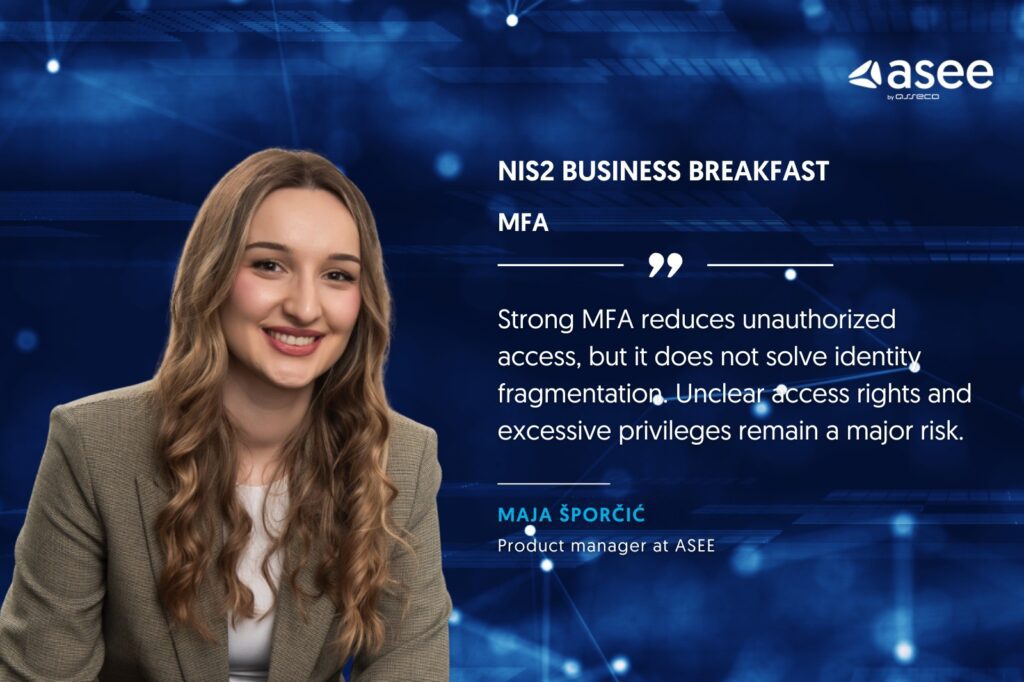
How to Choose an MFA Solution for NIS2 Compliance: A Complete Guide 

As cyber threats grow more sophisticated and critical infrastructure expands, the NIS2 Directive makes it clear that cybersecurity must be a top priority. At the core of a strong security strategy is Multi-Factor Authentication (MFA), a reliable shield for sensitive systems and data. By insisting on more than just a password to confirm user identities, MFA helps prevent unwanted access - whether it’s a phishing attempt, stolen credentials, or insider misusing privileges.

In this guide, we’ll cover: 

What is MFA?

Multi-Factor Authentication (MFA) is an additional layer of security that verifies that a user is who they say they are. It requires users to verify their identity using multiple factors, more precisely – at least two authentication factors. The authentication process can be completed through a combination of: 

This ensures that even if one factor is compromised, there are still other layers of security in place to protect the user's account.  

How to start? 

The process of choosing the right MFA solution can be overwhelming. Many providers make similar-sounding claims about their products, even though their offerings often vary greatly. Some combine MFA with unrelated features in bundled packages that fail to prioritize security, leaving organizations with incomplete solutions that still expose them to risks. 

Start your NIS2
compliance journey now

A prerequisite for understanding the criteria necessary for selecting an effective MFA solution is conducting a thorough risk analysis. Start by identifying the areas where your organization is most vulnerable to security risks. Understanding these exposure points will help you evaluate how an MFA solution can effectively mitigate those threats and strengthen your overall security.  

In this guide, we’ll explore key criteria to help you evaluate multi-factor authentication solutions. 

Key criteria for MFA solution

Security Impact 

When selecting a multi-factor authentication (MFA) solution from a security perspective, it’s essential to prioritize robustness and flexibility.  

Start by choosing an MFA solution whose methods go beyond simple SMS codes, as these can be vulnerable to interception and phishing attacks. Opt for solutions that support modern, secure authentication protocols such as FIDO2, which uses public-key cryptography for a more secure login process.  

Additionally, look for adaptive authentication features that evaluate risk factors like device type, location, and behavior patterns, adjusting security requirements based on the context of each login attempt.  

Ensure that the MFA solution offers support for biometrics, hardware tokens, or mobile push notifications, as these methods provide higher levels of security compared to traditional password-based systems.  

Finally, check if the solution can integrate with your existing security infrastructure, such as identity providers or Single Sign-On (SSO) systems, to ensure a seamless yet secure user experience across your organization.  

Investing in a highly secure MFA solution is an essential step in safeguarding sensitive data and preventing unauthorized access to your systems. 

Ease of Use and Adoption 

An MFA solution is only effective if all users—employees, contractors, and partners—can adopt it with ease and are willing and able to use it consistently. Recognizing who needs to authenticate and their specific work environments is critical to creating a seamless experience.  

For instance, contractors or partners may require temporary access with minimal setup, while full-time employees may need a solution optimized for daily use. Additionally, the way people work—remotely, on-site, or in a hybrid model—must inform the MFA design. Remote workers benefit from options like mobile push notifications or biometric authentication, while on-site staff working in highly secure air-gapped organizations rely on hardware tokens.  

By offering a flexible range of authentication methods that align with diverse user needs and environments, businesses can drive higher adoption rates and ensure secure, uninterrupted workflows. A frictionless user experience not only improves compliance but also minimizes disruptions to productivity, making MFA a seamless part of daily workflows. 

Give me recommended solutions

Integrations and Scalability  

Modern organizations operate in increasingly complex IT environments, blending legacy systems, cloud platforms, and hybrid architectures. For an MFA solution to succeed, seamless integration with this ecosystem is critical. Whether it's connecting to identity providers like Active Directory, supporting single sign-on (SSO) protocols, or integrating with widely used applications such as Microsoft 365, Salesforce, or Cisco VPNs, an MFA solution must align with the technologies a business depends on. 

Scalability is also essential to ensure the solution evolves alongside your organization. This includes accommodating new users, applications, and systems as your business grows, as well as supporting diverse user roles - employees, contractors, and external partners - each of whom may require distinct authentication policies. Scalability also means adapting to evolving security challenges, such as enabling FIDO2-based passwordless authentication or biometric solutions as these technologies mature and gain adoption. 

Another important consideration is future-proofing your security investments by choosing an MFA provider committed to continuous updates, innovation, and compliance with emerging standards. By selecting an MFA solution designed to integrate seamlessly and scale efficiently, organizations can maintain a robust security posture while meeting operational and business demands without frequent reconfigurations or costly upgrades. 

Conclusion

Choosing the right MFA solution for NIS2 compliance is essential for securing critical infrastructure. Look for a solution that offers strong authentication methods (e.g., biometrics or passwordless authentication), seamless integration with existing systems, and robust audit capabilities to meet NIS2 standards. It should be scalable to adapt to your organization's growth and secure enough to protect sensitive data.  

ASEE solutions cover not only multi-factor authentication (MFA) but also access management, risk assessment, protection of software supply chains, and the use of cryptography. Contact us today to find the right solution for your organization. 

Contact us

Securing Android Apps from Remote Access Attacks: The Role of RASP SDK in Android Security

Android, with its rich app ecosystem, is particularly vulnerable to these types of attacks. For developers and security experts, understanding these risks and implementing effective defenses is essential.

This article will focus on the tactics cybercriminals use to compromise Android devices and explore how Runtime Application Self-Protection (RASP) SDK can help app developers protect their applications and users from remote access threats.

What Makes Android Particularly Vulnerable to Remote Access Attacks?

The flexibility of Android’s open-source operating system, while a key strength, also provides opportunities for exploitation. The Android environment allows for extensive customization, third-party app installations, and permission requests, which attackers often exploit. Additionally, the variety of Android devices and OS versions creates a fragmented ecosystem, making it difficult to enforce uniform security standards across the platform.

Remote access attacks on Android often exploit this flexibility through tactics like:

How RASP SDK Helps Protect Android Apps from Remote Access Threats

Runtime Application Self-Protection (RASP) SDK is a powerful tool that offers app developers real-time security by monitoring and responding to threats as they occur. While traditional app security methods focus on detecting malware after installation, RASP SDK focuses on detecting suspicious activities while the app is running, making it an ideal solution for protecting Android applications from remote access attacks. Here’s how RASP SDK addresses Android-specific security challenges:

1. Screen Overlay Detection

Screen overlay attacks are particularly common on Android, as malicious apps can use this feature to create deceptive interfaces over legitimate apps. RASP SDK includes screen overlay detection, which can alert the app in case of an overlay attempt. Our advice is to integrate this functionality across all screens within the app to ensure comprehensive protection against phishing overlays and permission hijacking attempts.

2. Accessibility Permission Monitoring

Many Android-based remote access attacks exploit the accessibility permissions granted to malicious apps. Accessibility services help users with disabilities but can be misused by attackers to gain elevated control over the device. RASP SDK monitors accessibility permissions in real-time, detecting suspicious attempts by malware to access app data, especially in sensitive applications like banking or healthcare. This detection is particularly effective in stopping RATs and overlay attacks from accessing confidential data.

3. Screen Recording Detection (Android 14+)

With Android 14+, RASP SDK can detect screen recording attempts, preventing attackers from capturing real-time app interactions. This feature is essential for high-security apps, as it stops attackers from observing sensitive information such as user credentials, personal messages, or financial data.

4. In-App Security Notifications

In addition to its detection capabilities, RASP SDK allows developers to program in-app responses or notifications in case of suspicious app behavior. For example, if a screen overlay or accessibility service access is identified, the app can display a warning to the user or terminate the session to protect sensitive data. These alerts provide an added layer of protection, especially for apps that handle confidential information.

Enhancing Android App Security: Best Practices Beyond RASP SDK

While RASP SDK provides robust protection, it’s most effective when combined with other security best practices tailored to Android environments:

  1. Implement Strict Permission Controls: Limit app permissions to only those necessary for functionality, and encourage users to be cautious about granting permissions to other apps.
  2. Code Obfuscation: Minimize the risk of reverse engineering with code obfuscation, making it harder for attackers to study the app’s structure and inject malicious code.
  3. Regular Security Audits: Conduct regular security assessments to identify vulnerabilities that attackers might exploit.
  4. Frequent Updates and Patches: Release timely updates to patch security vulnerabilities and remain compatible with Android security advancements, especially with new releases like Android 14.
  5. User Education: Educate users about security best practices, such as avoiding app downloads from unofficial sources, being cautious with permissions, and regularly checking for unusual app activity.

Limitations of RASP SDK in Android Remote Access Protection

While RASP SDK offers critical security for Android applications, it has some limitations developers should be aware of:

For a holistic security approach, developers should consider integrating RASP SDK with other tools, such as Mobile Threat Defense (MTD) solutions and behavioral monitoring systems.

Wrap up

Android’s open-source design and extensive app ecosystem make it a prime target for remote access attacks. With the right security measures, however, developers can protect their apps and users from these sophisticated threats. RASP SDK’s real-time monitoring, screen overlay detection, accessibility permission checks, and screen recording detection (from Android 14+) offer essential layers of defense against remote access attacks.

Developers building high-security applications—particularly in sectors like finance, healthcare, and enterprise—should consider implementing RASP SDK to provide users with the protection they need. With comprehensive security practices and proactive threat detection, Android developers can create trusted, resilient applications that stand up to the ever-evolving tactics of cybercriminals.

Download App Protector SDK

App Protector SDK is a mobile security component built into the application's code enabling runtime protection as well as a variety of mobile application hardening techniques, including jailbreak detection.

Try App Protector Free

To find out more about our App Protector solution, contact us or visit our blog section.  

Mobile App Penetration Testing: Key Components For Your Pentest Strategy

By employing advanced security mechanisms such as anti-tampering, RASP (Runtime Application Self-Protection), integrity checking and more, you can drastically reduce vulnerabilities and create an app that resists various forms of attack.

Here’s a breakdown of the most effective security solutions to ensure you pass your mobile app penetration testing stress-free.

1. Anti-Tampering, Anti-Debugging, and Anti-Reverse Engineering Mechanisms

One of the primary focuses of any penetration test is to discover vulnerabilities that could allow attackers to tamper with or reverse-engineer your app. Anti-tampering mechanisms protect your app from unauthorized modifications, such as patching the binary or altering system-level files. When attackers attempt to modify an app’s code, anti-tampering measures can detect these efforts and block the application from functioning.

Adding anti-debugging tools prevents attackers from using debuggers to analyze how your app works, stopping them from uncovering vulnerabilities or bypassing certain security measures. Anti-reversing mechanisms make it more difficult for attackers to decompile or disassemble the application, especially when coupled with code obfuscation.

These measures are crucial for stopping an attacker before they even gain an understanding of how your app functions. Many successful hacks rely on the attacker’s ability to reverse-engineer code and modify it. Anti-tampering and anti-debugging mechanisms thwart this, allowing you to pass mobile app pen testing by demonstrating robust defenses against these common attack vectors.

2. Preventing Binary Patching and Unauthorized System-Level Changes

Pen testers often try to manipulate the core binaries or system-level files of an application to exploit weaknesses. Without protection, your app’s binaries can be patched, allowing attackers to alter the app’s behavior or bypass security features. This is where binary integrity checking becomes invaluable. Integrity checking continuously monitors the app’s code, ensuring that the binaries remain unaltered during runtime.

RASP (Runtime Application Self-Protection) is a highly effective solution in this context as well. RASP actively monitors an app’s execution and detects suspicious changes in real-time, such as unauthorized attempts to patch binaries or modify system files. By incorporating RASP, you add an active, self-defending layer that prevents these kinds of attacks from succeeding. This proactive approach strengthens your app’s defenses during a pen test and ensures that unauthorized changes are detected immediately.

3. Jailbreak and Root Prevention

Rooting (on Android) or jailbreaking (on iOS) removes important security restrictions, giving attackers full control over the device and the applications running on it. A successful mobile app penetration test will attempt to exploit these compromised environments to bypass security features and access sensitive data.

To pass your pentest, your app should include jailbreak/root detection and prevention mechanisms. In case a device has been compromised the mechanism either blocks the app from running or restricts functionality. This ensures that attackers cannot exploit a rooted or jailbroken device to access your app’s core functions. Jailbreak and root prevention can be implemented using RASP, as it monitors device integrity and takes immediate action if a device appears compromised.

4. Data Encryption: Protecting Data at Rest

Data stored on a device, whether in the app’s sandbox, preferences, or offline storage, can be an attractive target for attackers. To pass a penetration test, it’s essential that all sensitive data is encrypted while at rest. This includes encrypting data in XML strings, resources, DEX files, and offline databases.

By using strong encryption algorithms to secure data at rest, you ensure that even if an attacker gains physical access to the device or its storage, they will not be able to read or modify sensitive information. This is a critical aspect of mobile app security. Having strong encryption mechanisms in place greatly reduces the likelihood of a breach.

5. Code Obfuscation: Protecting Native and Non-Native Code

During a pentest, attackers will often try to reverse-engineer the apps' code to understand how the app works and uncover vulnerabilities. Code obfuscation is a powerful technique that makes the code harder to read and analyze. By obfuscating both native and non-native code, libraries, and key algorithms, you make it significantly more difficult for attackers to reverse-engineer or modify your app.

Obfuscation techniques include relocating control flows, stripping debug information, and adding junk code to confuse or mislead attackers. This adds an extra layer of security during a penetration test, making it much harder for attackers to gain insight into your app’s structure and logic. When combined with anti-debugging and anti-reversing, code obfuscation becomes a vital part of your app’s overall security posture.

A Proactive Approach to Mobile App Security

Throughout this article, we’ve touched on various solutions that form the foundation of a strong mobile app security strategy. RASP is particularly effective as it provides real-time protection, detecting attacks as they happen and stopping them before they can cause damage. RASP works in tandem with integrity checking and anti-tamper detection, ensuring that your app remains protected against binary patching, debugging, and other forms of tampering.

By combining RASP with solutions like code obfuscation, data encryption, and secure communications, you create a multi-layered security approach that will help you pass your pen test painlessly. These measures make it difficult for attackers to reverse-engineer or modify your app, while also protecting sensitive data from unauthorized access.

Passing a mobile app penetration test doesn’t have to be a painful process. By integrating the above-mentioned solutions you can boost your app’s defenses. By proactively addressing potential vulnerabilities and implementing these advanced security measures, you can ensure your app passes the pen test, while also safeguarding your users and maintaining compliance with industry regulations.

App Protector by ASEE

App Protector by ASEE is a security solution prioritizing mobile app security. It seamlessly integrates with the app's runtime environment, offering early-stage intrusion detection, real-time attack prevention, and control over the app's execution. App Protector shields mobile applications from various threats, such as emulator attacks, jailbreak/root detection, debugging, screen recording, and hooking attempts.

Download App Protector SDK

App Protector SDK is a mobile security component built into the application's code enabling runtime protection as well as a variety of mobile application hardening techniques, including jailbreak detection.

Try App Protector Free

To find out more about our App Protector solution, contact us or visit our blog section.  

Enhancing 3DS User Experience: Join Our Webinar on App-to-App Redirection & Deep-Linking for Seamless Transactions

That’s why we are excited to announce a webinar where we will untangle App-to-App Redirection and Deep-Linking - two critical components designed to streamline the 3DS authentication process across mobile applications and browsers.

This is an opportunity for your teams to learn about cutting-edge authentication solutions that are transforming the in-app payment experience. As Mastercard and Visa continue to raise the bar for security and ease of use in mobile transactions, this webinar will provide key insights into how your organization can leverage these functionalities, improve user experience, and stay compliant with industry requirements.

Why Deep-Linking and App-to-App Redirection Matter

With growing demand for mobile in-app payments, Mastercard rolled out updates that focus on optimizing the 3DS user experience. This means that issuers and acquirers need to ensure that their mobile apps support deep-linking—a feature that allows automatic transitions between a merchant app and a bank’s authentication app. But deep-linking isn’t just limited to apps; mobile browsers, which are often the preferred medium for users, are also a critical piece of the puzzle.

With Mastercard’s recent mandate for issuers and acquirers to implement and test this functionality by December 31, 2024, it's essential for your business to be prepared. ASEE’s latest ACS release will enable merchant app redirection to bank authentication apps via Bridging Message Extension (BME) and deep-linking methods. To help you navigate these changes, we are hosting a free webinar where we will explain these developments in detail.

WATCH WEBINAR

Webinar Highlights

Our webinar will provide an in-depth look at the technology and user experience enhancements that deep-linking and app-to-app redirection bring to the table. Here’s a sneak peek at what we’ll cover:

1. App-to-App Redirection

2. How Deep-Linking Can Be Supported

We will explore the technical aspects of how deep-linking can be integrated into your authentication systems:

WATCH WEBINAR

3. Deep-Linking for Mobile Browser Transactions

With mobile browsers being the most frequent platform for users to make purchases, it’s critical to unify the user experience across devices. During the webinar, we’ll explain how deep-linking in mobile browsers works and how to incorporate it into your existing payment workflows. By doing so, you'll ensure that users enjoy a smooth and consistent experience, whether they are on a mobile app or browser.

Why Attend This Webinar?

This webinar provides you the tools and knowledge you need to ensure compliance with Mastercard's deep-linking requirements. By attending, you’ll:

Webinar Details:

WATCH WEBINAR

Don’t miss this opportunity to stay ahead of the curve and ensure your business is ready to meet industry demands. Register now and join us for this comprehensive session on App-to-App Redirection and Deep-Linking for 3DS Authentication.

We look forward to seeing you there!

3DS Access Control Server Datasheet

Secure, scalable, and designed for the future of digital payments. Let’s elevate your transaction security today.

Download datasheet

Feel free to contact us – zero obligation. Our ASEE team will be happy to hear you out.
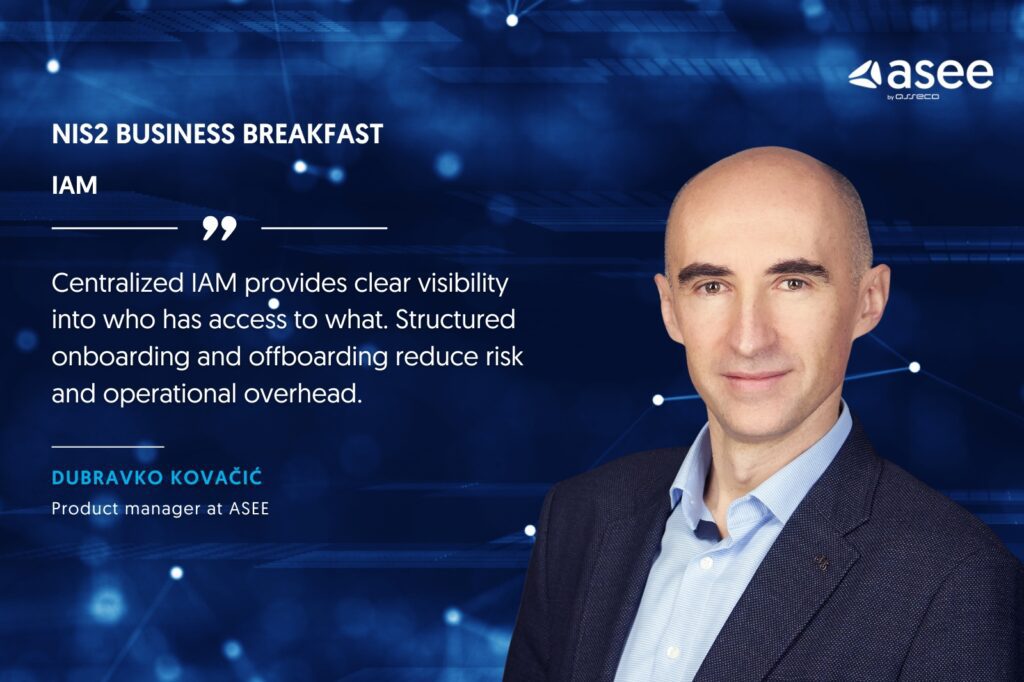
Confirming Transactions Securely Using Token SDK – How To Tutorial for iOS

Push messages are an important part of several features in Token SDK. Those would be: 

Step 1. Enable push notifications

When using push functionality for your app the first step is asking the user for permission to receive push notifications.

public func registerForFirebaseNotifications(application: UIApplication) {

        if #available(iOS 10.0, *) {

            // For iOS 10 display notification (sent via APNS)

            UNUserNotificationCenter.current().delegate = self

            let authOptions: UNAuthorizationOptions = [.alert, .badge, .sound]

            UNUserNotificationCenter.current().requestAuthorization(

                options: authOptions,

                completionHandler: {_, _ in })

        } else {

            let settings: UIUserNotificationSettings =

                UIUserNotificationSettings(types: [.alert, .badge, .sound], categories: nil)

            application.registerUserNotificationSettings(settings)

        }

    }

Note!

If you don’t ask for permission or the user doesn’t give permission for notifications, the user will not be able to receive push notifications.

We recommend calling the permission after some kind of boarding process to show the user why the app uses push notifications.

Firebase Instance Token

The default push service deployed with SxS is Firebase. Firebase should be added as a dependency to the project. For detailed instructions, please visit official site: https://firebase.google.com/docs/ios/setup.

Register token for push

To obtain the latest Firebase token use the Messaging module from Firebase and use the received firebaseRegistrationId to register it with your ASEE token.

Messaging.messaging().token { (result, error) in

            if let error = error {

                debugPrint("Error fetching remote instance ID: \(error)")

            } else if let firebaseRegistrationId = result {

                do {

                    try assecoToken.registerTokenForPushWithId(serverInfo: serverInfo!,

                                                           registrationId: firebaseRegistrationId,

                                                           success: {

                                                              //continue

                    }, failure: { (error) in

                        debugPrint(error)

                    })

                } catch let error {

                    debugPrint(error)

                }

            }

        }

However, the firebaseRegistrationId token is refreshed from time to time. To be notified whenever the token is updated, supply a delegate conforming to the messaging delegate protocol. The following example registers the delegate and adds the proper delegate method: 

Messaging.messaging().delegate = self

…

extension AppDelegate: MessagingDelegate {

    public func messaging(_ messaging: Messaging, didReceiveRegistrationToken fcmToken: String?) {

        do {

            guard let fcmToken = fcmToken else { return }

            try TokenFacade.registerTokenForPushWithAuthenticationTag(tokenName: tokenName, registrationId: fcmToken, serverInfo: serverInfo, keychainAccessGroup: keychainAccessGroup) {

            } failure: { error in

                debugPrint(error)

            }

        } catch {

            // NO-OP

        }

    }

}

This callback is fired at each app startup and whenever a new token is generated. 

Non-loaded token

It is also possible to register a token for push using the method called registerTokenForPushWithAuthenticationTag. With this method, non-loaded tokens can be registered for push messages if registerTokenForPushWithID is called at least once.

Note!

This method is a precautionary measure in case a new fcm token arrives and the token has not yet been loaded into memory using, for example, the loadToken method.

Step 2. Consume push message content

Receiving Message

When push message is received, it must be determined what type of message is received. When confirming/rejecting transaction the message type will be TokenNotificationType.NOTIFICATION_TYPE_MAC. 

It can be found out like this: 

public func checkTransaction(userInfo: [AnyHashable : Any]) {

        let messageType = userInfo["jwtType"] as? String

        guard let payload = userInfo["jsonWebToken"] as? String else { return }

        switch messageType {

        case TokenNotificationType.NOTIFICATION_TYPE_MAC:

        case TokenNotificationType.NOTIFICATION_TYPE_RECOVERY_START:

        case TokenNotificationType.NOTIFICATION_TYPE_RECOVERY_CHALLENGE:

        case TokenNotificationType.NOTIFICATION_TYPE_MTM_CONSENT:

        case TokenNotificationType.NOTIFICATION_TYPE_LOGIN_BY_TOKEN:

        default:

            break

        }

    }

MACNotificationPayload Object Description

MACNotificationPayload is the object that contains payload data when push notification is received. Payload data consists of three important parts: 

To obtain these values, use the method processMACNotification:

let macNotificationPayload = try TokenFacade.processMACNotification(encodedPayload: encodedPayload, publicKeyModulus: pushModulusKey, publicKeyExponent: serverInfo.publicKeyExponent)

MAC values and transaction ID are used in payment confirmation. While content is not needed for payment confirmation, it is important because it gives user some info about payment. It is usually displayed at Confirm payment screen.

This is example how content should look like in json form:

{"en":[{"Payment provider":"iPay"}, {"Accounts":["AT611904300234573201","AT611904300234573201"]},

{"Permissions":["Read Balances","Read Transactions"]}, {"Calls per day":"10"},{"Valid until":"1.10.2018"}]}

Step 3. Confirm/Reject Payment

A received transaction should be handled and confirmed or rejected. Otherwise, the transaction will be available in the notification inbox until an action is taken. 

This is how the flow for confirming payment should look like:

try tokenFacade.confirmPayment(

                    serverInfo: config.serverInfo!,

                    applicationName: CharArrayExt.valueOf(string: “MAC_APP”),

                    encodedPayload: encodedPayload,

                    publicKeyModulus: pushModulusKey,

                    publicKeyExponent: config.serverInfo!.publicKeyExponent!,

                    success: {

                        …

                        }

                    },

                    failure: { error in

                        …

                                          })

System integrators are responsible for providing applicationName used for confirming payment. Default application name is MAC_APP

One important thing to do when confirming a transaction is correctly using publicKeyModulus. Most often with push notifications, you have to use pushKeyModulus. When confirming transactions with a QR code, you confirm the transaction with qrPushModulus.

System integrators are also reponseble for providing pushKeyModulus. Please check with them if you should use pushKeyModulus or publicKeyModulus for confirming payment.

Reject Payment

After push is received and parsed the payload, transactionId should be passed to TokenFacade.rejectPayment(transactionId) method. 

try tokenFacade.rejectPayment(serverInfo: config.serverInfo!,

                                          transactionId: transactionId,

                                          success: {

                                                                                                  …

            }, failure: { (_) in

                …

            })

Confirm/reject consent

In essence, consent push messages are processed in the same way as transaction notifications are. The only difference between payment and consent push messages is jwtType, which is TokenNotificationType.NOTIFICATION_TYPE_CONSENT for consent ones. Payload is processed the same way, by invoking: TokenFacade.processMACNotification() method. 

The only difference is that consents are confirmed or rejected via the following methods:

Karolina Škunca

Karolina is an iOS Software Developer. She works on preventing security attacks on iOS phones and frequently tests ASEE’s applications. Her greatest passions are designing and developing new applications.

Secure Authentication with ASEE Token Library – How To Tutorial for iOS

This tutorial will guide you how to import ASEE Token Library and properly activate and load token instance.

Requirements

TokenSDK has following requirements for development:

PlatformsPrerequisites
iOSmToken SDK – v10.0+
AndroidmToken SDK – v5.0+ (Lollipop, API 21)

Importing the SDK

SDK is delivered in a .zip format. After unzipping the delivered file you will be faced with two separate folders. One folder named SWIFT and the other one named ObjectiveC.

Both folders inside of them have folder SDK in which you can find XCFrameworks. To import the said framework:

  1. Go to File – > Add Files to “YourProjectName”
    1.1. Choose the appropriate .xcframework for your target depending on the language
    1. Copy items if needed

2. Make sure to Embed & Sign your frameworks

3. Disable bitcode in build settings:

4. It is also needed to enable Always Embed Swift Standard Libraries

After importing the SDK we can move onto implementation.

Step 1. Activating token

On the first app instance, we should require the user to activate the token. This is done using the activateAndLoad method which is used to actiavte token on the device and immidielty loads it.

public class func activateAndLoad(

tokenName: String,

keychainAccessGroup: ASEETokenLib.CharArrayExt,

userID: ASEETokenLib.CharArrayExt,

clientID: ASEETokenLib.CharArrayExt,

activationCode: ASEETokenLib.CharArrayExt,

licenceKey: ASEETokenLib.CharArrayExt,

pin: ASEETokenLib.CharArrayExt,

serverInfo: ASEETokenLib.ServerInfo,

slotsToUnlock: [CharArrayExt],

success: @escaping(_ returnValue: TokenFacade?) -> Void,

failure: @escaping(_ err: Error) -> Void

) throws

Let’s further explain the parameters required for this method.

Token Name

tokenName is a constant name for your token and you will use it every time you want to get its instance with methods such as loadToken, getToken, etc., or to check if the token is secured with biometrics.

Keychain Access Group

Keychain Access Group is used to enable Keychain sharing to take advantage of the highest possible security for storing token data.

Please note that multiple keychain groups are not allowed in TokenSDK!

User ID

Activating the token with User ID is an additional security measure and it should be configured on SxS. If its not configured, the effect will be the same as if a regular method is used which does not send userId.

Activation Code and Client ID

Activation Code and Client ID form a 16-digit code that is used for activation. Usually, they are sent through different mediums, for example, 8 numbers of activation code are given on paper and the other 8 numbers are sent via SMS.

License Key

A license key is provided by ASEE to allow using this SDK.

PIN

Usually, the PIN is a 4 or 6-digit number that is later used for loading tokens and verifying transactions.

The SDK provides method isPINStrong which helps you determine if the entered pin satisfies certain constraints such as if the pin should not be ascending (1234).

We also recommend creating a custom keyboard for entering PIN. If a stock OS keyboard is used for data input, the user can be exposed to keylogger attacks.

Server Info

ServerInfo object contains data for connecting to the SxS server to enable token activation.

There are three exposed functions with different certificate pinning.

public static func create(dskppProxyURL: CharArrayExt, mtmProxyURL: CharArrayExt, niProxyURL: CharArrayExt? = nil, organizationID: Int, serviceID: Int, publicKeyModulus: CharArrayExt? = nil, publicKeyExponent: CharArrayExt? = nil, sxsVersion: SxSVersion) -> ServerInfo

public static func createWithPublicKeyPinning(dskppProxyURL: CharArrayExt, mtmProxyURL: CharArrayExt, niProxyURL: CharArrayExt? = nil, organizationID: Int, serviceID: Int, publicKeyModulus: CharArrayExt? = nil, publicKeyExponent: CharArrayExt? = nil, trustedCertificates: [CharArrayExt], sxsVersion: SxSVersion) throws -> ServerInfo 

public static func createWithCertificatePinning(dskppProxyURL: CharArrayExt, mtmProxyURL: CharArrayExt, niProxyURL: CharArrayExt? = nil, organizationID: Int, serviceID: Int, publicKeyModulus: CharArrayExt? = nil, publicKeyExponent: CharArrayExt? = nil, trustedCertificates: [CharArrayExt], sxsVersion: SxSVersion) throws -> ServerInfo 

In case of failure, error code is returend with which you can look up the ASEE Documentation to see what failed.

try TokenFacade.activateAndLoad(tokenName: tokenName, keychainAccessGroup: keychainAccessGroup, userID: userID, clientID: clientID, activationCode: activationCode, licenceKey: licenceKey, pin: pin, serverInfo: serverInfo, success: { (tokenInstance) in

                DispatchQueue.main.async {
            //present new screen
                        }


            }) { (error) in
                ASEEErrorHelper.checkError(from: self, error: error)

Activating Token

After adding all the necessary parameters and if the communication with SxS was successful, success completion handler will be called and our token will be activated and loaded into memory.

In case of failure, error code is returend with which you can look up the ASEE Documentation to see what failed.

try TokenFacade.activateAndLoad(tokenName: tokenName, keychainAccessGroup: keychainAccessGroup, userID: userID, clientID: clientID, activationCode: activationCode, licenceKey: licenceKey, pin: pin, serverInfo: serverInfo, success: { (tokenInstance) in

                DispatchQueue.main.async {
            //present new screen
                        }


            }) { (error) in
                ASEEErrorHelper.checkError(from: self, error: error)

Conclusion

If the activation is successful, a token instance will be returned and further token manipulation can be done such as changing the pin, securing the token with biometrics or approving transactions or calculations such as OTP, Challenge/Response.

Karolina Škunca

Karolina is an iOS Software Developer. She works on preventing security attacks on iOS phones and frequently tests ASEE’s applications. Her greatest passions are designing and developing new applications.

Strengthening iOS App Security: How To Tutorial For ASEE’s Obfuscation Solution

The solution uses the Low-Level Obfuscator app which provides:

By incorporating these features, the Low-Level Obfuscator fortifies your app, making it significantly harder for attackers to exploit. In the following sections, we'll explore how these functionalities work together to protect your iOS applications.

Requirements

PlatformsPrerequisites
iOSmacOS– v11.0+ (Big Sur or higher)
Integrity SDK – v12.0+

Getting started

The best way to start is to set up the LowLevelObfuscator app and the Deobfuscator SDK before moving onto obfuscating.

Setup Licensing

To use the Deobfuscator SDK and the MacOS application a valid license must be provided.

The licenses are issued per iOS app and are tied to the bundle identifier. Each license should be entered in the MacOS app’s licensing menu and in the initialization function provided by the SDK.

Step 1. Set up LowLevelObfuscator app

Licencing

To be able to run the app, and later the SDK, a valid licence should be provided.

The licensing menu can be accessed by choosing the Licensing option from the menu bar in the upper left corner of the screen. To insert a new license a plus button should be clicked. Once a valid license is inserted a bundle identifier will be listed in the menu and marked as valid.

Tip

If you can’t open the program because integrity can’t be verified, go to System Settings -> Privacy & Security -> Open Anyway to verify and open the program.

Define Code signing settings for bundle IDs

Code signing settings can be accessed by clicking the list icon that will appear when a provisioning profile has been dragged and dropped to the user interface.

Code signing can be a complex process, often involving multiple parameters and configurations.

This feature offers users a clear overview of code signing information, enabling them to verify the correctness of their parameters.

Step 2. Setup Deobfuscator SDK in your Xcode project

The Deobfuscator SDK should be imported into the iOS applications by the developer as follows:

  1. Copy the DeobfuscatorSDK.xcframework file from the release package to the iOS Xcode project,
  2. Set the Embed parameter of the added .xcframework to Embed & Sign value.

c. For an application to run successfully, it is necessary to set the Enable Bitcode option in the Build Settings to the value "No".

d. The license key required for initializing the Deobfuscator SDK can be generated by selecting the licensed bundle ID from the provided list and clicking the "Generate SDK License" button.

e. Import the SDK in your application and initiate the SDK using the generated licence.

How to use String obfuscation

This functionality aims to enhance the security of sensitive string constants that can often be found in plain text format within the mobile app executable file. Some examples of such constants are:

The security enhancement is provided in the form of white-box AES encryption performed

during the development process of the iOS mobile application.

Step 1. Add Path to Xcode project

Step 2. Select budle identifier

Select the appropriate bundle ID from the identifiers drop down menu so that the obfuscation would work properly.

If you do not see your bundle ID it means that the licensing process was not successful!

Tip

To have better control over what is obfuscated it is suggested to extract strings that will be obfuscated in a separate class.

Step 3. Click Continue

After this process finishes, all string literals that were found in the selected files will be obfuscated.

How to obfuscate code

The second functionality provided by the Low-Level Obfuscator is the Code Obfuscation. The purpose of this functionality is to prevent the attacker from understanding the internal programming logic of the mobile application. This is done by preforming the low-level modification of the executable files in the Mach-O format.

The symbols containing internal names (e.g., class names, function names, variable names, etc.) defined by the developer are extracted from the sections of the Mach-O file and replaced with the randomly generated strings.

 In this way the symbols that can be extracted from the final app package during the process of reverse engineering have no descriptive value that can help the attacker to understand the internal programming logic of the mobile application.

Step 1. Add .ipa file you want to obfuscate and corresponding .mobileprovision

Step 2. Select Code Signing Certificate

Select code signing certificate from the drop-down menu.

Step 3. Click “Obfuscate” button

Once the obfuscate button is clicked the obfuscation of all the Mach-O files within the application archive will be performed. After the obfuscation process finishes the modified .ipa file will be resigned using the attached provisioning profile and the chosen signing certificate.

Step 4. Test created .ipa file

The resulting .ipa file will be ready to install on the mobile devices or upload to the App Store.

The Low-Level Obfuscator is still in the early development stage; hence the current version does not provide obfuscation support for .nib or storyboard files.

It is possible that a new application will crash on start. Following section will in detail explain how to recover from this error.

Code  Obfuscation Error Recovery

When performing code obfuscation for the first time on a new application it is highly possible that some of the following errors will occur:

This section will provide guidance on how to effectively recover from the errors listed above.

Missing Symbol Errors

The symbols are identifiers for various elements within the code, such as framework, class, variable or function names. Since code obfuscation is based on symbol concealment, errors can occur when certain symbols are obfuscated inappropriately or not handled correctly. These errors can result in application crashes or inconsistent behaviour because the application cannot find the symbol it needs to execute a particular operation. Inappropriate symbol handing can occur for various reasons, and it may vary from one application to another. In such cases, the best practice is to exclude the problematic symbol from obfuscation by using the whitelist. The usage of whitelist is described in more detail in the Whitelisting section of this document.

To determine which symbols should be whitelisted the following options can be used:

  1. Device Console
  2. Symbol Halving


Step 1. Open Console log

The device console can be accessed from Xcode’s toolbar as follows:

Window -> Devices and Simulators -> Open Console.

Once the console is open and the test device is selected the message stream can be started. If a missing symbol is causing an app to crash, the crash log can be found by searching the key word “Crash” or “Symbol not found”.  An example is shown in Figure 20.

Crash log shown in Device Console containing obfuscated symbol

Step 2. Find missing symbol in Obfuscation Logs

            The symbols found in console logs will be obfuscated so the original symbol name must be found for a symbol to be correctly whitelisted.

The original name can be found by checking the log file generated in the Logs folder next to the processed .ipa file.

Content of Log folder

The log file contains the map of original symbol names and the obfuscated names.

Finding missing symbol in the log file

If you can’t immediately find the value, try erasing letters at the beginning/end of the string.

Step 3. Add to whitelist

Once the original symbol name has been found it should be added to the whitelist and the obfuscation process should be repeated using the original, not obfuscated .ipa file.

Adding missing symbol to the whitelist

Symbol added to the whitelist

After adding a new item to the whitelist, re-obfuscate the .ipa file using “Obfuscate” button. Make sure you are using the original .ipa file!

Conclusion

The results of the obfuscation process can be verified using MachOView, Hex Fiend, IDA Pro or similar third-party software. Your app has now been additionally hardened against malicious attacksReverse engineering poses a significant threat to mobile app security, allowing attackers to extract and exploit sensitive data from app executables. To address this risk, ASEE provides a solution for obfuscating your application.

The solution uses the Low-Level Obfuscator app which provides:

By incorporating these features, the Low-Level Obfuscator fortifies your app, making it significantly harder for attackers to exploit. In the following sections, we'll explore how these functionalities work together to protect your iOS applications.

Karolina Škunca

Karolina is an iOS Software Developer. She works on preventing security attacks on iOS phones and frequently tests ASEE’s applications. Her greatest passions are designing and developing new applications.

How to Integrate ASEE’s Integrity Check Solution into your iOS app   

Requirements

PlatformsPrerequisites
iOSmacOS– v11.0+ (Big Sur or higher)
Integrity SDK – v12.0+

Step 1: Set Up in Xode

Copy ASEEIntegritySDK.framework

First step is to copy the provided ASEEIntegritySDK.framework file from the release package to the iOS Xcode project

Embed and Sign framework

Then set the embed parameter to Embed & Sign

Disable Bitcode

After that, in Build Settings, set Enable Bitcode option to NO

Step 2: Integrate the SDK into your app

Next we move onto integrating the sdk by adding the import statement into our code where we wish to check for integrity of our app.

Add “import ASEEIntegritySDK”

This can be done on app start in App Delegate or through out the app where possible sensitive information might be processed.

Next up intilize the SDK by providing a valid licence.

    func application(_ application: UIApplication, didFinishLaunchingWithOptions launchOptions: [UIApplication.LaunchOptionsKey: Any]?) -> Bool {
        // Override point for customization after application launch.
        do {
            try IntegrityValidator.initialize(licenceKey: "xxx-xxx-xxx-xxx-xxx")
        }catch {
            print("Failed to initialize with error: \(error)")
        }
        return true

To validate the integrity of the app, call the function validateIntegrity. In this section, you can define what action the app should take in case of invalid integrity. For example, you can terminate the app or, to provide a better user experience, display a dialog that explains why the app can’t proceed.

    private func checkIntegrity() {    
        IntegrityValidator.validateIntegrity {
            self.setIntegrityOkImage()
        } failure: { error in
            self.setIntegrityCompromisedImage()
            print("Integrity check failed with error: \(error)")
        }

Step 3. Build and publish your app

The next part is validating your app with the Mac OS app provided in the bundle.

Step 1. Build .ipa file

Step 3. Use ASEEIntegrityCheck Mac App

Open the provided app and enter a valid license.

Drag and drop the .ipa file and the corresponding .mobileprovision file in the designated areas of the MacOS application

Once the main app signature value is successfully calculated the .ipa file generated by the ASEE Integrity check tool can be run on an iOS device or uploaded to the App Store

Tip

If your MacOS application can’t open, go to System Preferences -> Security and Privacy -> General and select Open Anyway button for ASEEIntegrityCheck application.

Conclusion

Securing our app's integrity is one of the key measures for fighting against app attacks and malicious exploitations. By adding integrity checks in our app, we are adding additional security checks before accessing sensitive information and providing our customers best and safest experience.

Karolina Škunca

Karolina is an iOS Software Developer. She works on preventing security attacks on iOS phones and frequently tests ASEE’s applications. Her greatest passions are designing and developing new applications.

FIDO2 Authentication within Online Payments: An Overview

This is where FIDO2 authentication steps in, offering a robust solution to enhance online payment security. This blog post provides an overview of FIDO2 authentication, its components, and its role in secure payment confirmation (SPC).

What is FIDO2 Authentication?

FIDO2 is a set of standards developed by the FIDO (Fast Identity Online) Alliance to enable strong authentication. It aims to reduce the reliance on passwords, which are often weak and vulnerable to attacks. FIDO2 consists of two primary components: WebAuthn (Web Authentication) and CTAP (Client to Authenticator Protocol). Together, these components provide a secure, user-friendly way to authenticate online transactions.

The Components of FIDO2

WebAuthn (Web Authentication)

WebAuthn is a web standard published by the World Wide Web Consortium (W3C). It defines a standard web API that allows web applications to use public-key cryptography for user authentication. WebAuthn enhances security by enabling biometric authentication (like fingerprint or facial recognition) and hardware tokens, eliminating the need for passwords.

WebAuthn is integrated into major web browsers and platforms, making it widely accessible. It works by generating a unique public-private key pair for each web service. The private key is stored securely on the user's device, while the public key is stored on the server. When a user tries to authenticate, the server sends a challenge that the user's device signs with the private key, verifying the user's identity without exposing the private key.

CTAP (Client to Authenticator Protocol)

CTAP complements WebAuthn by defining protocols for communication between authenticators (such as security keys or biometric devices) and clients (like browsers or operating systems). It ensures that the authenticator can securely interact with the client to perform authentication tasks. This interaction is crucial for enabling multi-factor authentication (MFA) and ensuring a seamless user experience.

Secure Payment Confirmation (SPC)

Secure Payment Confirmation (SPC) is a new web standard that builds on the FIDO2 framework to provide an additional layer of security for online payments. SPC leverages the existing infrastructure of WebAuthn and CTAP to authenticate payment transactions securely. It is designed to streamline the payment process while ensuring robust security.

Benefits of SPC in Online Payments

SPC offers several benefits that make it an attractive solution for online payment authentication:

Enhanced User Experience: SPC simplifies the payment process by allowing users to authenticate transactions using biometrics or security keys. This reduces the friction associated with traditional password-based authentication.

Increased Transaction Security: By using strong cryptographic methods, SPC ensures that payment transactions are secure and cannot be tampered with.

Reduced Fraud Risk: The use of biometric data and hardware tokens makes it difficult for attackers to impersonate users, significantly reducing the risk of fraud.

How FIDO2 Improves Online Payment Security

Strong Authentication Factors

FIDO2 employs multi-factor authentication (MFA), which combines something the user knows (like a PIN) with something the user has (like a security key) or something the user is (like a fingerprint). This combination makes it much harder for attackers to gain unauthorized access.

Elimination of Passwords

Traditional passwords are prone to various attacks, such as phishing, brute force, and credential stuffing. FIDO2 eliminates the need for passwords by using cryptographic methods that are resistant to these attacks. Passwordless authentication not only improves security but also enhances the user experience by removing the hassle of remembering and managing passwords.

Implementing FIDO2

Technical steps

Adopting FIDO2 authentication requires a few technical steps:

Technical Requirements and Setup

Ensure that your payment systems support FIDO2 standards. This may involve updating your servers to handle WebAuthn requests and integrating CTAP-compatible authenticators.

Integration with Existing Payment Systems

Modify your payment processing workflows to incorporate FIDO2 authentication. This might involve working with your payment gateway providers to ensure seamless integration.

User Onboarding and Education

For a successful transition to FIDO2, businesses must educate their users about the new authentication method:

Strategies to Introduce FIDO2 to Users: Use clear and simple communication to explain the benefits of FIDO2 authentication. Provide tutorials and support to help users set up their authenticators.

Ensuring a Smooth Transition from Traditional Methods: Offer a grace period during which users can switch between traditional and FIDO2 methods. Provide robust customer support to address any issues that arise during the transition.

FIDO2 and Regulatory Compliance

FIDO2 meets several regulatory standards for payment security, such as the Payment Services Directive 2 (PSD2) in Europe. As regulations evolve, FIDO2 is likely to remain compliant, providing a future-proof solution for online payment authentication.

Wrap Up

FIDO2 authentication represents a significant advancement in online payment security. By leveraging strong authentication factors, eliminating passwords, and integrating Secure Payment Confirmation (SPC), FIDO2 provides a robust and user-friendly solution for securing online transactions. Businesses that adopt FIDO2 can enhance their security posture, reduce fraud, and improve the overall user experience. As the digital landscape continues to evolve, FIDO2 will play a crucial role in shaping the future of online payment security.

Additional resources

https://fidoalliance.org

https://webauthn.guide

https://www.w3.org/TR/secure-payment-confirmation

Feel free to contact us – zero obligation. Our ASEE team will be happy to hear you out. 
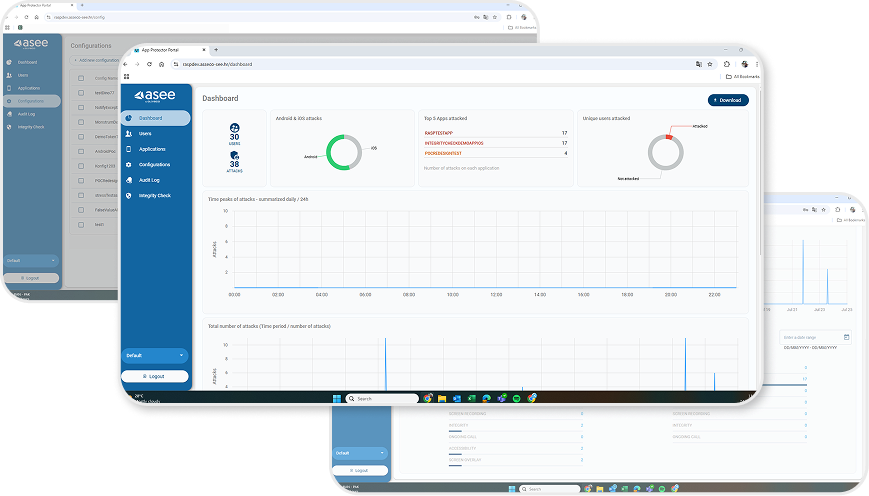
ASEE Product Updates: Q2 2024 Highlights

New In: Authentication

SxS Now Supports OPEN JDK 8

OpenJDK 8 is widely recognized for its compatibility across various platforms and environments. This new support for OpenJDK 8 means our solutions can run more efficiently and securely across different systems. In addition to this update, we've addressed all critical and high vulnerabilities in the libraries we use by upgrading, removing, or mitigating affected libraries. This update underscores our commitment to delivering cutting-edge technology and superior performance, ensuring that your systems remain robust and secure.

New In: Trides

Enhancing 3DS User Experience: MasterCard's Deep-Linking Mandate

MasterCard has introduced updates to enhance the 3DS user experience during mobile in-app purchases, which require issuers and acquirers to support deep-linking. This feature allows an automatic switch from the merchant app to the issuer authentication mobile application, streamlining the authentication process.

In response, ASEE is preparing ACS release v2.11.1, set for mid-October 2024. This update will facilitate merchant app redirection to the bank authentication app via Bridging Message Extension and deep-linking authentication in mobile browsers. To ensure smooth implementation and testing, ASEE will hold a client workshop in September and offer CIS testing professional services. This proactive approach will help our clients meet the December 31, 2024, compliance deadline set by MasterCard.

New In: Mobile Security

App Protector Portal – Improved Audit Log Feature

We've enhanced the audit log section on the App Protector portal. Now, all users and roles registered on the portal can access detailed statistics about activities performed. The new audit log features will show what has been added, changed, or deleted, along with a detailed description, time of change, and the user responsible. This enhancement improves transparency and accountability, making it easier to track and manage changes within the system.

RASP SDK – Enhanced Detection Capabilities

Our SDK now detects the latest versions of Magisk and Frida tools. Magisk can bypass root detection mechanisms and inject malicious code into mobile apps, while Frida allows attackers to intercept and modify specific functions within an application. By enhancing the detection capabilities of our App Protector RASP SDK, we ensure that no bypass is made by hackers, keeping your apps secure from these advanced threats.

Events

Frauds that cost billions: ASEE presented digital innovations in the protection of users and companies

In our first ASEE CyberSafe Showcase, we focused on the risks and importance of social engineering fraud prevention. Social engineering, in the context of IT security, refers to psychological manipulation aimed at revealing confidential information. With around 98% of cyber attacks relying on this technique, it's critical to stay informed and prepared. Our showcase highlighted innovative solutions and strategies to protect users and companies from such fraud.

Find out more

Industry Trends and Insights

Staying updated with industry trends is crucial for maintaining a strong security posture. Here are some key insights:

These insights provide valuable knowledge to help you navigate the evolving landscape of cybersecurity regulations and threats.

Wrap Up

The second quarter of 2024 has been productive for ASEE, with several key updates aimed at enhancing security measures and operational efficiency. These updates not only help organizations improve their security posture but also simplify operations by introducing more efficient and user-friendly features. As ASEE continues to innovate in the field of cybersecurity, businesses can expect more improvements that will help them protect their digital assets and enhance user experiences.

eBook: Beyond the Basics: A C-Suite Checklist for Banking Security Strategy

To guide you toward developing and maintaining a secure banking security strategy, ASEE offers a detailed security checklist to assist you in the process.

Download ebook

We look forward to your feedback and are happy to answer any questions regarding these updates and enhancements. Feel free to contact us.

Securing the Software Supply Chain: PdM's Perspective

This insight comes from a study by the Croatian Chamber of Economy conducted on more than 200 companies, presented at the first strategic workshop of the Cybersecurity Academy. As seen in Lider, Maja Šporčić shares her view on the current state of software supply chain attacks and discusses how these attacks are carried out.

Third-party Software Compromise

Attacks on software supply chains have surged by 742 percent between 2021 and 2023. Gartner predicts that by 2025, 45 percent of companies globally will experience such attacks. Instead of directly targeting the main company, attackers often compromise a third-party software product used by the company. This means targeting software manufacturers and suppliers, infiltrating malicious code or security weaknesses into their software. When this compromised software reaches end-users, attackers gain access to their systems, potentially affecting hundreds or thousands of organizations.

Maja Šporčić, product manager at ASEE, emphasizes the severity of these attacks.

"Attackers target software producers and suppliers, embedding malicious code or security weaknesses into their software. When this compromised software reaches the end-users, the attackers gain access to their systems. This strategy allows them to attack not just one organization but potentially hundreds or thousands using that software."

Constant Threat

Ransomware has been a persistent threat for years. This type of attack typically involves malicious software encrypting company data, making it inaccessible until a ransom is paid. Exploiting supply chain vulnerabilities is also becoming more prevalent. The SolarWinds incident is a prime example where attackers infiltrated a trusted software manufacturer to breach many government and corporate networks. Such attacks highlight the need for companies to ensure that their suppliers adhere to cybersecurity standards and best practices. Identity theft and phishing attacks, which are increasingly personalized and often crafted to mimic regional languages or use generative AI technology, also remain significant threats.

Artificial intelligence is being used more frequently to automate attacks, create malicious code and content, and facilitate the work of cybercriminals. This speeds up their attack campaigns and aids them in executing social engineering attacks. One tactic showcasing the power of AI in cyberattacks is cloning or voice modulation, where attackers imitate authoritative figures during phone calls to gain access to organizations or extract financial gain. While cybercriminals are getting smarter, so are legislative bodies, which have realized the importance of robust cybersecurity measures.

Legislative Measures

Regulators and state authorities are increasingly aware of the importance of cybersecurity. The European Union's NIS2 framework aims to strengthen cybersecurity and operational resilience. Unlike its predecessor, NIS2 covers more sectors, prescribes stricter security measures, and imposes harsher penalties for non-compliance, affecting both organizations and managers responsible for protecting the company. In Croatia, the provisions of NIS2 have been incorporated into the new Cybersecurity Act, which came into force in February. This legislation is prompting many companies to reassess their level of cybersecurity.

"NIS2 encompasses more sectors and prescribes more demanding security measures and stricter penalties for non-compliance, which apply not only to the organization but also to managers responsible for company protection. This move, integrated into Croatia’s new Cybersecurity Act, forces many companies to start considering their cybersecurity levels seriously." – Maja Šporčić

The Human Factor

Human error remains one of the greatest vulnerabilities in cybersecurity. Continuous employee training is crucial. Research shows that 88 percent of cybersecurity breaches occur due to human error. Companies should develop training programs that cover basic security practices, recognizing phishing attacks, and password management. This education should be ongoing and regularly updated to address new threats.

Šporčić reiterates the importance of ongoing education, "Research shows that 88 percent of cybersecurity breaches happened due to human error. A training program should cover basic security practices, recognizing phishing attacks, and managing passwords. This education should be continuous and regularly updated to address new threats."

By understanding and addressing these challenges, companies can better protect themselves and their clients in an increasingly digital world.

How can ASEE help?

Third-party attackers frequently exploit weak authentication measures and inadequate access control to compromise authentication infrastructures. This approach allows them to infiltrate organizations and insert malicious code into software. Highlighting this tactic emphasizes the robustness of our security solutions and their effectiveness in preventing such breaches. ASEE provides innovative solutions tailored to address specific cybersecurity challenges, effectively mitigating risks and enhancing overall security. Here’s how ASEE can assist your organization in overcoming these challenges:

ENHANCED MOBILE APPLICATION SECURITY:

Organizations often struggle with compromised mobile applications and failing penetration tests. ASEE’s App Protector solution tackles this issue by reducing vulnerabilities and actively detecting and responding to threats in real-time. Through application hardening techniques such as code obfuscation, anti-tampering, and integrity checks, it becomes significantly more difficult for attackers to exploit vulnerabilities. Additionally, Runtime Application Self-Protection (RASP) technology monitors the application’s behavior and context, effectively blocking malicious activities like jailbreaking, rooting, debugging, hooking, emulator detection, and screen recording. This comprehensive approach minimizes the attack surface and ensures the security of your mobile applications against emerging threats.

ROBUST ACCESS MANAGEMENT:

Inadequate authorization mechanisms can expose organizations to unauthorized data breaches. ASEE’s Identity and Access Management (IAM) system enforces strict access controls, managing and authenticating the credentials of employees and third-party entities alike. This system ensures that only authorized personnel can access critical systems and data while maintaining detailed audit trails for enhanced security and compliance.

MULTI-FACTOR AND ADAPTIVE AUTHENTICATION:

Weak authentication measures leave organizations susceptible to unauthorized access. ASEE addresses this by implementing Multi-Factor Authentication (MFA) and Adaptive Authentication. MFA adds an extra layer of security, making it difficult for unauthorized users to gain access even if credentials are compromised. Adaptive Authentication goes further by analyzing factors such as user behavior, location, device, and time of access to dynamically assess the risk level of each authentication attempt. This real-time analysis allows the system to respond immediately to potential threats, providing a smarter, more responsive security layer.

PASSWORDLESS AUTHENTICATION SYSTEMS:

Unsafe password management by employees can lead to significant security risks. ASEE’s Passwordless authentication solution moves away from traditional password-based security, utilizing biometric authentication methods instead. This not only simplifies and secures the login process but also reduces security fatigue among users. With biometric credentials that cannot be easily stolen or replicated, organizations can ensure a higher level of security with less user friction.

By integrating ASEE’s tailored solutions, your organization can significantly enhance its security posture, protect critical data, and maintain compliance with industry standards.

Feel free to contact us – zero obligation. Our ASEE team will be happy to hear you out. 
G.R.I.D. Conference: The State of Cybersecurity Awareness

The awareness of cybersecurity is growing, although more work is still needed. In raising awareness, the NIS2 directive (Network and Information Security Directive) and the DORA regulation (Digital Operational Resilience Act) help.

These regulations mandate stricter security protocols and resilience strategies, pushing companies to prioritize cybersecurity. However, despite the regulatory push, many organizations struggle with the practical aspects of implementation, often due to limited resources or a lack of understanding of the cyber threats complexity. As the digital landscape evolves, so too must the approach to cybersecurity, making continuous education and adaptation essential components of any strategy.

ASEE's Strategic Response to Emerging Cybersecurity Threats

Robert Preskar, Security and Compliance LoB Manager at ASEE, emphasized the critical need for heightened cybersecurity awareness in both large and small companies. He particularly highlighted the emerging threats of smishing (SMS phishing) and vishing (voice phishing), and introduced Spoofing Protector, a solution by ASEE designed to mitigate such risks.

Preskar noted that while larger companies are increasingly aware of cyber threats and actively work to prevent them, the SME sector remains less vigilant, often not recognizing the severity of the threat until it becomes an immediate concern. He pointed out that the weakest link in cybersecurity continues to be human behavior, emphasizing the need for better education and awareness among employees. According to Preskar, cybersecurity budgets tend to be minimal until an incident occurs, after which investments surge. However, he cautioned that effective cybersecurity is not just about investing in technology but also about having a robust strategy and risk assessment plan.

Cybersecurity Paradox: Essential Yet Undervalued

Bojan Ždrnja, Chief Technology Officer at Infigo, shared that his team has been constantly engaged with cybersecurity incidents, rarely having a free weekend since November last year. He observed that while regulations are raising awareness, the overall understanding of cybersecurity's importance is still insufficient.

Zlatan Morić, director of the cybersecurity department at Algebra University, agreed by noting that many managers still see cybersecurity as a cost rather than a necessity. He highlighted the challenges posed by the new Cybersecurity Law, which focuses on risk analysis—a task made difficult by the fact that many companies do not even know what assets they possess. This lack of knowledge makes it hard to perform effective risk analysis and leaves systems vulnerable to attacks.

Progress Achieved, But More Needed

Ždrnja acknowledged some positive developments, particularly in the financial industry, which is more regulated and thus more in tune with cybersecurity needs. However, he stressed that progress is slow and more sectors need to catch up. He underscored the importance of strategy, risk assessment, and investment in both technology and human resources to achieve an appropriate level of security.

The Talent Gap in Cybersecurity

Morić pointed out the significant talent gap in cybersecurity, despite efforts to educate more experts in the field. He explained that the demanding nature of cybersecurity work, compared to roles like programming or system engineering, deters many IT professionals from pursuing this path.

Conclusion

The roundtable participants agreed that companies must prioritize raising employee awareness about cybersecurity threats. As hackers increasingly target the easiest victims, enhancing staff vigilance should be a core component of any company's security policy. Preskar's insights, particularly on emerging smishing and wishing threats and ASEE's Spoofing Protector, underscore the need for proactive and comprehensive cybersecurity strategies.

eBook: Spoofing Protection for Combating Vishing and Smishing Fraud in the Banking Sector

If you're struggling to prevent vishing and smishing fraud targeting your customers, this eBook will help you make informed decisions regarding social engineering fraud. Download the ebook to learn how Spoofing Protector detects and prevents mentioned attacks.

Download eBook

Feel free to contact us – zero obligation. Our ASEE team will be happy to hear you out. 

Supply Chain Attacks: Prevention Best Practices and Examples

What are supply chain attacks?

Supply chain attacks target third-party vendors trusted to provide essential services or software within a supply chain. In software supply chain attacks, attackers inject malicious code into an application to infect its users, whereas hardware supply chain attacks tamper with physical components to achieve the same goal.

Historically, supply chain attacks have targeted the trusted relationships between companies, exploiting weaker security in one supplier to reach their larger trading partners. Today, however, the main reason for worry is software supply chain attacks. These attacks are especially threatening because modern software relies heavily on pre-built components, including third-party APIs, open-source code, and proprietary software from vendors. This means if a widely-used application incorporates a compromised dependency, every business that downloads software from that vendor is at risk, potentially affecting a large number of victims.

Also, because software is often reused, a single vulnerability can persist beyond the life of the original software, especially in software that lacks a large user community. Larger communities tend to identify and address vulnerabilities more quickly than smaller ones.

How do supply chain attacks work?

Cyber attackers infiltrate a supplier or vendor's network, often one with weaker security protocols. Once inside, they can tamper with software and systems to compromise the security of any connected organizations. Because businesses typically trust their suppliers, these attacks can go unnoticed for a long time, allowing malicious actors to cause extensive damage.

Types of supply chain attacks

Software attacks

These involve malicious modifications to software products before the delivery to customers. It includes embedding malware within legitimate software updates or installation packages.

Browser-based attacks

Attackers exploit vulnerabilities in web browsers to execute unauthorized commands or redirect users to malicious websites.

JavaScript attacks

These attacks use malicious JavaScript code inserted into reputable websites, often through compromised third-party services.

Magecart attacks

A specific type of JavaScript attack where cybercriminals inject skimming code into e-commerce sites to steal credit card data directly from online payment forms.

Open-source attacks

These occur when attackers inject malicious code into open-source libraries or components, which are then unknowingly used by developers in various applications.

Cryptojacking

In this scenario, attackers use someone else's computing resources to mine cryptocurrency without their knowledge.

Watering hole attacks

Cybercriminals compromise a popular website known to be visited by targeted users to infect their systems.

Known examples of supply chain attacks

SolarWinds

In 2020, a highly sophisticated supply chain attack came to light, targeting the Orion software by SolarWinds, a popular IT management solution. This attack involved the insertion of a malicious code, dubbed "SUNBURST," into the software's updates. Over 18,000 SolarWinds customers downloaded the compromised software update, which then allowed attackers to infiltrate the networks of multiple US federal agencies and numerous private companies. The breach was notable not only for its scale but also for the stealth and sophistication with which the attackers operated, remaining undetected for months.

Mimecast

In 2021, Mimecast, an email management tool, reported that one of its digital certificates was compromised. This certificate was used to authenticate Mimecast Sync and Recover, Continuity Monitor, and IEP products to Microsoft 365 Exchange Web Services. As a result, the attackers potentially accessed email and other data from about 10% of Mimecast's customers who used this connection. The breach was part of a larger series of attacks that also involved SolarWinds, suggesting a coordinated effort to target multiple parts of the technology supply chain.

Equifax

The Equifax breach, which occurred in 2017, was one of the largest recorded data breaches and involved the exposure of sensitive personal information, including social security numbers, of approximately 147 million people. The attackers exploited a vulnerability in Apache Struts, an open-source application framework used by Equifax for its web applications. Despite patches being available several months before the breach, Equifax failed to update its systems in time, leading to unauthorized access and massive data leakage.

Okta

Okta recently experienced a significant software supply chain attack, impacting files associated with 134 of its customers, which is less than 1% of its total customer base. The breach notably damaged Okta's reputation, a critical asset in the cybersecurity field, resulting in an 11% drop in its shares due to diminished trust among current and potential customers. Sensitive customer data was compromised during the attack, thereby raising serious privacy and security concerns. Additionally, the breach led to potential operational disruptions for the affected customers. While a prompt response helped mitigate severe impacts, necessary investigations and bolstered security protocols likely disrupted regular business activities. Also, the attackers had access to stolen session tokens, which could lead to unauthorized account takeovers, further endangering confidential data and operational integrity within the affected organizations.

10 best practices to mitigate software supply chain attacks

  1. Inspect unauthorized shadow IT systems: Regularly audit and monitor for any unauthorized IT practices or solutions within the organization.
  2. Keep a comprehensive and up-to-date software asset inventory: Maintain a detailed inventory of all software assets to manage and secure them effectively.
  3. Evaluate the security standards of suppliers: Before onboarding, assess the security posture of all potential suppliers to ensure they meet your security requirements.
  4. Continuously validate supplier integrity: Regularly review and reassess the security practices of suppliers to ensure ongoing compliance and security.
  5. Implement client-side security measures: Deploy security solutions that protect end users from potential threats via their client devices.
  6. Utilize endpoint detection and response technologies: Implement advanced technologies that can detect, investigate, and respond to security threats on endpoint devices.
  7. Establish stringent code integrity guidelines: Create policies that only allow vetted, authorized applications to run in your environment.
  8. Ensure the build and update infrastructure is secure: Safeguard all systems involved in the development, build, and deployment processes from unauthorized access and tampering.
  9. Incorporate secure software updates within the Software Development Life Cycle (SDLC): Integrate security practices into every phase of software development to detect vulnerabilities early.
  10. Formulate a robust incident response strategy: Develop a comprehensive incident response plan to quickly identify, respond to, and recover from security breaches.

By understanding and implementing these practices, organizations can significantly enhance their defenses against the rising tide of supply chain attacks, ensuring their data and systems are well-protected against this sophisticated and potentially devastating form of cyber threat.

How can ASEE help?

Third-party attackers often exploit weak authentication measures and inappropriate access control to target the authentication infrastructure. This strategy enables them to penetrate organizations and inject malicious code into the software. Highlighting this tactic further underscores the strength of our security solutions and effectiveness in protecting against such breaches. ASEE offers innovative solutions tailored to address specific cybersecurity challenges, effectively mitigating risks and enhancing overall security. Here’s how ASEE can assist your organization in overcoming these challenges:

Enhanced mobile application security:

Many organizations face the challenge of compromised mobile applications and failing penetration tests. ASEE’s App Protector solution directly addresses this by minimizing vulnerabilities and actively detecting and responding to threats in real-time. Through application hardening techniques like code obfuscation, anti-tampering, and integrity checks, it becomes significantly harder for attackers to exploit vulnerabilities. Additionally, Runtime Application Self-Protection (RASP) technology monitors the application’s behavior and context, effectively blocking malicious activities such as jailbreaking, rooting, debugging, hooking, emulator detection, and screen recording. This comprehensive approach reduces the attack surface and ensures that your mobile applications remain secure against emerging threats.

Robust access management:

Inadequate authorization mechanisms can expose organizations to unauthorized data breaches. ASEE’s Identity and Access Management (IAM) system enforces stringent access controls, managing and authenticating the credentials of employees and third-party entities alike. This system ensures that only authorized personnel have access to critical systems and data while maintaining detailed audit trails for enhanced security and compliance.

Multi-Factor and Adaptive authentication:

Weak authentication measures leave organizations vulnerable to unauthorized access. ASEE addresses this by implementing Multi-Factor Authentication (MFA) and Adaptive Authentication. MFA adds an extra layer of security, making it difficult for unauthorized users to gain access even if they have compromised credentials. Adaptive Authentication takes this further by analyzing factors such as user behavior, location, device, and time of access to dynamically assess the risk level of each authentication attempt. This real-time analysis allows the system to respond immediately to potential threats, providing a smarter, more responsive security layer.

Passwordless authentication systems:

Unsafe password management by employees can lead to significant security risks. ASEE’s Passwordless authentication solution shifts away from traditional password-based security, using biometric authentication methods instead. This not only makes the login process simpler and more secure but also reduces the chances of security fatigue among users. With biometric credentials that cannot be easily stolen or replicated, organizations can ensure a higher level of security with less user friction.

By integrating ASEE’s tailored solutions, your organization can significantly enhance its security posture, protect critical data, and maintain compliance with industry standards.

Feel free to contact us– zero obligation. Our ASEE team will be happy to hear you out. 
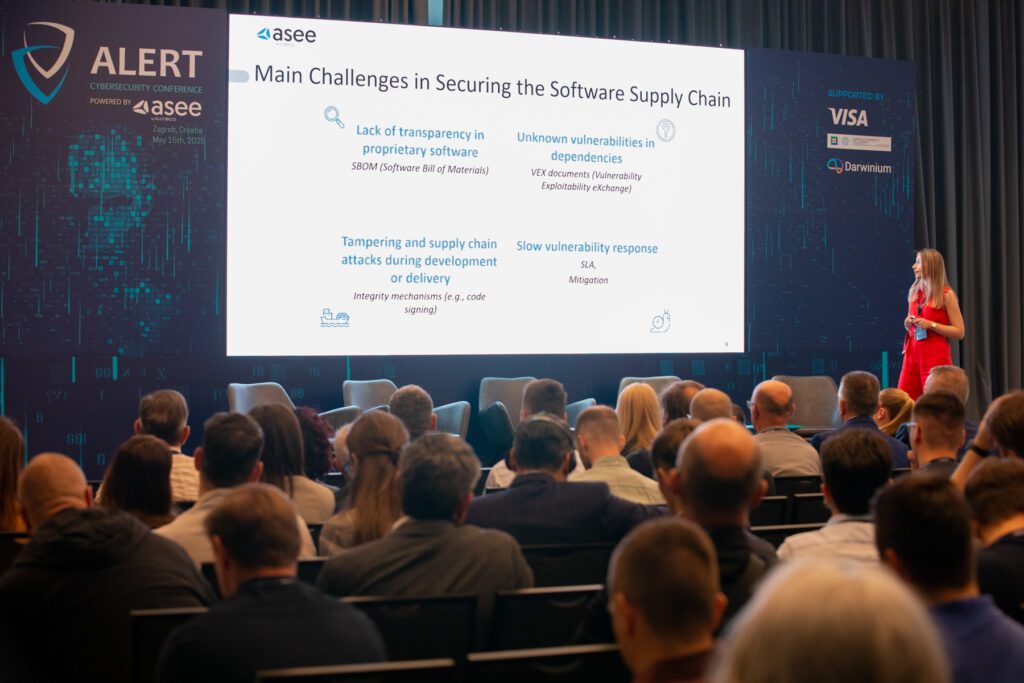
Luka Mićanović on ASEE Private Cloud: One Less Thing To Worry About

The concepts of IaaS/SaaS/PaaS took off back in the 90s. While companies, banks, and government institutions in the region are starting to move, larger companies in more advanced markets are already beginning to leave the cloud. On the other hand, data centers are popping up all over the place, and there is fear of power shortages.

What is happening? What should I buy? These are some of the questions Luka Mićanović, Delivery Unit Manager in the Security&Compliance department at ASEE, will answer for us.

Luka, can you first explain the types of cloud we are talking about?

Each type of cloud is different. When we say cloud today, we usually mean public cloud like AWS or Azure. Besides that, there are also private clouds and hosting options. Simplified, in the cloud, you can offer infrastructure where you get machines, and platforms where you get additional services on those servers, so you generally need fewer people to maintain the infrastructure. Also, there is SaaS where you get a complete application and just work with it. The latest thing is serverless (FaaS – function as a service) where developers can directly run code without even thinking about the server.

What would be the pros and cons of public cloud?

Public cloud is currently as popular as Taylor Swift. Everyone wants a piece of the pie but doesn’t know exactly why, and more importantly, how. The law of conservation of energy says you can’t create something out of nothing, and this applies here as well. To fully exploit the potential of the cloud, knowledge and effort are required.

The last few years have shown the two biggest advantages of the public cloud – low investment to start a new service (PoC or beta) and almost unlimited scalability. Expected savings, primarily on the people who previously maintained in-house systems, often did not occur or did not happen to the expected extent.

Why is that?

To get the same functionalities in the public cloud, you need knowledge from specialized experts who deal with that specifically. The cloud has an infinite number of functionalities – it has been shown that to arrange things in the desired setup, external company support is often needed, such as ASEE. Only then is good service and the desired benefit achieved.

Does that mean that we should “forget” about the public cloud?

The message here is not that the public cloud is bad, but that it is necessary to conduct a good analysis and prepare the desired setup. In some cases, it is much better to go in the direction of a hybrid or even a private cloud solution.

Who should consider these solutions?

Anyone who has an application and plans to install it somewhere! Currently, we provide services for the most sensitive production environments of banks across Europe and simultaneously have isolated environments for smaller development pilot projects, so there are no restrictions on ''who''.

What would be the first steps if we decide to implement it?

Just contact us for a meeting to confirm that the project makes sense and to agree on when to start. Technically, the most important are the resources and technology to be used.

How can ASEE help here?

ASEE can cover everything from the initial assessment, migration, all necessary services and licenses, project management, integration, and later maintenance activities.

Do you have an example from practice where a private solution was better than a public one?

Examples of successful migrations from the public cloud and achieved savings can be found online. Specifically, in our environment, we have 60+ banks and processors that have chosen our private cloud and have never looked back.

How has this impacted the client's business?

The biggest impact has been savings in terms of maintaining additional machines, scaling, security, training people, and reducing risks concerning an additional environment that would be in the bank. At least one less thing to worry about!

eBook: Beyond the Basics: A C-Suite Checklist for Banking Security Strategy

To guide you toward developing and maintaining a secure banking security strategy, ASEE offers a detailed security checklist to assist you in the process.

Download ebook

Feel free to contact us – zero obligation. Our ASEE team will be happy to hear you out. 
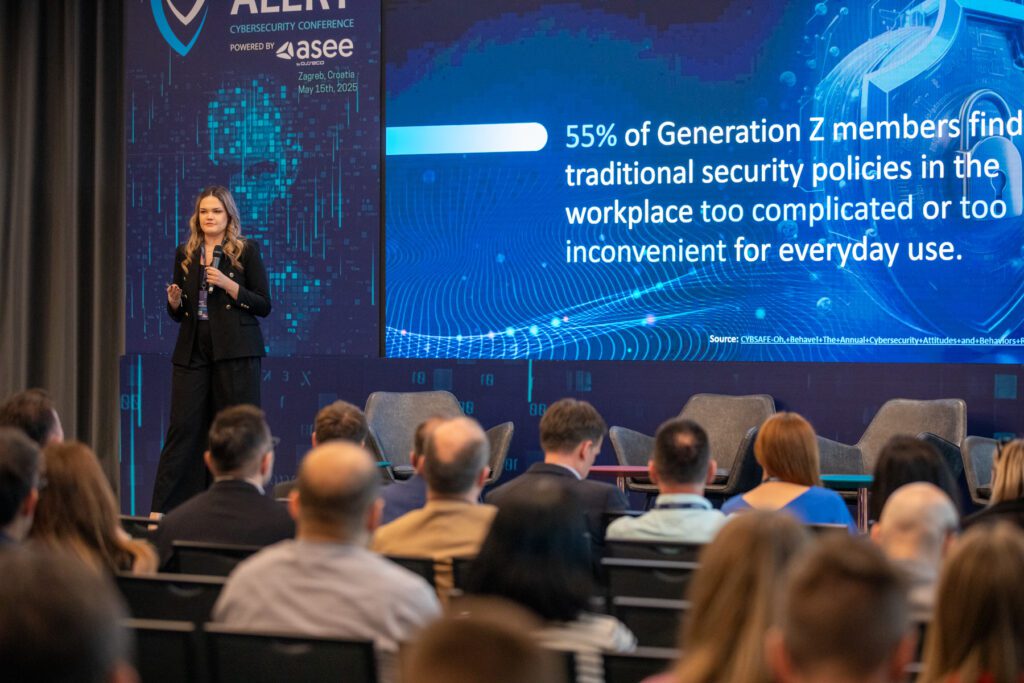
How to Protect Your Clients from Spoofing: PdM's Perspective

“Your package could not be delivered. Click on the link to update the address information.” –you click and fill out the requested information, moreover, you are also asked to pay a small fee. This “small” fee turns out to be significant, and your account details are stolen through a fake form on the website. Within minutes, you’ve become a victim of spoofing fraud.

This is a major issue in the EU countries - and a costly one for banks, delivery services, and payment providers. Millions of euros are spent annually to compensate and refund amounts lost in actions where a fraudster impersonates a trusted institution and requests personal information from users.

Some EU banks have already launched campaigns to raise awareness about fraudulent messages and calls directed at their customers. Željka Jurić, Product Manager in the Security&Compliance department, explained how ASEE, works on security solutions to tackle this new issue.

Can you provide more technical insight into the issue of spoofing fraud?

There are actually two methods. The more common and frequent, and thus easier for users to notice, involves someone sending you a message (known as smishing) or receiving a call (vishing) from a random number that looks like any other unknown number. You might think a friend or someone from work is calling, but once you answer, they start telling a story. For example, they tell you that you have a lot of money in cryptocurrencies and it’s time to cash it out. They call you to get your account details to transfer the money. It’s similar to SMS. The message comes from an unknown number or even an email address. In such cases, the fraudster is not doing anything technically demanding; they might have bought many different SIM cards to call from or send messages through an SMS platform.

With ''true'' spoofing, the number displayed on your screen is indeed the number of a bank or some other well-known institution. The caller ID is something you can never trust because it can be easily spoofed using software that fraudsters share freely online. Your screen usually shows the phone number and the name associated with the line calling you. But there are services that allow any fake caller ID to be displayed. Some Voice over IP (VoIP) providers allow the user to configure the displayed number as part of the service provider's web interface settings.

How do fraudsters obtain the contact numbers of victims?

Fraudsters get contact numbers in various ways. One way to obtain sensitive data is the dark web, where data that has been stolen and published. However, it’s also easy to obtain personal data from social networks or job ad sites. This way, fraudsters can gain the user's trust more easily because they already know a lot about them.

They usually send fake SMS messages to random numbers. So, out of 20.000 numbers, they might hit yours just when your package from the post office is delayed. You receive a message from the fraudster that your package could not be delivered, and you need to fill out information for the courier to contact you. Naturally, you'll act accordingly as you were indeed expecting a delivery.

How did you counter these malicious practices by fraudsters?

Since we have been working with banks and financial institutions for many years, we knew what was happening. For over 20 years, we have been developing security solutions and are well-versed in mobile applications and additional features that can be integrated to protect mobile applications and their users. The logical step was to continue helping our clients and create something innovative to solve this big current issue. We utilize existing security mechanisms which we adapted , and applied to this matter.

How does Spoofing Protector work, and what technologies does it rely on?

Our solution, Spoofing Protector, is actually an SDK that integrates into the mobile application of a particular institution. It is essentially a B2B solution that protects the end-user. Each user will receive a notification before they receive a legitimate call from a particular institution. This is one of the first ways a user can know that the call is genuine. In the case of a fake call, there will be no notification. Our solution will immediately terminate the call before it even reaches the end-user.

For SMS messages, every message sent by a particular institution will contain a secure signature generated by our solution. This way, we can verify that the SMS is legitimate. If the SMS does not contain a secure signature, or the signature is not successfully verified (or is suspicious for other reasons such as the sending time or sender's name/number), the SMS will be flagged as a spoofing attempt.

What happens from the end-user's perspective when they receive a spoofed call or message?

To the user, it looks like they are receiving a legitimate call. It might even seem like the bank is calling them. In reality, the fraudster is calling the victim, saying they work at their bank or another institution, and informing them about a problem with their account or credit card. A fake alert can also arrive via SMS initially, asking the person to call a number to resolve the issue. Another tactic used in vishing scams are links offering opportunities to pay off debts below the original amount or high-return investments. These “offers” usually have a limited time, so the person needs to act immediately.

If it is a true spoofed SMS, it will contain the bank's or delivery service's name or number. In the SMS, they usually send a fake link directing you to check your details or redirect the package. You can easily spot that the link is fake. The URL contains a mix of letters and numbers or even some symbols, or it is just a single page with no content, and the links lead nowhere except to that page.

Because of all this, the implementation of Spoofing Protector by institutions and companies will not only help protect the company's reputation and reduce costs caused by this type of fraud.  It also protects its end-users and restores trust in the institution.

Who is liable for damage caused by spoofing scams, institutions or the end-user?

It depends on the type of spoofing. If it is real spoofing where the fraudster calls from the number of a particular institution, the institution is entirely responsible for protecting its number and its users. However, if it is a random number from which calls are received, the responsibility lies with the user, as they decide how they manage their data and with whom they share it. In practice, though, institutions often try to compensate and refund money to their users to maintain their loyalty.

What can users do themselves to protect themselves?

Be careful where you leave your personal information such as email, phone number, name, and address. Prevent anyone from getting your number and making you a victim of spoofing scams. Always use multi-factor authentication for login to protect the data you have stored anywhere on the internet.

Always check the source from which you receive a message or call. If anything seems illogical or strange, do not respond or click on links. Often, fake calls are made from automated voice tools, so it feels like you are talking to a robot.

No institution will ever ask for your account details to pay you or deposit money into your account.

If you notice a fake call or message, it is best to report it immediately to the institution being impersonated to prevent any future fraud attempts.

HOW CAN ASEE HELP? 

Are you experiencing issues with social engineering attempts targeting your clients? We'll gladly offer guidance and help you protect your business and your customers.

eBook: Spoofing Protection for Combating Vishing and Smishing Fraud in the Banking Sector

If you're struggling to prevent vishing and smishing fraud targeting your customers, this eBook will help you make informed decisions regarding social engineering fraud. Download the ebook to learn how Spoofing Protector detects and prevents mentioned attacks.

Download eBook

Feel free to contact us – zero obligation. Our ASEE team will be happy to hear you out. 

Frauds that cost billions: ASEE presented digital innovations in the protection of users and companies

The first ASEE CyberSafe Showcase, organized by ASEE in Zagreb, focused on the risks and importance of social engineering fraud prevention. In the context of IT security, social engineering refers to psychological manipulation with the aim of revealing confidential information. Around 98% of cyber attacks rely on this technique.

The damage caused by this type of fraud is counted in billions of euros worldwide. The case of Singapore's OCBC Bank, which lost $13.7 million because more than 790 of its customers fell victim to fake text messages, clearly shows the severity of the problem for banks and institutions. Such examples of fraud are also present in Croatia. Mirta Šimunić from ASEE pointed out in her introductory lecture recent articles in the domestic media and announcements by banks and post offices that call for caution. She also cited specific examples of messages in which fraudsters falsely presented themselves in the name of the well-known portal Njuškalo and Hrvatska pošta (Croatian Post). These examples and numerous others clearly show how important it is to educate users and raise awareness of the problem.

Željka Jurić, Product Manager in the Security & Compliance department of ASEE, spoke about protection from spoofing, where the attacker uses the real and registered number of a specific institution to deceive the user and obtain sensitive data through calls or SMS messages. Željka emphasized the importance of continuous investment in advanced technologies and security measures in order to reduce the risk of fraud. One such solution is the Spoofing Protector developed by ASEE for its clients. This solution integrates into the mobile application of a particular institution and protects the end user. The user will be notified before receiving a legitimate invitation from the institution. The notification will not be sent in case of a fake call, and the solution will immediately end the call.

The solution works similarly for SMS messages. If the SMS does not contain a security signature or the signature has not been successfully verified and is suspicious for any reason (time of sending, sender's name/number), the SMS message will be marked as a fraud attempt and will not be delivered to the user.

Dubravko Kovačić, Product Manager for the Security of Payment Solutions of ASEE, held a presentation on the topic of adaptive authentication. He emphasized the advantages of such authentication in payment processes and fraud prevention. Banks want to be sure of the user's identity in order to reduce risk, and users want a simple and fast user experience. A solution that performs multiple levels of identity verification without additional user engagement enables exactly that and reconciles two seemingly contradictory things.

"It became clear that the attackers stopped targeting the technology and found the weakest link - the user," said Dražen Koren from Hrvatska poštanska banka and Dario Matacun from ASEE, who discussed the implementation of this solution in one of Croatia's largest banks. They pointed out that the solution was developed and received its final outlines through close cooperation between the two companies, enabling the bank and its users additional protection.

"The prevention of social engineering fraud is becoming increasingly important as attackers become more sophisticated. We know the importance of continuous conversation on this topic. Our goal is to educate and empower companies to recognize and prevent these threats, and to offer technological solutions to increase security and trust in the digital environment," said Robert Preskar, Director of Security & Compliance at ASEE.

ASEE is one of the region's leading providers of digital solutions, specializing in security technologies and protection against cyber threats. Through innovative solutions and partnerships with leading banks and companies, ASEE continuously works to increase security and protect users in the digital world.

HOW CAN ASEE HELP? 

Are you experiencing issues with social engineering attempts targeting your clients? We'll gladly offer guidance and help you protect your business and your customers.

eBook: Spoofing Protection for Combating Vishing and Smishing Fraud in the Banking Sector

If you're struggling to prevent vishing and smishing fraud targeting your customers, this eBook will help you make informed decisions regarding social engineering fraud. Download the ebook to learn how Spoofing Protector detects and prevents mentioned attacks.

Download eBook

Feel free to contact us – zero obligation. Our ASEE team will be happy to hear you out. 

Digital Operational Resilience Act (DORA): Europe’s Framework for Cybersecurity


Its objective is to enhance the IT security of financial institutions including banks, insurance companies, and investment firms, ensuring that Europe's financial sector can maintain its resilience during significant operational disruptions. DORA standardizes the operational resilience regulations across the financial sector, affecting 20 different kinds of financial entities and ICT third-party service providers.

The Need for DORA

The Digital Operational Resilience Act (DORA) emerges in response to the increasing digitalization of financial services. While offering numerous benefits, it also exposes the sector to heightened cybersecurity risks. The surge in cyberattacks and technology failures has demonstrated the critical need for robust regulatory frameworks to ensure the operational resilience of the financial system. The regulation aims to consolidate and upgrade ICT security regulations across the European Union, ensuring a standardized approach to cybersecurity for financial entities.

DORA Timeline and Important Dates

DORA was proposed as part of the European Commission’s digital finance package in September 2020. Following negotiations and amendments, it was officially adopted by the European Parliament and the Council in 2022. DORA entered into force on January 16th, 2023. The regulation is taking full effect 24 months after its adoption. This means that entities subject to the regulation are expected to be compliant until January 17th, 2025.

DORA Requirements

The Digital Operational Resilience Act (DORA) outlines a comprehensive set of requirements designed to fortify the cybersecurity frameworks of financial entities within the EU. These requirements target several key areas. From risk management to third-party interactions, they ensure that all aspects of ICT security are properly addressed. Below, we list each of these requirements providing insights into what organizations must do to comply and ultimately strengthen their digital operational resilience.

Navigate DORA Confidently.
Connect with Our Specialists Today.

ICT Risk Management and Governance

Entities are required to implement comprehensive management frameworks to identify, assess, and mitigate ICT risks. This includes establishing clear governance structures with defined roles and responsibilities to effectively manage ICT risks.

Incident Response and Reporting

DORA mandates a robust incident response mechanism. Financial entities must be able to detect and manage ICT-related incidents promptly. Additionally, they need to report major incidents to the competent authorities, facilitating a swift and coordinated response to mitigate impacts.

Digital Operational Resilience Testing

Regular testing is crucial under DORA. Entities must conduct and participate in resilience testing exercises, including vulnerability assessments and penetration tests, to evaluate their defenses against potential cyber threats and identify areas for improvement.

Third-Party Risk Management

Recognizing the increasing reliance on third-party service providers, DORA emphasizes the need for stringent third-party risk management practices. Financial entities must ensure that their third-party vendors comply with DORA standards to avoid introducing new vulnerabilities into their operations.

Information Sharing

DORA encourages and sometimes mandates information sharing regarding ICT risks and incidents among financial entities. This practice aims to foster a collective approach to threat intelligence and defense strategies, enhancing the sector's overall resilience.

Who Does DORA Apply To?

DORA applies broadly across the financial sector, including banks, insurance companies, investment firms, crypto-asset service providers, and critical third-party service providers to these entities. It covers a wide spectrum of financial activities within the EU, ensuring that all relevant players contribute to the sector's digital resilience.

A comprehensive list of entities affected by the Dora regulation:

  • Credit institutions
  • Payment institutions
  • Account information service providers
  • Electronic money institutions
  • Investment firms
  • Crypto-asset service providers and issuers of asset-referenced tokens
  • Central securities depositories
  • Central counterparties
  • Trading venues
  • Trade repositories
  • Managers of alternative investment funds
  • Management companies
  • Data reporting service providers
  • Insurance and reinsurance undertakings
  • Insurance intermediaries, reinsurance intermediaries and ancillary insurance intermediaries
  • Institutions for occupational retirement provision
  • Credit rating agencies
  • Administrators of critical benchmarks
  • Crowdfunding service providers
  • Securitisation repositories

How Does DORA Affect Your Organization?

For organizations within its scope, DORA introduces stringent compliance obligations aimed at strengthening ICT protocols, incident management, and continuity practices. It highlights investments in technology and governance frameworks, potentially leading to initial overhead costs but ultimately contributing to a more resilient digital operational environment.

Navigate DORA Confidently.
Connect with Our Specialists Today.

How to Start Preparing for DORA?

  1. Gap Analysis: Conduct a thorough assessment of your current ICT security measures and practices against DORA requirements.
  2. Framework Development: Develop or update your ICT risk management and governance frameworks to align with DORA standards.
  3. Staff Training: Invest in training programs to enhance your team’s understanding of DORA requirements and effective cybersecurity practices.
  4. Vendor Assessment: Review and adjust your third-party service contracts and management processes to ensure DORA compliance.
  5. Testing and Audits: Implement regular testing of your ICT systems and participate in industry resilience tests to identify and mitigate vulnerabilities.
  6. Continuous Improvement: Establish mechanisms for ongoing review and adaptation of your cybersecurity practices in response to evolving threats and regulatory expectations.

By addressing these aspects, financial institutions and related entities can ensure not only compliance with DORA but also a significant strengthening of their operational resilience in the digital age.

How can ASEE help?

ASEE can significantly strengthen your organization's cybersecurity capabilities in alignment with the stringent demands of DORA. Our suite of solutions addresses critical aspects of ICT risk management and governance. By implementing advanced measures like Identity and Access Management (IAM), Single Sign-On (SSO), and Multi-Factor Authentication (MFA) you minimize the risk of unauthorized access. Also, Adaptive and Passwordless Authentication make the user experience for employees seamless and frictionless.  

Our commitment to robust incident response and digital resilience reflects in our offerings such as Mobile Application Shielding and Inact AI/ML fraud monitoring. These technologies are designed to protect your applications from emerging threats and continuously monitor for fraudulent activities, ensuring detection and quick response to incidents.

With ASEE’s comprehensive cybersecurity solutions, your organization can not only meet the requirements of DORA but also advance its overall security posture. Ensure resilience and trust in the digital age! Let ASEE help you navigate the complexities of compliance and cybersecurity with confidence.

Feel free to contact us – zero obligation. Our ASEE team will be happy to hear you out.