Contact us

BOOK A PRESENTATION

Certiligent

an automated TLS/SSL certificate management platform that discovers, monitors, and renews certificates across your infrastructure.

Automated TLS/SSL Certificate Lifecycle Management with zero downtime so your certificates are always valid, compliant, and renewed before expiration - without manual effort or operational risk. 

Why TLS/SSL certificate expiration is becoming a business risk?

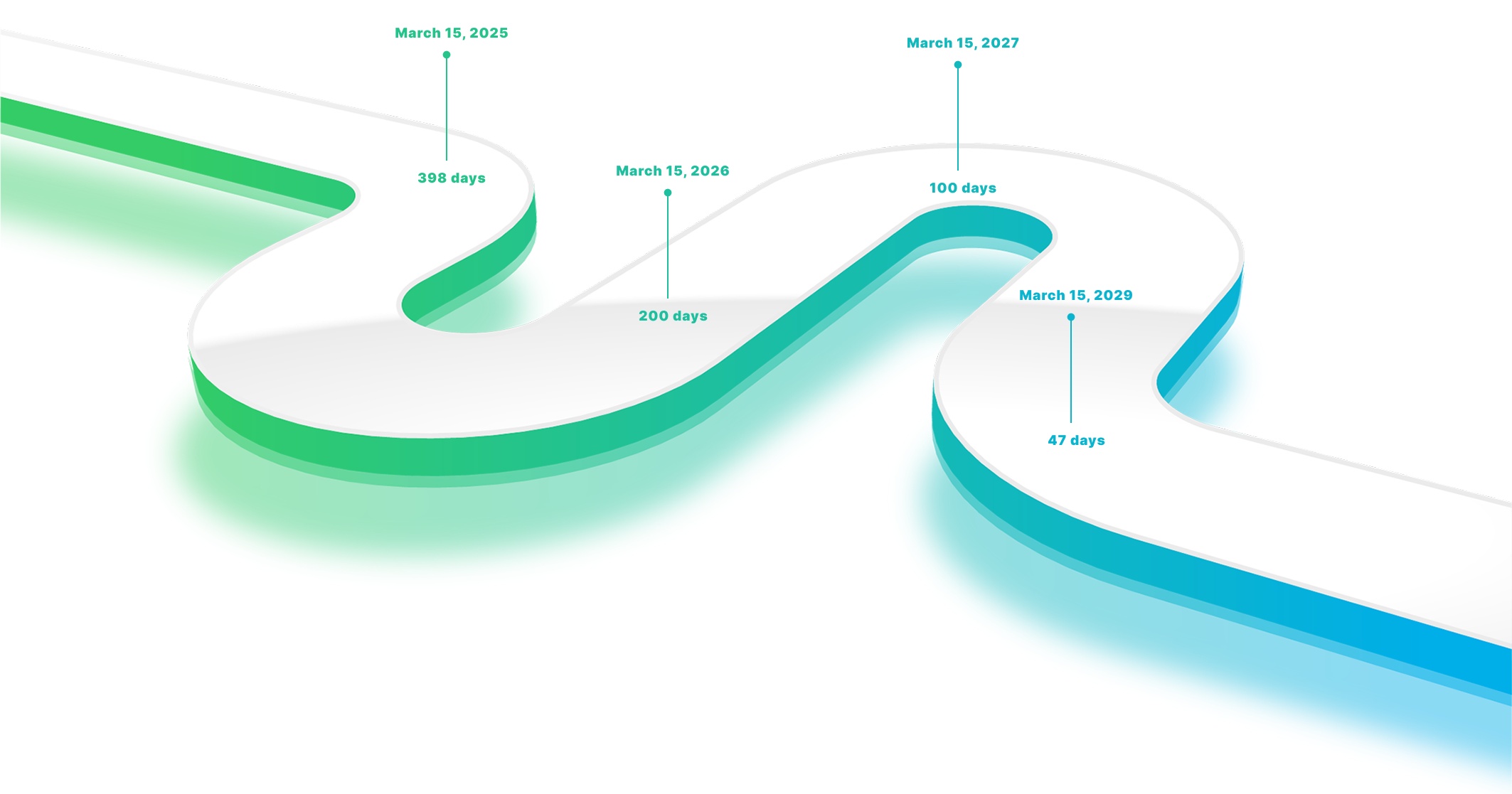
TLS/SSL certificate validity periods are rapidly decreasing, increasing operational pressure on IT teams and significantly raising the risk of missed renewals. From 398 to 47 days by 2029, what used to be multi-year validity periods is now moving towards days. Shorter lifespans, compliance requirements, and the growing number of machine identities make manual TLS/SSL certificate management unsustainable.

What is Certiligent?

Certiligent is an automated TLS/SSL certificate lifecycle management platform that continuously monitors, renews, and replaces TLS/SSL certificates before expiration without manual intervention.

Designed for companies where reliability, security, and availability are critical, Certiligent removes the operational risk associated with manual certificate management.
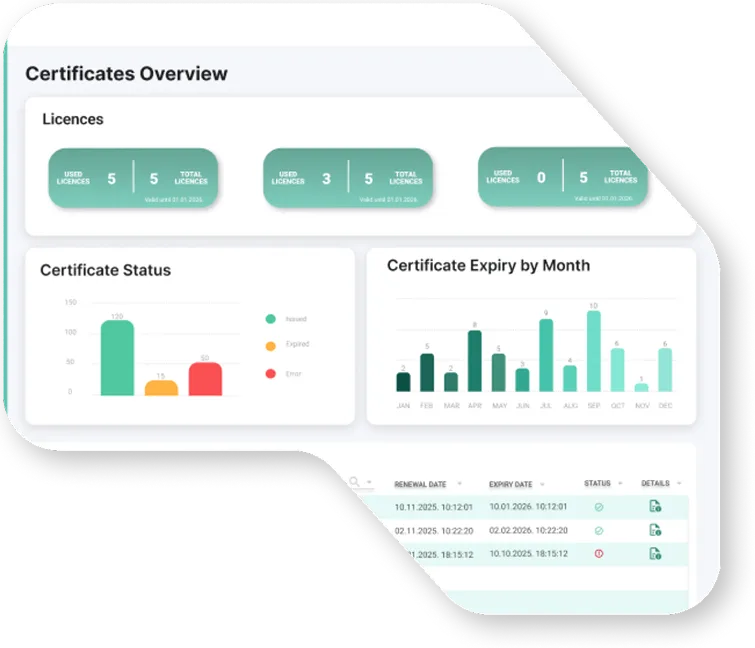
Zero downtime. Zero expired certificates. Zero manual renewal. Automate certificate lifecycle management.
Register for Free Trial 

What are the benefits of using Certiligent?

Zero Expired TLS/SSL Certificates
Prevent outages and service disruption caused by expired TLS/SSL certificates.
Fully Automated TLS/SSL Certificate Renewal
Remove manual processes, human error, and emergency interventions.
24/7 Certificate Monitoring
Continuously monitors TLS/SSL certificates and relieves IT teams from repetitive certificate tasks and emergency interventions.
No Downtime
Certificates are always valid, compliant, automatically renewed and replaced before expiration, ensuring continuous security and availability.
Full Visibility of TLS/SSL Certificates at Scale
Centralized insight into certificate status across all systems and environments,

How Certiligent works?

Certiligent continuously operates in the background to manage the full lifecycle of TLS/SSL certificates.
  • Continuously monitors TLS/SSL certificates across environments
  • Issues, renews, and replaces TLS/SSL certificates before expiration.
  • Provides centralized visibility, audit trails, and lifecycle insight.

Interested in more details about how Certiligent works? Download the datasheet. 

What are core Certiligent features?

Automated TLS/SSL certificate renewal and replacement

Centralized TLS/SSL certificate inventory and visibility

Integration with
supported public
CAs

Audit logs and
compliance-ready
reporting

Scalable, secure, enterprise-grade architecture

Who is Certiligent for?

Banking & Financial Services

Automate certificate lifecycle management for digital banking channels, APIs, payments systems, and critical infrastructure to ensure compliance and prevent outages.

Regulated Organizations

Manage TLS/SSL certificates in audit-sensitive environments with full lifecycle traceability, policy enforcement, and centralized control.

Large Enterprises

Manage thousands of TLS/SSL certificates across applications, APIs, VPNs, and microservices with centralized visibility and automation.

Certiligent FAQ

TLS/SSL certificates are the foundation of secure communication on the internet. Without them, every piece of data transmitted between a user and a server: passwords, payment details, personal information, travels as readable plaintext, vulnerable to interception. With a valid TLS/SSL certificate in place, that data is encrypted in transit, authenticated, and protected for integrity, making it unreadable to anyone who might attempt a man-in-the-middle (MITM) attack along the way.
Encryption, authentication, and data integrity are the three core functions of a TLS/SSL certificate work together to protect every online interaction. Encryption transforms plaintext into ciphertext using asymmetric encryption (public key / private key, based on algorithms like RSA) during the TLS handshake, then switches to faster symmetric encryption for the session itself. Authentication through the Certificate Authority (CA) and the PKI (Public Key Infrastructure) chain of trust confirms that users are genuinely communicating with the intended server and not an impersonator. Data integrity ensures that information has not been altered in transit, so what the server sends is exactly what the user receives.
Certificate expiration is the point at which a TLS/SSL digital certificate reaches the end of its validity period and is no longer recognized as trusted by browsers, operating systems, and applications. Every digital certificate issued by a Certificate Authority (CA) carries a defined start date and an end date, once that end date passes, the certificate is considered invalid, regardless of whether its cryptographic keys have been compromised or not. When a TLS/SSL certificate expires, browsers immediately display security errors that block users from accessing the site, the TLS handshake fails, and encrypted communication stops. For organizations this means service disruption, loss of browser trust, reputational risk, and potential compliance violations under PCI-DSS, GDPR, and NIS2. At scale, the problem compounds as infrastructure grows across hybrid and multi-cloud environments, manually tracking validity periods across hundreds or thousands of machine identities becomes operationally unsustainable, making certificate monitoring not optional but essential.
Certificate renewal is the process of replacing an expiring or expired TLS/SSL digital certificate with a new, valid one before the existing certificate's validity period ends. It ensures that encrypted communication between servers and clients remains uninterrupted, that browsers continue to display a trusted connection rather than a "connection not private" error, and that the organization remains compliant with security standards such as PCI-DSS, GDPR, and NIS2. 

Automated certificate renewal is the process of automatically issuing, renewing and replacing TLS/SSL certificates before they expire, without manual intervention.
The renewal process involves several steps. First, a new private key and CSR (Certificate Signing Request) are generated, a document containing the organization's public key and identity information submitted to the CA to apply for a new certificate. The CA then performs domain control validation to confirm the applicant still controls the domain in question, and in the case of OV (Organization Validated) or EV (Extended Validation) certificates, verifies organizational identity as well. Once validated, the CA issues the new certificate, which must then be deployed and installed on the relevant web servers, whether Apache, Nginx, IIS (Internet Information Services), or other infrastructure before the existing certificate expires.
Shorter certificate lifetimes and growing infrastructure complexity make manual TLS/SSL certificate management error‑prone and risky. Automation prevents outages, reduces operational effort, and eliminates human error.
Certiligent continuously monitors TLS/SSL certificates and automatically renews and replaces them before expiration, ensuring certificates remain valid, compliant, and available at all times.
Yes. Certiligent integrates with supported public Certificate Authorities via standardized interfaces, allowing organizations to manage TLS/SSL certificates across different CAs from a single platform.
TLS/SSL certificate management has evolved from a periodic administrative task into a critical operational function. As certificate validity periods shorten, with the industry moving toward 90-day lifespans and proposals for as little as 47 days by 2029, the volume of renewals multiplies rapidly, making manual management operationally unsustainable. The right certificate lifecycle management (CLM) tool depends on infrastructure complexity, regulatory requirements, and whether the organization needs multi-CA support, audit trails, enterprise governance, or deep DevOps integration.
For regulated industries operating large-scale or heterogeneous environments, particularly banks, financial institutions, and organizations subject to NIS2, PSD2, or GDPR, a dedicated CLM platform, such as Certiligent, provides the most complete solution, combining automated renewal, policy enforcement, audit trails, and compliance reporting in a single platform. For cloud-native organizations with simpler environments, cloud-provider native tools or ACME-based automation may be sufficient. For DevOps teams managing internal certificate estates, a private CA with ACME support offers the flexibility required.
At scale, TLS/SSL certificate management demands full automation, centralized governance, and continuous monitoring across the entire certificate estate spanning hybrid infrastructure, multi-cloud environments, microservices, IoT devices, load balancers, and API gateways. A centralized CLM (Certificate Lifecycle Management) platform provides a unified certificate inventory, automated renewal via the ACME protocol, private CA integration for internal workloads, DevSecOps and CI/CD pipeline embedding, HSM-backed private key management with enforced RSA and ECC key length compliance, and continuous expiration monitoring with audit trails for NIS2, PSD2, and GDPR compliance reporting,eliminating the human error and operational fragmentation that make manual certificate management unsustainable at scale.
Yes. Certiligent offers a free trial with no credit card required. Simply visit our free trial page and sign up to start exploring the full automated TLS/SSL certificate management capabilities: https://cybersecurity.asee.io/certiligent-free-trial/ 
Contact us to get started with automated TLS/SSL certificate management.
Contact Us

CyberSecurityhub

chevron-down linkedin facebook pinterest youtube rss twitter instagram facebook-blank rss-blank linkedin-blank pinterest youtube twitter instagram