AuthHub is a SaaS platform that combines ASEE IAM and ASEE SxS authentication, delivering centralized identity management, Single Sign-On, and modern MFA (OTP, QR, Push) through the ASEE Authenticator.
AuthHub is purpose-built for EMEA regulated industries offering both SaaS deployment and on-premises integration options, with native support for SAML 2.0, OIDC, and OAuth2 protocols.
Why choose AuthHub?
One central hub for authentication, authorization, and enrollment
AuthHub automates identity access workflows using the SxS backend and the ASEE Authenticator.
Standards that fit your architecture
Industry standards such as OIDC, OAuth2, and SAML ensure seamless integration.
SaaS without heavy infrastructure
Delivered fully from the ASEE SaaS environment for rapid deployment and scalability.
Without AuthHub:
Too many applications. Too many identities. Too much risk.
Most organizations operate multiple systems with separate credentials, access rules, and user repositories creating identity sprawl, credential sprawl, and unacceptable security risk. Without a centralized identity layer, enforcing consistent authentication policies, tracking access, or meeting regulatory requirements (GDPR, NIS2, DORA) becomes operationally unsustainable.
With AuthHub:
Centralized Identity. Secure Access. Zero Compromise.
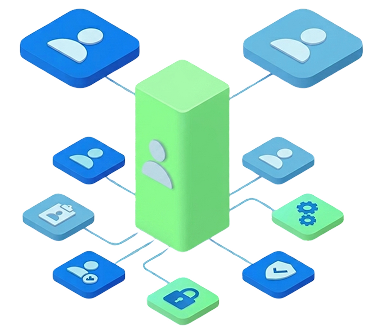
AuthHub solves this by introducing a single, centralized Identity and Access Management (IAM) layer that handles authentication, authorization, auditing, and Single Sign-On from one place - eliminating fragmented identity silos across your application landscape.
What I get with AuthHub?
Centralized identity and access management (users, roles, groups, attributes from a single hub)
Risk-adaptive MFA using workflow-based authentication - OTP, QR, and Push notifications
Role-Based Access Control (RBAC) with fine-grained permission management
Fast integration using OIDC, OAuth2, and SAML standards
Full audit trail with centralized access logging and session monitoring
Discover how AuthHub fits your needs
Tell us about your environment and our team will walk you through exactly what AuthHub looks like for your use case.
IT governance and compliance IT governance with RBAC, audit logging, and session control. AuthHub provides the full identity governance controls required for internal IT audits and regulatory compliance reviews.
Workforce identity Workforce SSO and MFA for web and SaaS applications. AuthHub enables employees to authenticate once via SSO and access all connected applications with adaptive MFA triggered based on risk and context.
Privileged access Privileged access with step-up authentication. AuthHub enforces stronger authentication requirements for access to sensitive systems, applying step-up MFA when users attempt to reach privileged resources.
Identity federation onboarding Fast onboarding via tenant-based identity federation. new organizations or departments can be onboarded by federating existing LDAP or Active Directory identity sources into a dedicated AuthHub tenant.
Core Features of AuthHub
Single Sign-On
AuthHub provides Single Sign-On (SSO) with centralized policy enforcement - users authenticate once and gain access to all connected applications without re-entering credentials.
Multi-Factor Authentication (OTP, QR, Push)
AuthHub supports three MFA methods via the ASEE Authenticator: OTP (one-time passwords), QR-code authentication, and Push notifications - covering a broad range of use cases from consumer-grade convenience to high-assurance enterprise access.
Adaptive Authentication
AuthHub implements adaptive and step-up authentication flows, dynamically increasing the required authentication level based on user context, device posture, risk score, and predefined workflow conditions.
Role-Based Access Control (RBAC)
AuthHub includes full Role-Based Access Control (RBAC), enabling administrators to define roles, assign permissions, and manage user group memberships through a centralized identity directory.
Audit Logging & Session Control
AuthHub federates user identities from LDAP directories and Microsoft Active Directory, allowing organizations to extend their existing identity infrastructure without migrating user data.
Identity Federation (LDAP/Active Directory
AuthHub maintains a centralized audit trail with full session control. Every authentication event, access grant, and policy enforcement action is logged for security monitoring, compliance reporting, and incident investigation.
Least Privilege Enforcement
AuthHub enforces the principle of least privilege through attribute-based access policies. Users receive only the permissions required for their role, reducing the blast radius of compromised accounts.
How AuthHub Works?
1) Connect applications using SAML or OIDC / OAuth2 (web, mobile, APIs)
AuthHub supports SAML 2.0, OIDC, and OAuth2 protocols, covering web applications, mobile apps, and APIs. Most integrations are completed without custom code, using AuthHub’s pre-built protocol connectors.
2) Define authentication rules and MFA workflows
Administrators configure step-up authentication policies, adaptive MFA triggers, and role-based access rules through the admin GUI without writing code.
3) Users authenticate using SSO and MFA via the ASEE Authenticator
The ASEE Authenticator handles OTP, QR, or Push MFA, while AuthHub’s centralized session management maintains secure, audited access across all connected applications.
Multi-Tenant Architecture & Administration
AuthHub is built on a tenant-based architecture in which each tenant provides a fully isolated environment for users, applications, roles, groups, and identity providers. Tenant isolation ensures that identity data, access policies, and audit logs are strictly separated between organizational units or customer environments.
Administrative capabilities include tenant-level user directories, configurable client authentication flows, and security policies such as email verification rules, password complexity requirements, and session timeout controls - all managed through the AuthHub admin GUI.
Integrations
SAML 2.0 and OIDC/OAuth2 applications - web, mobile, and API-based
Microsoft 365 - SSO via SAML or OIDC for the full Microsoft productivity suite
VPN and RADIUS - MFA-protected infrastructure access for network and remote access scenarios
LDAP and Microsoft Active Directory - bidirectional identity federation without full migration
Atlassian Jira and Confluence - identity provider (IdP) scenarios for development and collaboration tools
OS logon and application gateways - available depending on package scope
Security & Compliance
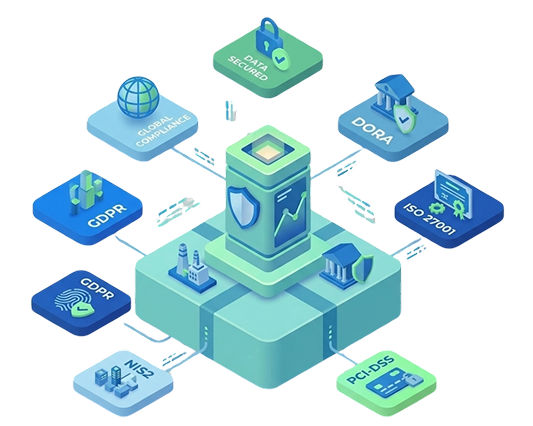
With AuthHub, your organization gains the access controls, audit trails, and identity governance needed to stay compliant across the frameworks that matter most.
Supported regulatory frameworks:
GDPR
NIS2 Directive
DORA (Digital Operational Resilience Act)
ISO 27001 (Control A.9)
PCI DSS
Discover how AuthHub fits your needs
Tell us about your environment and our team will walk you through exactly what AuthHub looks like for your use case.
AuthHub is a full IAM platform. It combines Multi-Factor Authentication (MFA), Single Sign-On (SSO), Role-Based Access Control (RBAC), identity federation, and centralized audit logging — powered by the ASEE SxS backend and ASEE Authenticator. MFA is one component of a broader identity and access management architecture.
AuthHub supports three MFA methods via the ASEE Authenticator: OTP (one-time passwords), QR-code authentication, and Push notifications. These methods cover use cases from standard enterprise authentication to high-assurance access for regulated environments.
Yes. AuthHub includes full RBAC capabilities — administrators can define roles, assign permissions, manage group memberships, and enforce the principle of least privilege through a centralized identity directory. RBAC policies are applied across all connected applications from a single management interface.
Applications are integrated using standard OIDC/OAuth2 or SAML 2.0 protocols, covering web applications, mobile apps, and APIs. AuthHub also supports LDAP and Active Directory federation for organizations with existing on-premises identity infrastructure. Most integrations require no custom development.
Yes. Authentication in AuthHub is defined through configurable workflows with conditional steps — enabling adaptive MFA based on user context, device, location, and risk level. Step-up authentication can be triggered automatically when users attempt to access sensitive resources.
Yes. AuthHub is designed to support compliance with GDPR (Article 32 — technical security measures), NIS2 (access control and authentication security), and DORA (ICT risk management for financial sector). It provides the centralized access logging, MFA enforcement, session control, and RBAC capabilities that these regulations require as technical safeguards
Yes. AuthHub maintains a centralized audit trail covering all authentication events, access grants, policy enforcement actions, and session activity. Audit logs support compliance reporting, security investigations, and access reviews required by ISO 27001, PCI DSS, NIS2, and DORA.
AuthHub is best suited for organizations that need centralized SSO and adaptive MFA in a regulated environment, particularly in banking, insurance, telecommunications, or the public sector. It is a strong fit when data residency requirements or NIS2/DORA obligations rule out cloud-only platforms, when existing LDAP or Active Directory infrastructure must be federated rather than replaced, or when full audit trail and session control are non-negotiable compliance requirements.
AuthHub, Okta, and Microsoft Entra ID all provide SSO, MFA, and identity federation, but differ in deployment model and target market. AuthHub supports both SaaS and on-premises deployment with native LDAP/AD integration, and is purpose-built for regulated industries in EMEA (banking, insurance, public sector) with built-in support for NIS2 and DORA compliance requirements. Okta is a cloud-only platform optimized for SaaS-heavy environments with a large global app catalog. Microsoft Entra ID is best suited for organizations already invested in the Microsoft ecosystem.
Secure Every Access Point. Without Compromise.
Contact us to find the right MFA solution fit for you and your business.