Ready to see the difference for yourself?
Apply for a free trial, and we'll walk you through Certiligent with your own certificate setup.
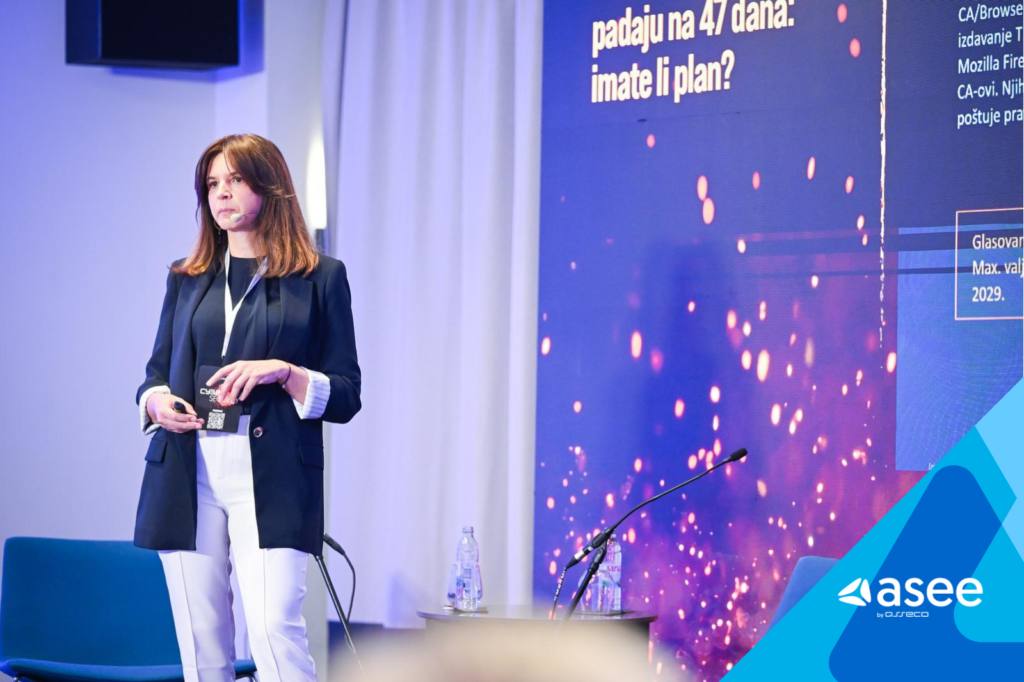

The reduction of TLS certificate validity to 47 days by March 2029 will significantly increase operational demands and risks for organisations that depend on the high availability of their digital services. While 2029 may seem distant, the process of shortening certificate lifespans has already begun, gradually reshaping how IT systems are managed.
"For large systems with tens or hundreds of certificates, moving to a 47-day validity period means a significant increase in operational load and risk of error. Certificate management is no longer an administrative activity, it's a critical operational function that directly affects the availability of digital services." — Marijana Mišić Mikulić, Product Manager, ASEE Croatia
The change particularly affects banks and financial institutions, e-commerce platforms, healthcare systems, telecoms operators, public sector bodies, and large enterprise organisations. In these environments, even a brief certificate expiry can cause service outages, security incidents, and serious financial and reputational consequences.
Where organisations previously renewed certificates once or twice a year, from March 2029 they will face significantly more frequent renewal cycles. This accounts for every certificate across every system. In environments with a large number of certificates, this represents a shift from an occasional task to a permanent operational responsibility requiring continuous monitoring and management.
Without an automated process, every renewal means a manual intervention. At this scale, that is simply not sustainable.
TLS certificates remain the cornerstone of digital service security. They enable encrypted communication, identity verification, and protection of sensitive data. Their expiry leads to application downtime, browser security warnings, and disruptions to business processes.
In many organisations, certificate management is still treated as a technical task rather than a business continuity concern. But as renewal cycles compress, that perception is becoming a liability.
According to cybersecurity experts at ASEE, the biggest challenge organisations face is not the renewal itself, it's the lack of complete visibility across complex IT environments. Certificates are distributed across different systems, applications, and infrastructure components, which without automation creates significant room for oversight.
"The biggest challenge we see with clients isn't the certificate renewal itself. It's the lack of full visibility across complex IT environments. Certificates are spread across different systems, applications, and equipment, which without automation creates room for gaps." — Marijana Mišić Mikulić
Automation eliminates manual processes and reduces the possibility of human error, while continuous monitoring enables timely intervention before an incident occurs. Centralised visibility also simplifies infrastructure management and increases overall control.
The organisations best positioned for the 2029 transition are those that start building the right processes and tooling now. Introducing automation and centralised certificate management takes time. Particularly in enterprise environments where systems are complex and change processes are governed carefully.
"Organisations with complex IT systems and large numbers of certificates should start preparing now. Those that ensure full certificate visibility and automate their processes in time will have a clear advantage in preserving the stability and continuity of their digital services." — Marijana Mišić Mikulić
ASEE has been developing cybersecurity solutions for the financial sector, public institutions, and enterprise systems for decades. Certiligent offers centralised oversight and automated lifecycle management for TLS certificates. It provides a unified view of all certificates, continuous monitoring, policy-based management, and automated renewal with timely expiry alerts. The group's solutions are used across 24 countries worldwide.
Apply for a free trial, and we'll walk you through Certiligent with your own certificate setup.